Grand Theft Auto 6 is nearing its Nov. 19 release date with the kind of expectations that make ordinary blockbuster language feel comically underpowered. Rockstar Games’ next open-world crime epic is due on PlayStation 5 and Xbox Series X|S, and estimates cited by market-research firm Newzoo place its first-week sales somewhere between $3.25 billion and $5.2 billion. Those are projections, not results, and they should be treated that way. Even so, the range explains why the game is being framed as more than a major launch: it is a potential entertainment event with consequences far beyond one publisher’s balance sheet.
The reported budget is $1.5 billion. Take-Two Interactive chief executive Strauss Zelnick has said pre-orders are running well above internal expectations, while also stressing that the company will not declare victory before players actually receive the game. That restraint is sensible. Revenue forecasts, pre-order totals and cultural anticipation can establish the size of a moment, but they cannot establish player satisfaction, long-term engagement or the wider response to Rockstar’s creative choices.
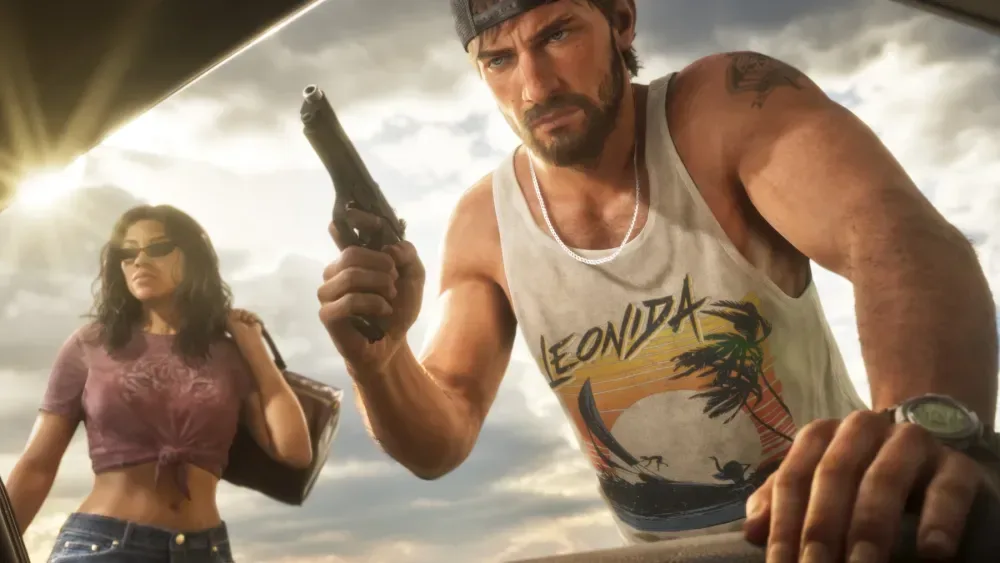
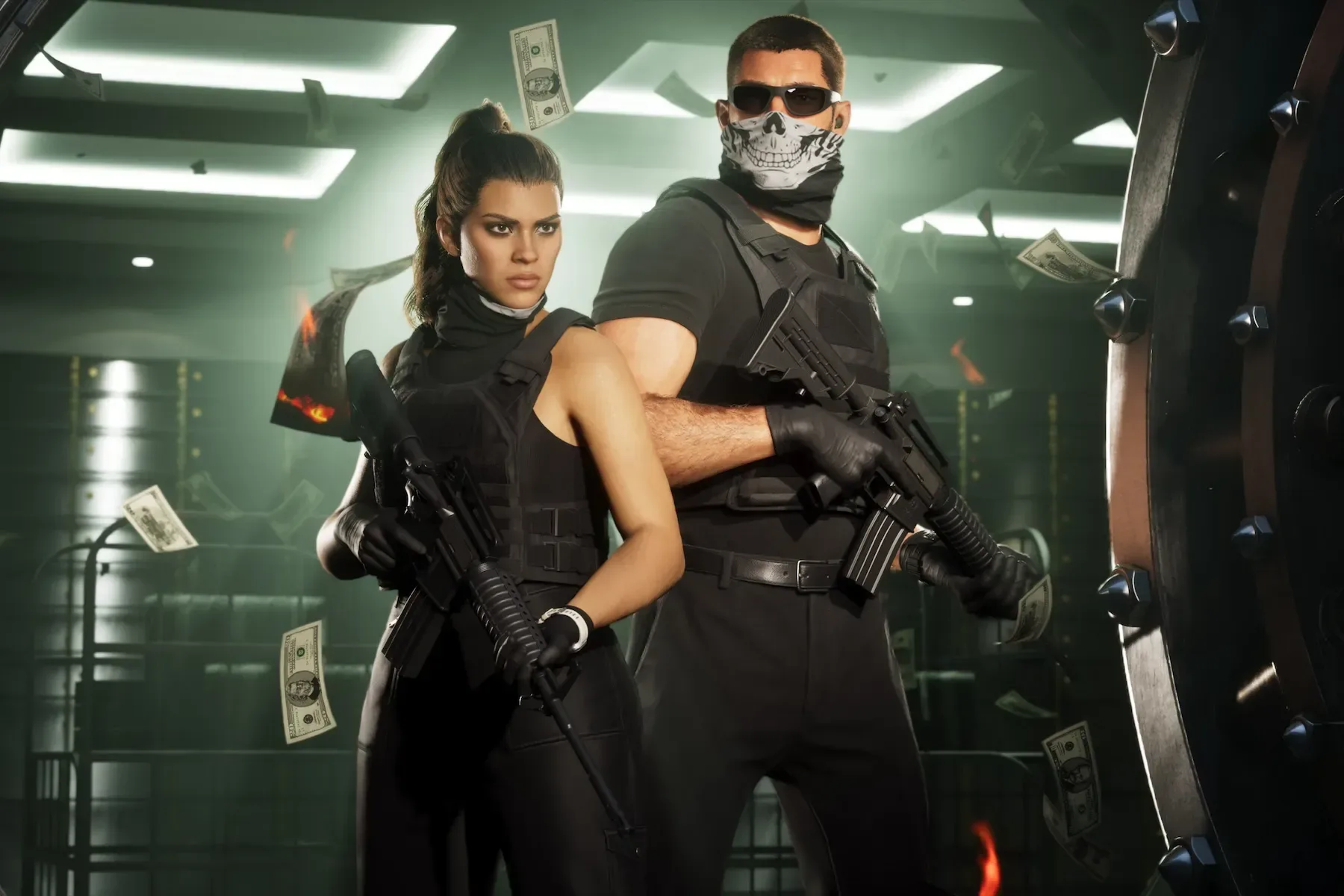
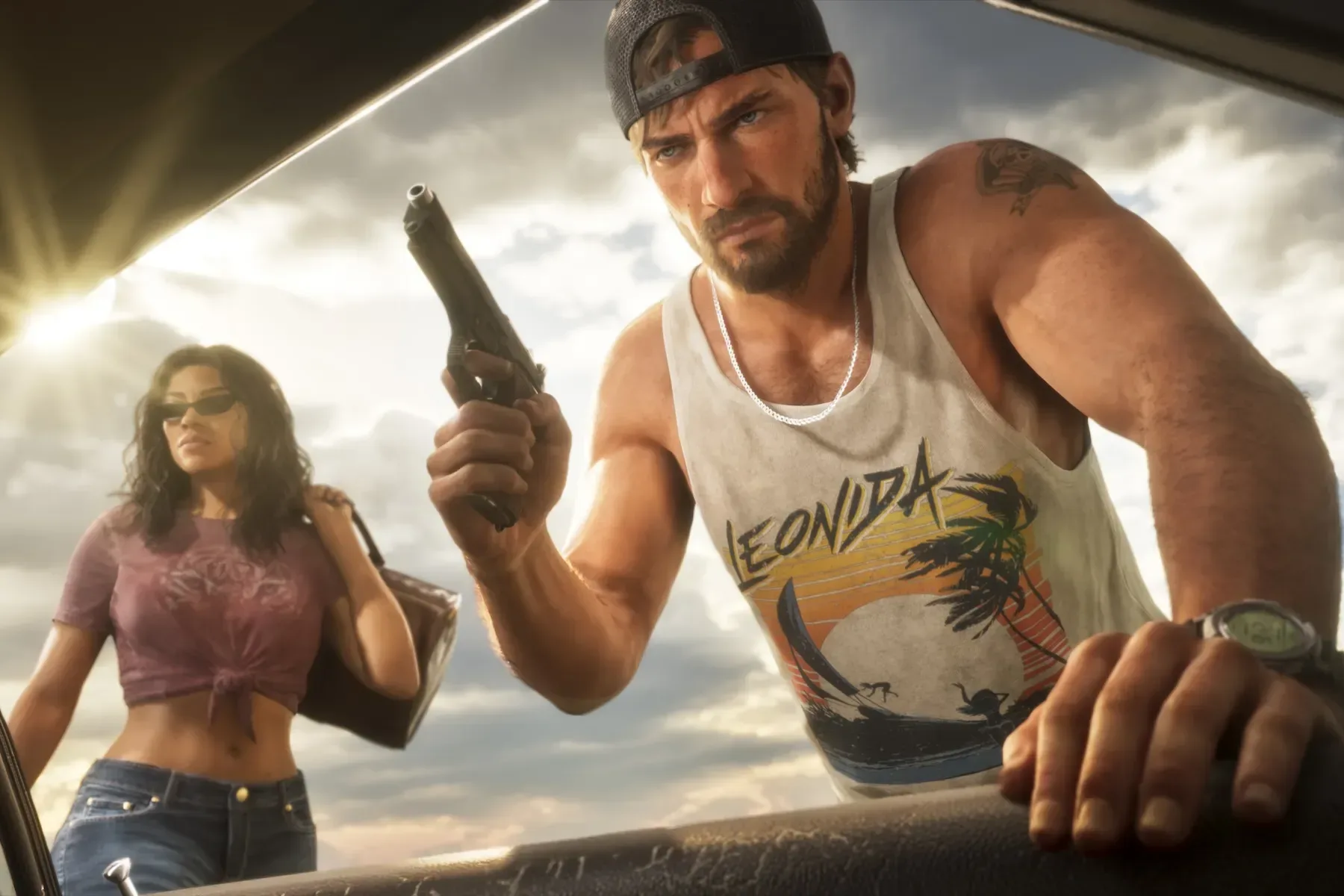
Still, the basic situation is extraordinary. This is the first numbered Grand Theft Auto release in 13 years, arriving after Grand Theft Auto V and GTA Online remained fixtures for much of that gap. The new game has been positioned as a giant, dense return to the series’ fictional Florida-inspired setting, Leonida, with Vice City at its center. Its protagonists are Jason and Lucia, a pair pushed into a criminal conspiracy after an apparently easy score goes wrong.
Why “open world” is doing so much work here
Calling GTA 6 an open-world game may sound like routine genre shorthand, but it is central to why its release is attracting so much attention. An open world is a game structure in which players are given broad freedom to move through an environment, pursue activities in different orders and spend time outside the main plot. That differs from a more linear game, where progress is largely a sequence of designed levels or story missions.
The distinction matters because GTA’s appeal has never rested solely on completing its campaign. A player can follow missions, drift through the city, seek out side activities or simply observe and interact with the simulation. That latitude creates a personal rhythm: two people can own the same game and emerge with very different stories about what they did in it.
Geoff Keighley, the creator and host of The Game Awards, has described Grand Theft Auto III’s transition into a 3D open world as a foundational turning point for the series. His broader point is useful: Rockstar’s games put a great deal of their identity into player agency, meaning the player’s capacity to make meaningful choices about how they navigate a virtual space. Agency does not mean every action changes the ending. It means the route through the experience, and much of the time spent within it, belongs to the player.
That model helps explain why the looming launch is being discussed alongside films, television and other mass entertainment while also resisting easy comparison with them. A movie has a fixed runtime. A season of television may be watched at different speeds, but the episodes remain the same. An open-world game can be a story campaign, a social destination, a sandbox for unscripted activity, or a long-running hobby depending on the player.
Rockstar co-studio head Rob Nelson has said GTA 6’s main narrative is expected to take roughly 80 hours. That figure is notable not simply for its size, but because it describes only the primary narrative path. The game is also said to feature the biggest open-world map in Grand Theft Auto history, making the practical question less “How long is it?” than “How much of its world will players choose to inhabit?”
Related coverage includes Grand Theft Auto VI Nears Nov. 19 Launch With Enormous Expectations.
What Rockstar has said players will be able to shape
Jason and Lucia anchor the story. Rockstar’s premise says they have always known the odds are against them, and that a botched score pulls them into a conspiracy spanning Leonida. The setup places their relationship at the heart of the campaign rather than treating it as incidental flavor.
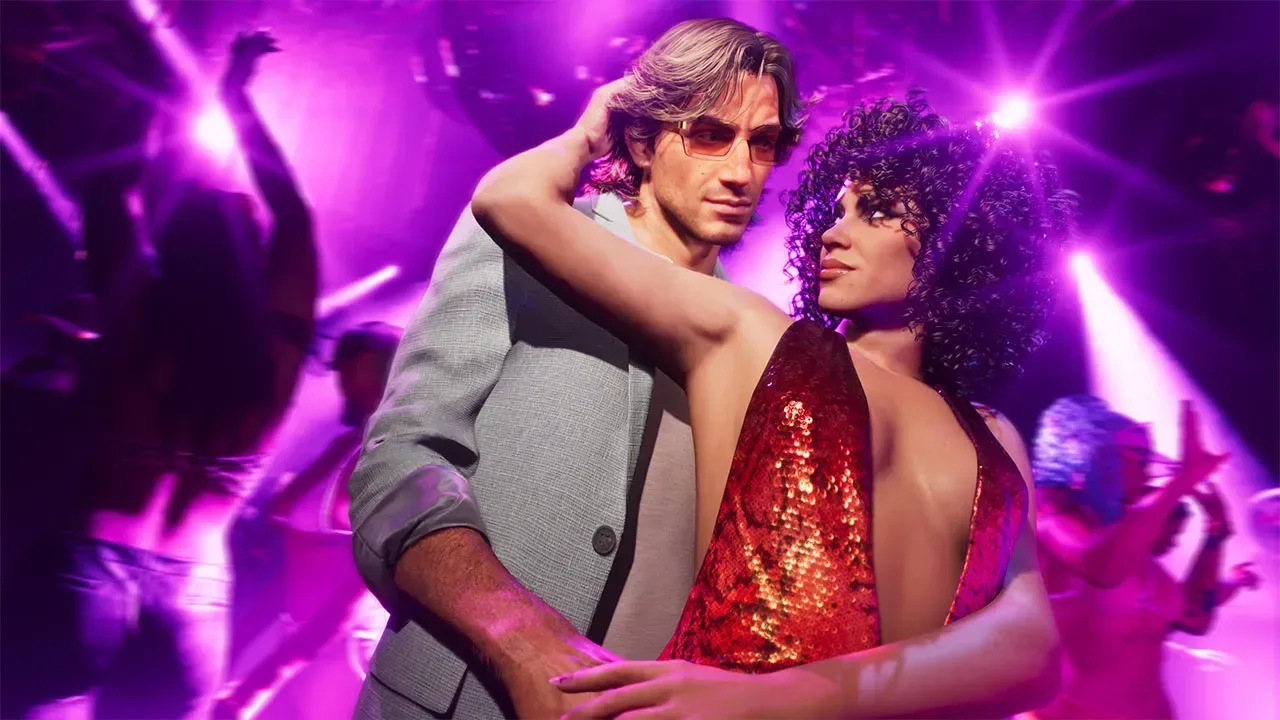
Reported systems extend that focus into player choice. Players will be able to influence the degree of romance between Jason and Lucia, and their physical appearance will respond to diet and workout habits. Those details are worth separating from the broader promise of a large map. Map size is a measure of geography; responsive character systems aim for a sense that actions leave visible traces. Whether that adds meaningful role-playing depth will depend on implementation, but it signals Rockstar’s interest in making the protagonists’ lives feel more malleable.
There is a temptation to treat every pre-release detail as evidence that GTA 6 will contain everything anyone could want. That is not a useful standard, and it is not one any game can meet. A more grounded reading is that Rockstar appears to be combining its established open-world framework with a longer story and systems that can personalize the player’s version of Jason and Lucia.
For players planning their first week, the practical implication is straightforward: this does not sound designed as a quick weekend completion. An 80-hour main story estimate alone calls for patience, while open-world games typically reward exploration at a player’s own pace. Anyone expecting to see the whole game immediately should be cautious about spoilers, but equally cautious about turning leisure into a checklist.
The scale is financial, technical and cultural
The first-week sales estimate has naturally driven headlines, but it is only one measure of the game’s expected reach. A reported $80 price point and launch on two current-generation console families establish the commercial baseline. Sales will matter. Yet the more unusual question is how much time the game absorbs after the transaction.
Engagement, in this context, refers to how long and how often players continue spending time with a game. It is not identical to sales. A title can sell quickly and fade, or it can build a lasting community. Grand Theft Auto has an especially high bar on that front because GTA Online continued for a decade. The new release will face attention not just as a campaign game but as the next chapter in a franchise whose prior ecosystem endured for years.
That makes the launch relevant to developers, publishers and platform holders even if they have no direct stake in Leonida. The release will compete for finite player time, conversation and spending. Other games arriving around the same window may find themselves measured against an unusually dominant cultural event, while teams across the industry will watch for clues about how an audience responds to a release built at this scale.
It also highlights a recurring mismatch in the way games are treated in public discussion. Games generate more than $200 billion in revenue each year, yet debates about cultural prestige still often position movies and television as the default forms of major entertainment. GTA 6’s launch will not settle that argument. It will, however, make it harder to ignore how a game can dominate schedules, social feeds, mainstream conversation and business forecasts at the same time.
Gaming’s wider infrastructure has already shown how quickly a major release can become a technical and social event. Downloads, preloads, updates and online services all become part of the experience, not just background logistics. One industry executive estimated the GTA 6 download at 212 GB, although players should wait for official platform information before treating that figure as final. Whatever the eventual file size, it is a reminder that modern blockbuster games can require substantial storage, download time and planning before a player even starts the first mission.
From counterculture posture to mainstream institution
Rockstar was founded by Dan Houser and Sam Houser in 1998, and its earlier public image was closely associated with irreverence and transgression. That posture once helped distinguish Grand Theft Auto from more conventional entertainment brands. The circumstances surrounding GTA 6 are markedly different. Rockstar is no longer an insurgent name trying to seize attention; it is a central power in the games business, backed by Take-Two and launching one of the medium’s largest franchises.
That transition creates an interesting tension. Grand Theft Auto’s identity has long involved satire, provocation and a sense of cultural mischief. But a release expected to generate billions in a week cannot credibly present itself as a small outsider. The question is not whether Rockstar can become mainstream—it plainly already has—but whether its work can preserve a sharp creative personality at the enormous scale now expected of it.
That is a creative issue as much as a marketing one. The most compelling case for GTA 6 will not be that it is expensive, enormous or unavoidable. It will be that its enormous resources result in a world and story that feel specific rather than merely vast. The focus on Jason and Lucia provides a potential answer: scale can be impressive, but a relationship under pressure is what can give a giant simulation emotional direction.
The anticipation also comes with the predictable risk of hype converting possibility into assumed fact. Players know the stated premise, the platforms, the estimated campaign length and a few high-level systems. They do not yet know the final pacing, the quality of mission design, the boundaries of the relationship mechanics or how satisfying the game will feel over dozens of hours. Those are release-day and post-release questions, not things forecasts can answer.
Labor is part of the GTA 6 story, too
The game’s approach arrives while Rockstar employees continue unionization efforts, now with public support from SAG-AFTRA. That timing puts attention on the people behind a title described as the product of more than a decade of work. It is easy for industry conversations to reduce a game to a budget, a release date, a franchise logo or a sales target. Union activity redirects some of that attention toward working conditions, representation and the labor required to make detailed interactive worlds.
There is no contradiction in recognizing both the ambition of GTA 6 and the importance of the workforce that built it. In fact, the two are inseparable. A simulation of this size is not created by “Rockstar” as an abstract machine. It is made through the specialized work of artists, programmers, writers, performers, designers, quality-assurance staff and many others. The bigger the claimed achievement, the more important it is to discuss the people and conditions behind it.
That is why the game’s success could matter beyond Take-Two’s quarterly results. If it becomes the landmark release many expect, it will further reinforce the market’s appetite for huge, long-development productions. The industry will then have to keep asking how that appetite can coexist with sustainable work practices and meaningful worker voice.
A release worth watching, not pre-crowning
GTA 6 has the rare ability to concentrate nearly every major games-industry discussion in one place: blockbuster budgets, console ecosystems, long-term engagement, mainstream visibility, creative risk and labor. It is also arriving when gaming’s reach is increasingly impossible to separate from the broader entertainment economy. For a useful look at another major event expanding its distribution footprint, see The Game Awards’ expanding streaming lineup.
But the most sensible position before Nov. 19 is the one Take-Two itself has adopted: confidence without premature victory laps. The expectations are enormous, the commercial projections are staggering and the franchise’s history gives Rockstar a formidable foundation. None of that substitutes for the game in players’ hands.
When GTA 6 arrives, the meaningful verdict will be larger than an opening-week number. It will be found in how players experience Leonida, whether Jason and Lucia’s story lands, how the game’s systems hold up over time, and what its success means for the people whose work made such a colossal release possible.