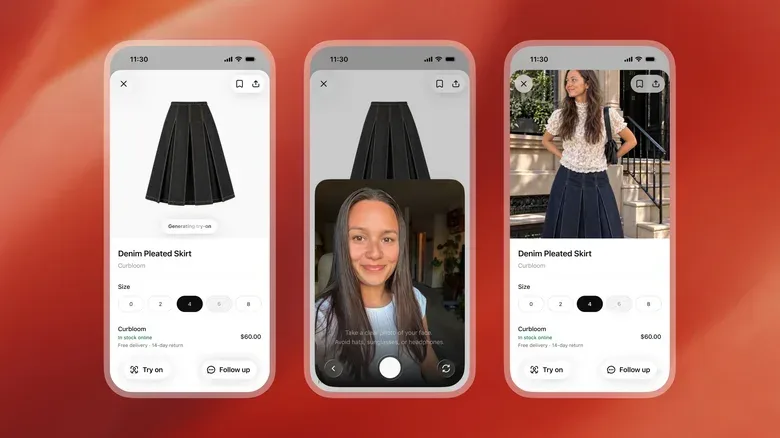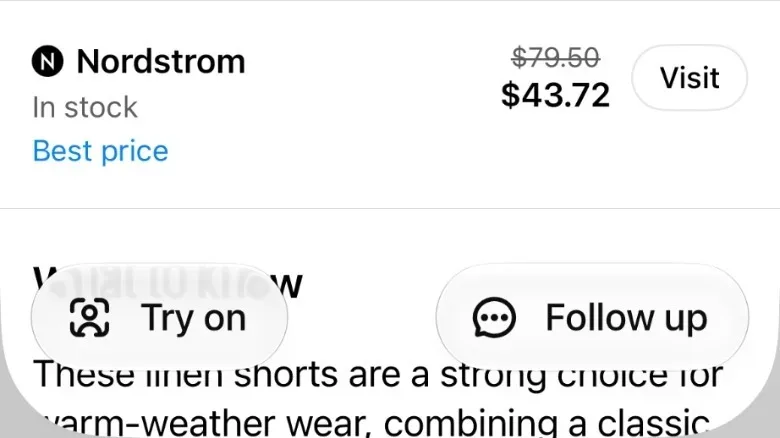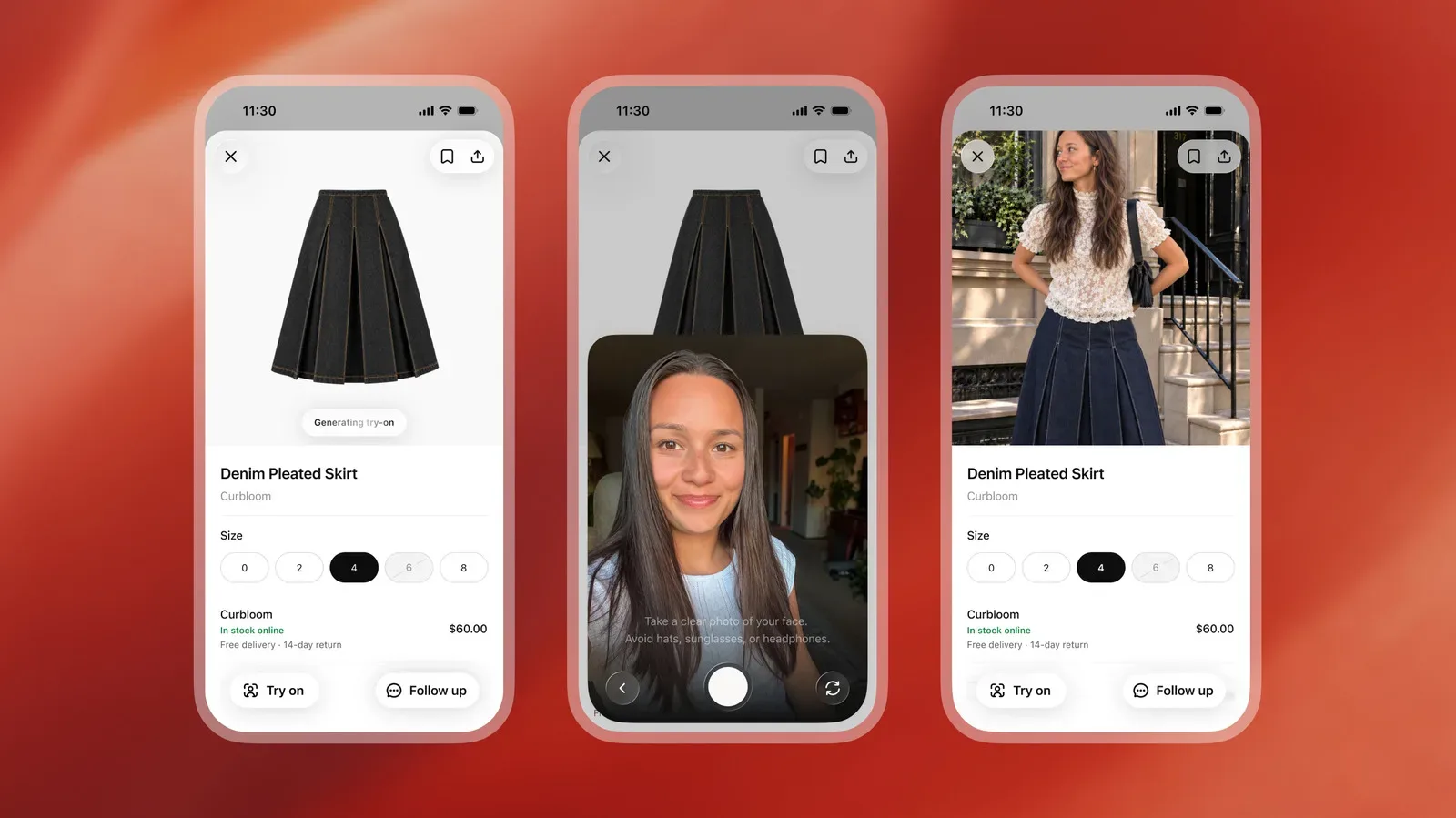
ChatGPT is moving further into shopping with a virtual clothing try-on tool that generates an image of a person wearing an item after they upload photos of themselves. The feature is available wherever a clothing product listing appears in a chat, and it can also work with a screenshot of clothing uploaded by the user.
The process is straightforward on paper: select a clothing item, choose Try on, then provide a selfie and a full-body image for the system to use. ChatGPT then creates a virtual try-on image using ChatGPT Images 2.5, the image model released in September. Users can additionally save products to a Library in the app for later reference.
That is a useful combination for the familiar problem of browsing apparel online: product photography shows the garment, but it does not necessarily help a shopper picture its proportion, silhouette or general styling on themselves. A generated image may make the consideration stage more immediate. It is not, however, a replacement for the details that determine whether clothing is actually right for someone, including sizing, fabric, construction, fit and return terms.
How ChatGPT’s virtual try-on works
The feature is connected to clothing listings inside ChatGPT conversations. When a listing is present, the user can tap the garment and select the try-on option. The request then requires two personal images: a selfie and a full-body photograph. Those pictures give the image model visual material from which it can create its result.
ChatGPT is not limited only to products it has already surfaced in a shopping conversation. A user can upload a screenshot showing an item of clothing and, in principle, use that image as the basis for a try-on request. That distinction matters because it makes the feature less like a narrow catalogue tool and more like a general image-generation workflow for apparel discovered elsewhere.
In this setting, a virtual try-on image is an AI-generated visualization, not a photo documenting a real fitting. The system is being asked to synthesize a representation of a person and an item together. It should therefore be read as an aid to imagining an outfit rather than proof that the garment will look, drape or fit the same way in the physical world.
That is especially important for online clothes shopping because a generated image can appear persuasive even when it cannot answer practical questions. An image may suggest a style pairing or overall look, but it cannot independently establish a garment’s measurements, comfort, material behavior, color under different lighting, or how it will fit a particular body. Shoppers should still rely on the retailer’s product information and policies when making a purchase decision.
A more complete shopping flow inside the chatbot
The try-on tool arrives alongside a new way to save products to ChatGPT’s Library. Rather than requiring a shopper to find an earlier chat or repeat a search, the Library is designed to hold items they want to revisit.
Related coverage includes ChatGPT Adds Virtual Try-On Images for Clothing Searches.
Together, virtual try-ons and saved products create a clearer shopping loop. First, someone finds an item in a chat or uploads a screenshot. Next, they generate a visualization to decide whether they like the look. Finally, they can retain the product in their Library for later comparison or consideration. That does not turn ChatGPT into a marketplace on the scale of major retail platforms, but it does make the chat interface a more persistent place for product discovery.
OpenAI has already been expanding commerce-related features within ChatGPT. Its Instant Checkout feature enables the company to take a cut of some transactions completed in ChatGPT. Merchants can also use advertising within chats to promote products and services. The new clothing functions fit that wider direction: shopping is increasingly being treated as something that can happen during the same conversational process used for search, questions and recommendations.
The practical appeal is easy to see. Apparel browsing tends to involve lots of small, repeat decisions: Does this look like my style? Would it work with items I own? Is it worth keeping in mind until I compare alternatives? A generated image and a saved-item space address those steps more directly than a static product card alone.
The privacy decision comes before the outfit decision
The main caveat is not aesthetic. It is the personal images required to use the feature. OpenAI says that images uploaded from a personal account can be used for training by default unless the user opts out. That means a person considering the try-on tool should understand their account’s data controls before uploading a selfie or full-body photograph.
Training, in this context, refers to using uploaded material in efforts to improve AI systems. The relevant point for users is that a photo supplied for a one-off shopping visualization may have an additional data-use implication under the default setting. Opting out is therefore the key choice for anyone who does not want personal uploads used in that way.
It is worth treating this as a separate step from deciding whether a generated outfit image would be helpful. The convenience case may be strong, particularly when comparing several garments, but the input is more personal than an ordinary text shopping query. A selfie and full-body photo can contain more visual information than a user may initially associate with a clothing search.
A cautious approach is to review the applicable controls before beginning, upload only images the user is comfortable sharing under those settings, and remember that a screenshot of an item and personal photographs serve different roles in the request. The clothing image tells the system what to visualize; the selfie and full-body image provide the personal reference for the try-on result.
What the tool can—and cannot—help a shopper decide
Virtual try-on is most readily useful as a visualization tool. Someone may use it to get a rough sense of an outfit’s overall direction, to compare a few styles, or to turn a saved clothing discovery into something more concrete. The feature’s ability to work from screenshots broadens that use case beyond the products first displayed by ChatGPT.
But the distinction between visualization and verification remains crucial. A synthetic image is not a fitting room, and it is not a guarantee. It cannot settle whether a size will work, whether a fabric will feel right, or whether the item will match expectations after delivery. The sensible role for the output is as one signal among the normal information a shopper would use.
There is also a broader platform implication. Product discovery, saved items, ads and checkout can all operate near one another when shopping occurs inside a chatbot. That can reduce friction for people who want a single place to browse and organize options. It also means users should stay aware of the boundary between an assistant helping them explore products and a commercial system designed to surface, save and potentially facilitate purchases.
ChatGPT’s clothing try-on feature follows a similar capability introduced in Google Search in 2025, where users could upload photos to see themselves in different clothing. The emerging pattern is clear: AI shopping tools are increasingly trying to bridge the gap between a product listing and a personal visualization.
For ChatGPT users, the immediate takeaway is simple. The tool offers a new way to imagine clothing on a person using uploaded images, and its Library offers a way to hold onto promising products. Before using either convenience feature, however, it is worth checking the training preference attached to personal-image uploads. As AI features become more embedded in everyday shopping, the most useful choice is often not just which outfit to save, but which data settings to use first.
The expansion also lands amid ongoing scrutiny of how AI services handle content, traffic and commercial relationships. For related context on disputes around AI-generated search experiences, see this report on the dismissal of lawsuits involving Google AI Overviews and web traffic.