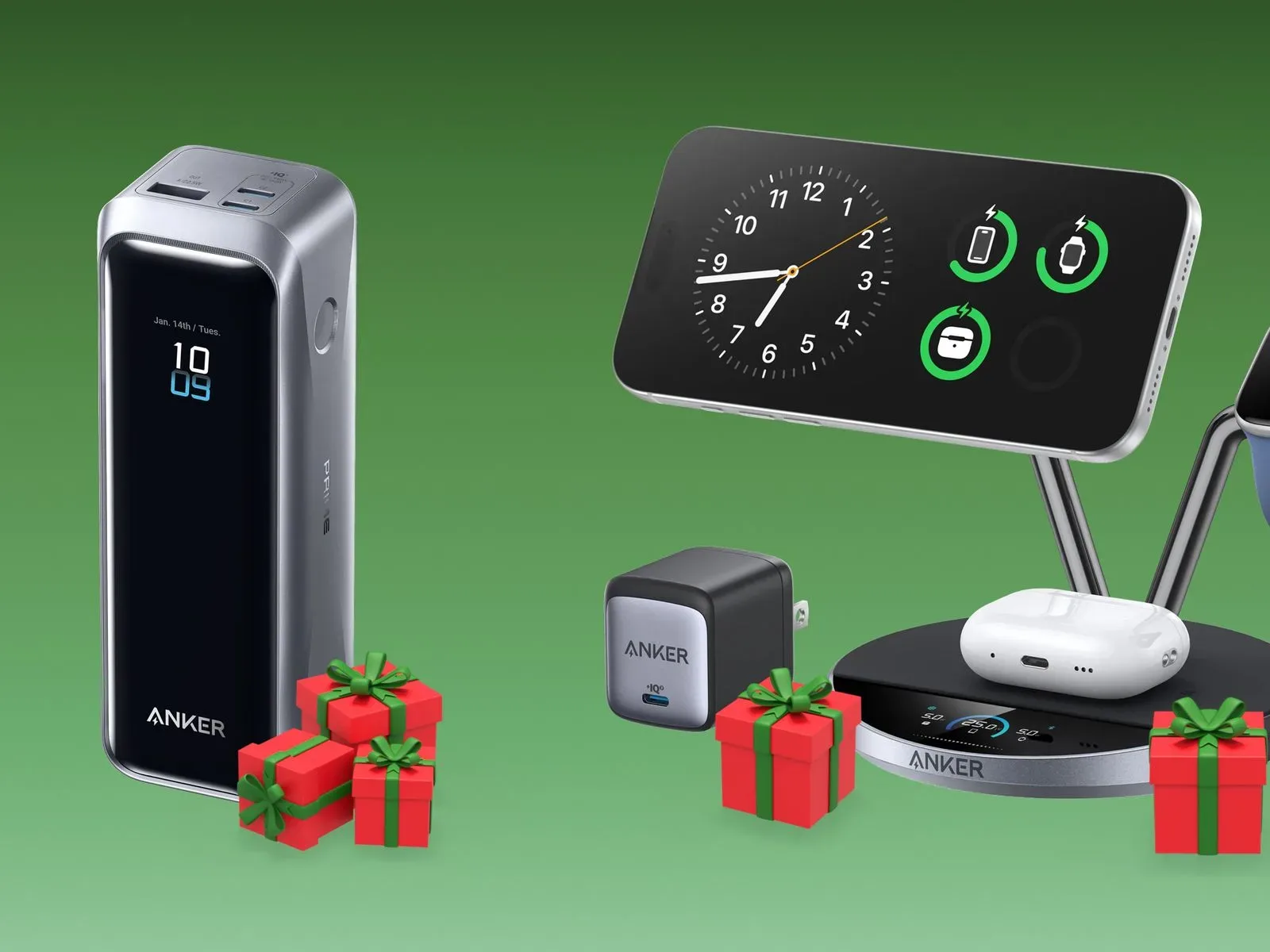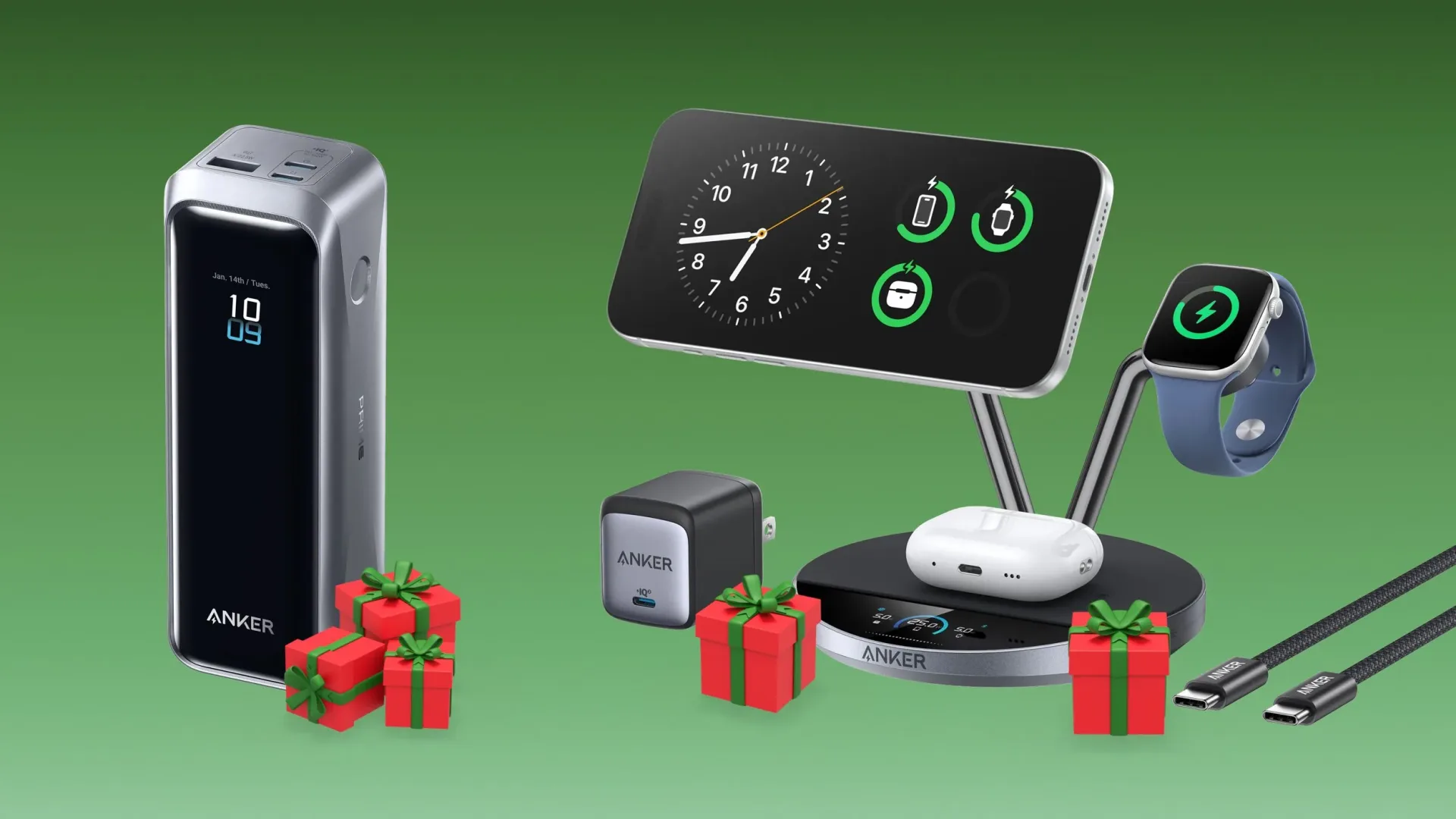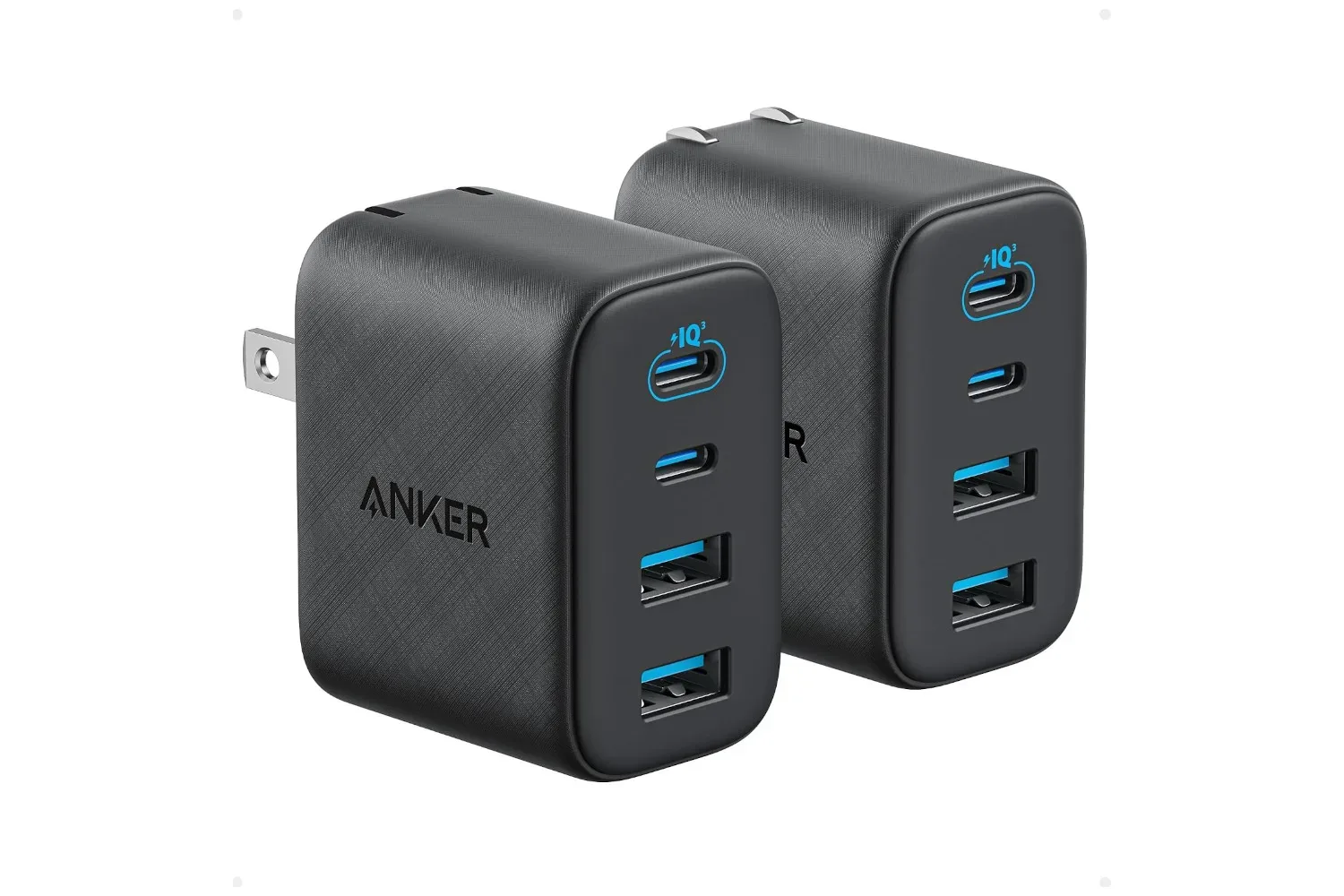
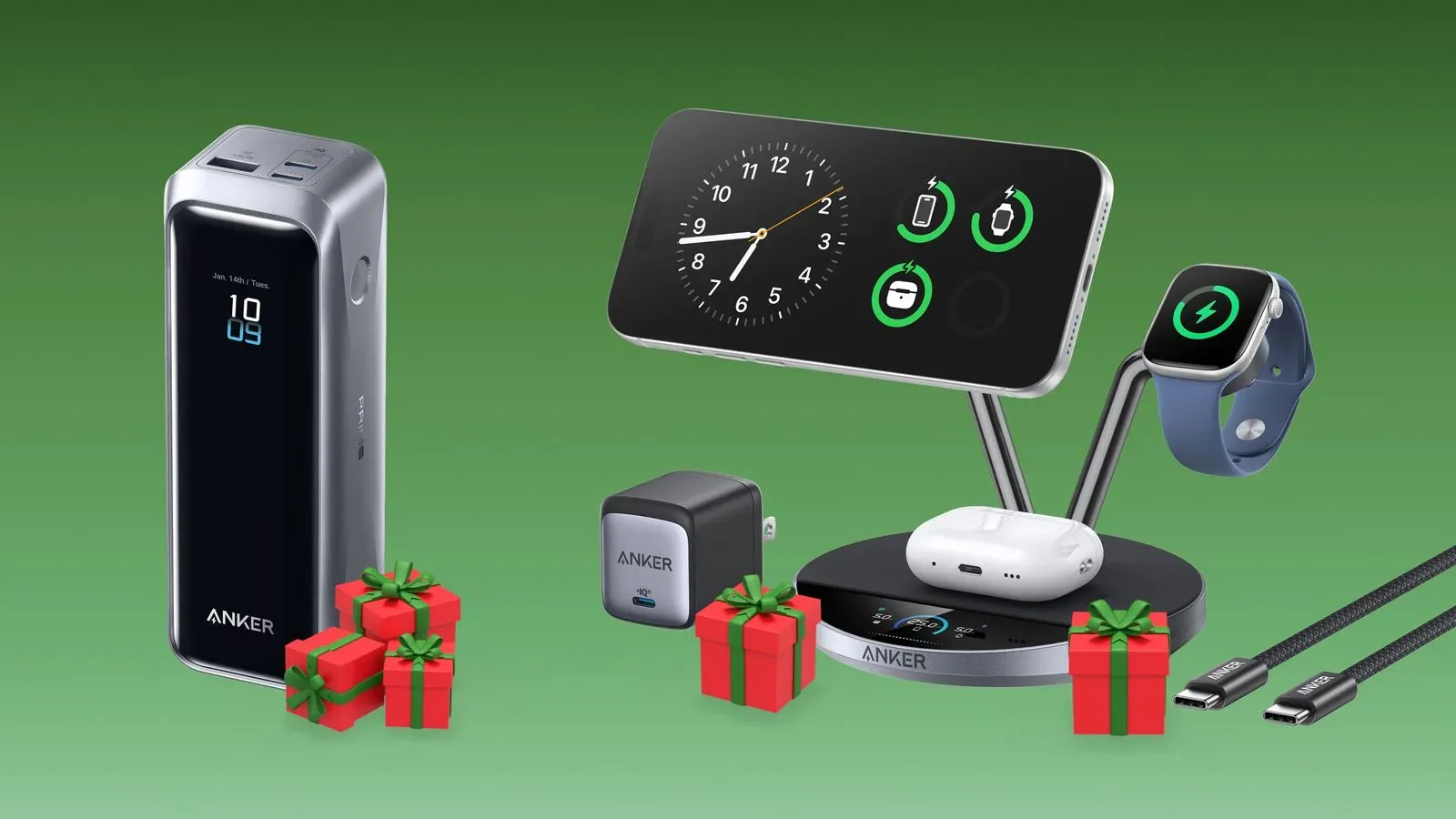
A gaming setup can have an impressively expensive monitor, a powerful console or PC, and enough controllers to start a small local tournament—but it can still be defeated by the far less glamorous problem of charging. Anker’s early Black Friday promotion is aimed squarely at that everyday hardware layer, with price cuts on portable batteries, multi-device wireless chargers, high-output wall chargers and desktop docking stations.
The sale is scheduled to run through November 18. After that date, Anker is expected to move into a separate Black Friday week sale. The promotion covers a broad group of accessories, with advertised reductions of up to 46% across chargers, power banks, MagSafe-compatible accessories, cables, power strips and docks. The individual listed products below give a clearer picture of where the currently stated savings sit.
The deals most relevant to a desk or travel setup
The biggest percentage reduction among the named items is on the Anker 14-in-1 Prime Charging Docking Station, listed at $179.99, down from $269.99. That is a $90 reduction, or roughly 33%. A docking station is the device that consolidates connections and charging around a desk; the practical appeal is reducing cable clutter and limiting the number of separate adapters competing for outlets.
For gamers and creators who use a laptop as part of their regular setup, docks can be especially relevant because the desktop experience often needs more connections than the machine itself provides. Still, a product’s name and port count alone do not establish every technical detail. Shoppers should check the exact port layout, compatibility requirements and the needs of their own devices before treating a 14-in-1 model as an automatic replacement for their existing hardware.
- Anker 14-in-1 Prime Charging Docking Station: $179.99, from $269.99
- Anker Prime Charging Docking Station: $192.48, from $299.98
- Anker Prime TB5 Docking Station: $349.99, from $399.99
- Anker Prime Charger (160W, 3 Ports, Smart Display): $115.99, from $149.99
The other Prime Charging Docking Station is reduced by $107.50 from its stated $299.98 price, while the Prime TB5 Docking Station is $50 off. The latter carries the highest sale price among the listed items at $349.99, so the smaller percentage discount is still a meaningful dollar saving—but only if its particular capabilities are needed. A lower sale sticker is not, by itself, a reason to buy a higher-tier dock.
The 160W, three-port Prime Charger with a smart display is listed at $115.99, a $34 reduction. Wattage, usually written as W, is a measure of power. It is useful as a headline capability figure, but it should not be treated as a promise that every connected device will receive the maximum figure at once. With multi-port charging accessories, prospective buyers should verify how output is allocated when several devices are plugged in.
Portable power discounts
Portable batteries are the more immediately understandable half of the sale: they are external battery packs intended to recharge compatible devices away from a wall outlet. That can matter for handheld gaming, travel, long events, or simply keeping a phone alive when it is being used for chat, authentication and maps alongside a game session.
- Anker 622 MagGo Battery: $25.98, from $47.99
- Anker Prime Power Bank (20K, 220W): $129.99, from $179.99
- Anker Prime Power Bank (20K, 220W) with Charging Base: $199.99, from $279.99
- Anker Prime Power Bank (26K, 300W) with Charging Base: $279.99, from $329.99
The Anker 622 MagGo Battery has the steepest named cut in this part of the lineup, dropping $22.01 to $25.98 from $47.99. The Prime 20K, 220W power bank is $50 off, and the version sold with a charging base is $80 off. The 26K, 300W package with a charging base is reduced by $50.
There are two technical labels worth reading carefully here. First, 20K and 26K are product-name capacity designations; they indicate that the two Prime models are positioned at different capacity tiers. Second, 220W and 300W describe power ratings. Capacity and power are not interchangeable: capacity is about the battery reserve available, while wattage concerns the rate of power delivery. The right choice therefore depends on what someone actually needs to charge and how they expect to use the pack, rather than which number happens to be largest.
The charging-base bundles also deserve a simple comparison against buying only the pack. The 20K, 220W unit is listed at $129.99 by itself and $199.99 with its base. That is a $70 difference in the sale listings. For the 26K, 300W option, the named deal is the charging-base bundle at $279.99. Anyone considering either package should decide whether the included base serves a regular desk routine, rather than letting the bundle wording make that decision for them.
Three-device wireless charging stations
Anker has also reduced three foldable wireless charging products. These are designed around the convenience of placing compatible devices on charging surfaces rather than connecting each one individually by cable. The appeal is easy to understand for a bedside table or travel bag, but the key word remains compatible: wireless charging requires both the charger and the device to support the relevant charging approach.
- Anker MagGo Wireless Charging Station (Foldable 3-in-1): $79.99, from $109.99
- Anker Prime Wireless Charging Station (Foldable 3-in-1): $119.99, from $149.99
- Anker 3-in-1 Prime Wireless Charging Station: $169.99, from $229.99
The MagGo foldable 3-in-1 station is down $30, putting it at $79.99. The foldable Prime model is also $30 off at $119.99, while the 3-in-1 Prime Wireless Charging Station is reduced by $60 to $169.99. “3-in-1” describes the intended multi-device role, but it does not eliminate the need to confirm whether a particular phone, watch, earbuds case or accessory can use the charger as expected.
MagSafe-compatible accessories are included in the wider event. In practical terms, compatibility language signals that the accessory is meant to work with the relevant magnetic charging ecosystem; it should not be read as a universal guarantee for every device someone might own. Checking the actual product listing and a device’s charging support remains the sensible pre-check, especially where a charging station is meant to replace several cables.
The blind-box question: guaranteed discount, uncertain item
The most unusual feature of this promotion is the return of Anker’s blind boxes. A blind box is a mystery purchase: buyers know the possible pool of products, but not the exact item they will receive. There are four blind boxes in the event. The entry-level Silver Blind Box starts at $39.99 and contains one randomly selected accessory from a selection of four, with a stated potential value of up to $129.99.
There is an important distinction between a discount and a guaranteed preferred outcome. Each blind box is priced below the cheapest accessory that could be received, so the promotion says every box provides some savings against buying its possible contents individually. That establishes a minimum value proposition. It does not establish that every buyer will receive the particular accessory they most want.
That makes the blind-box option a better fit for someone who can use any of the disclosed possible accessories than for a buyer trying to solve one precise charging or connectivity problem. If a household specifically needs a power bank, dock or charger with a particular connection or output profile, selecting that product directly is the more predictable route. The mystery-box format adds the chance of receiving a higher-value item, but chance is part of the transaction rather than an extra feature guaranteed to every purchaser.
How to assess a sale without letting the percentage do all the work
Seasonal accessory sales tend to throw a lot of numbers at shoppers: original price, sale price, peak wattage, port count, capacity tier and bundle language. The useful way through is to begin with the problem being solved. Is the goal portable backup power? A tidier three-device charging spot? More desktop connections? Or simply replacing a basic wall charger?
- Identify the device need first. A power bank, wall charger, wireless station and dock address different jobs, even when they all involve electricity.
- Check the exact configuration. “With Charging Base” means a different package from the standalone power bank. The resulting price gap may or may not make sense for a given setup.
- Read compatibility details before purchase. The sale names establish broad categories and some ratings, not every technical limitation or supported-device scenario.
- Use the listed original price as a comparison point, not a command. A 30% reduction is valuable only when the product itself is useful at the sale price.
- Treat mystery boxes as optional entertainment, not precision shopping. The guaranteed discount is real within the stated terms, but the selection remains random.
The timing may also matter. This early event ends November 18 before the company transitions to its official Black Friday week promotion. That does not tell shoppers whether any given product will be cheaper, more expensive or unavailable afterward; it simply means the currently listed pricing is tied to a defined window. Anyone whose purchase is time-sensitive can compare the current numbers with their actual requirements instead of assuming a later phase will automatically be better.
For players building out a handheld, laptop or multi-device gaming routine, the sale’s practical value is in the spread of categories rather than one universal bargain. The $25.98 MagGo Battery, $79.99 foldable MagGo 3-in-1 station and $179.99 14-in-1 Prime dock are very different purchases for very different situations. The strongest deal is the one that removes an existing charging or connectivity annoyance without creating a fresh pile of unused ports, cables or mystery accessories.
For another look at how hardware pricing pressures can shape the broader game ecosystem, see our coverage of Nintendo’s effort to hold Switch 2 pricing amid rising component costs.