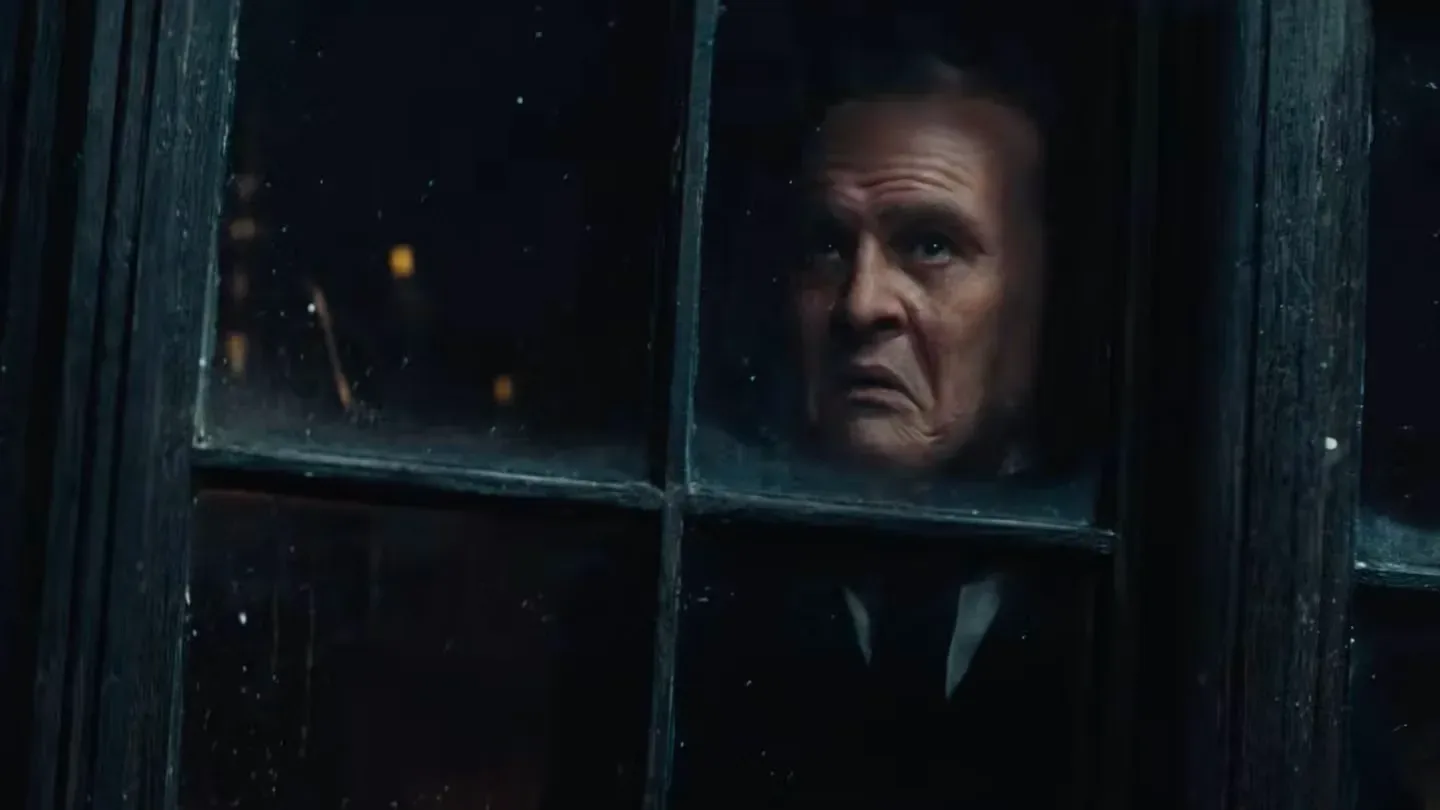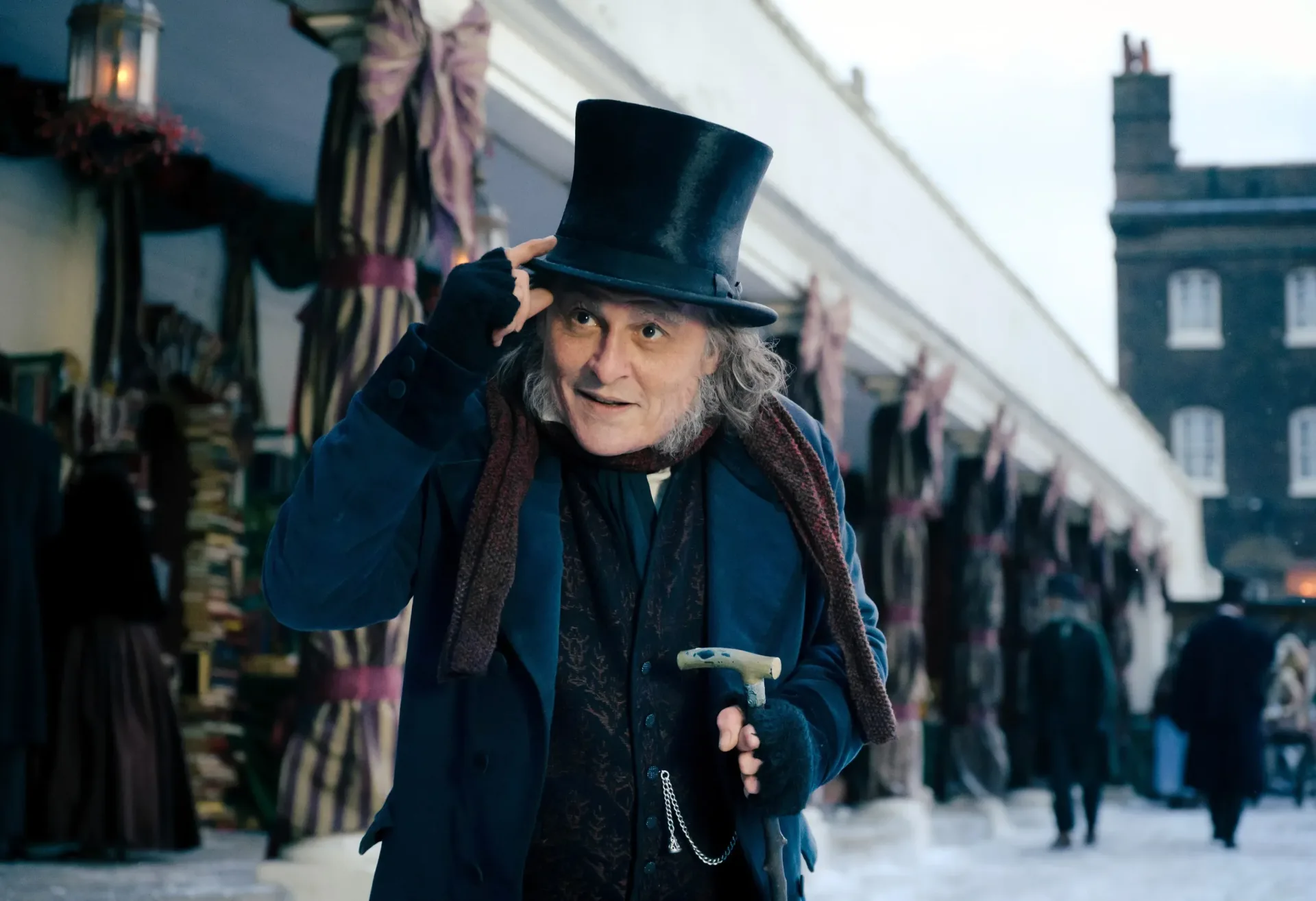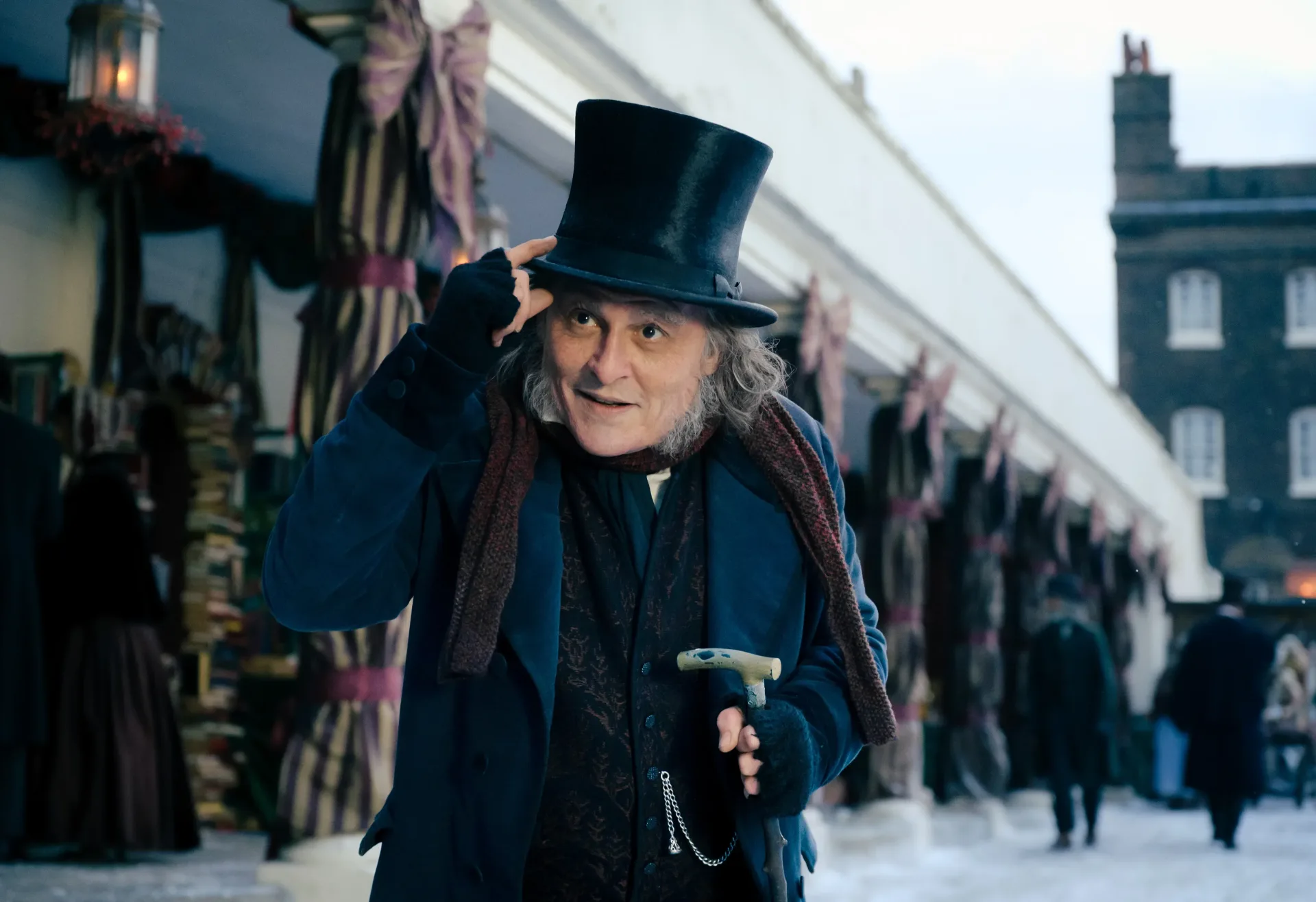

 Johnny DeppEbenezer Scrooge
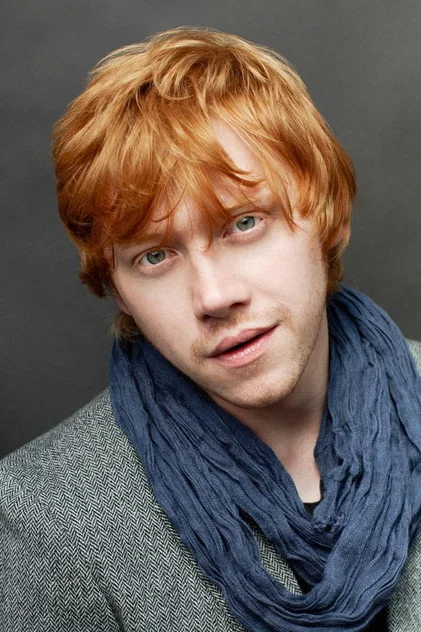 Rupert GrintBob Cratchit
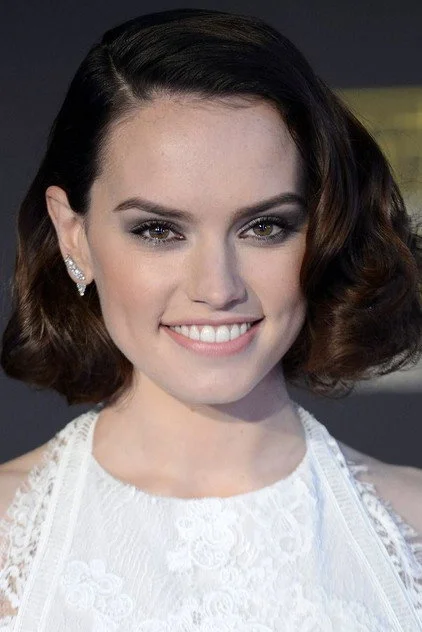 Daisy RidleyClara
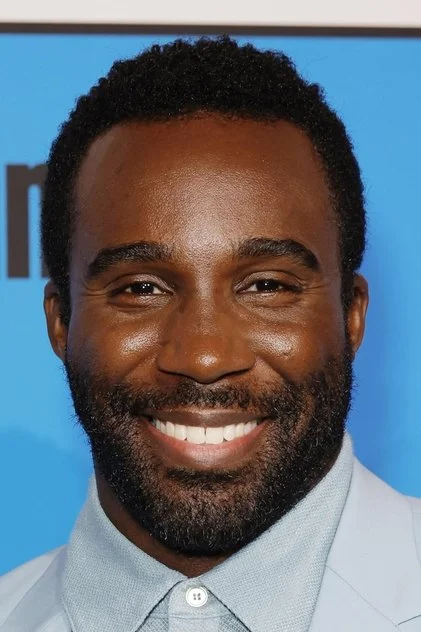 Tramell TillmanGhost of Christmas Present
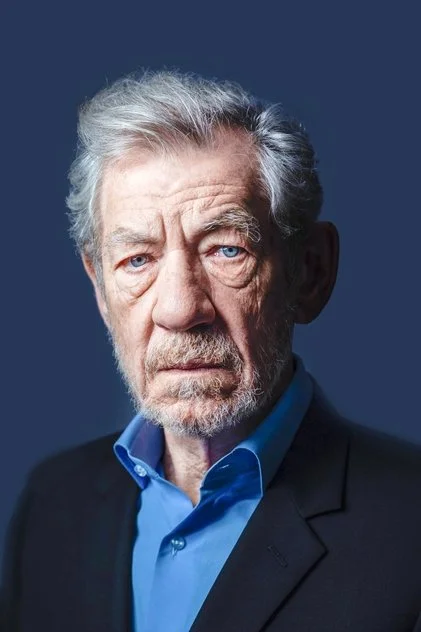 Ian McKellenJacob Marley
 Andrea RiseboroughGhost of Christmas Past
 Sam ClaflinFred
 Arthur ContiYoung Ebenezer
 Charlie MurphyEmily Cratchit
 Robert StrangeGhost of Christmas Future
 Ian MidlaneMr. Fezziwig
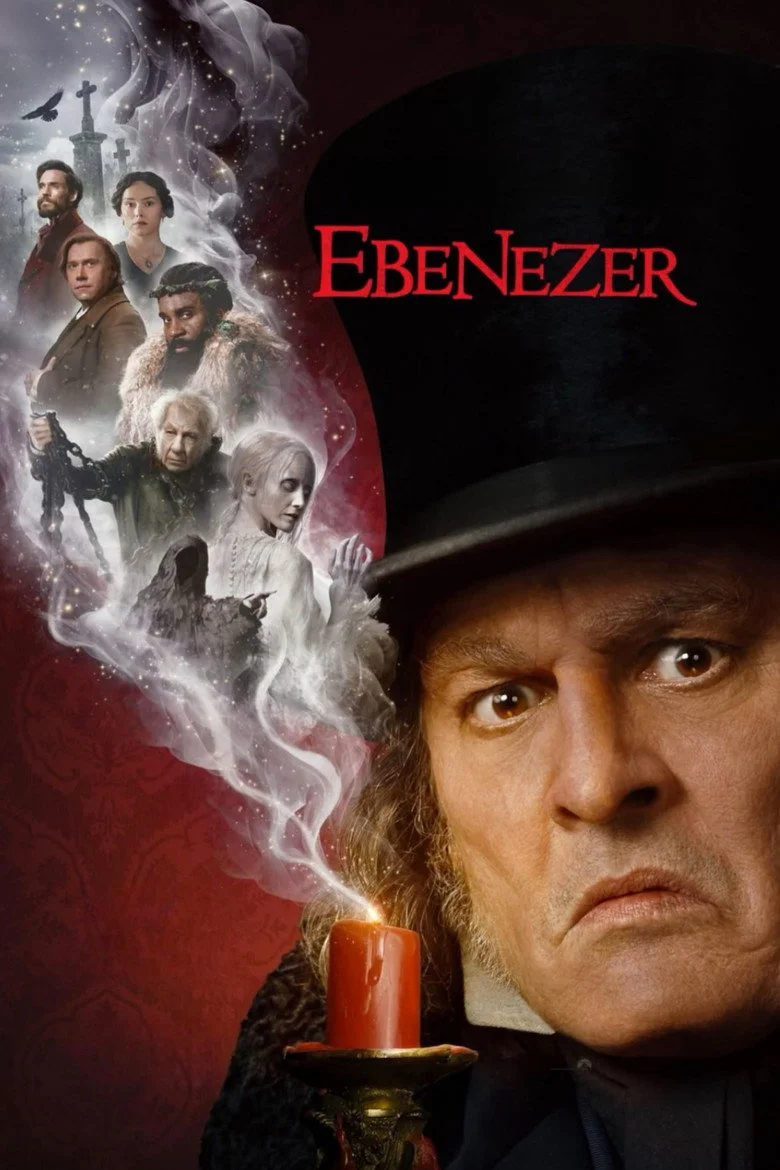
Ebenezer approaches A Christmas Carol with more reverence than reinvention. Its marketing may imply a radical pre-Scrooge origin story, but the film is instead a direct, book-faithful journey through Ebenezer Scrooge’s reckoning. That clarity is not a flaw in itself: Dickens’ structure remains sturdy, and the film finds its most distinctive flavour in the macabre possibilities of its visitors from beyond the grave. Yet faithfulness also means carrying a familiar shape, and this adaptation struggles to make that shape move with enough momentum or arrive at its redemptive payoff with the necessary lift.
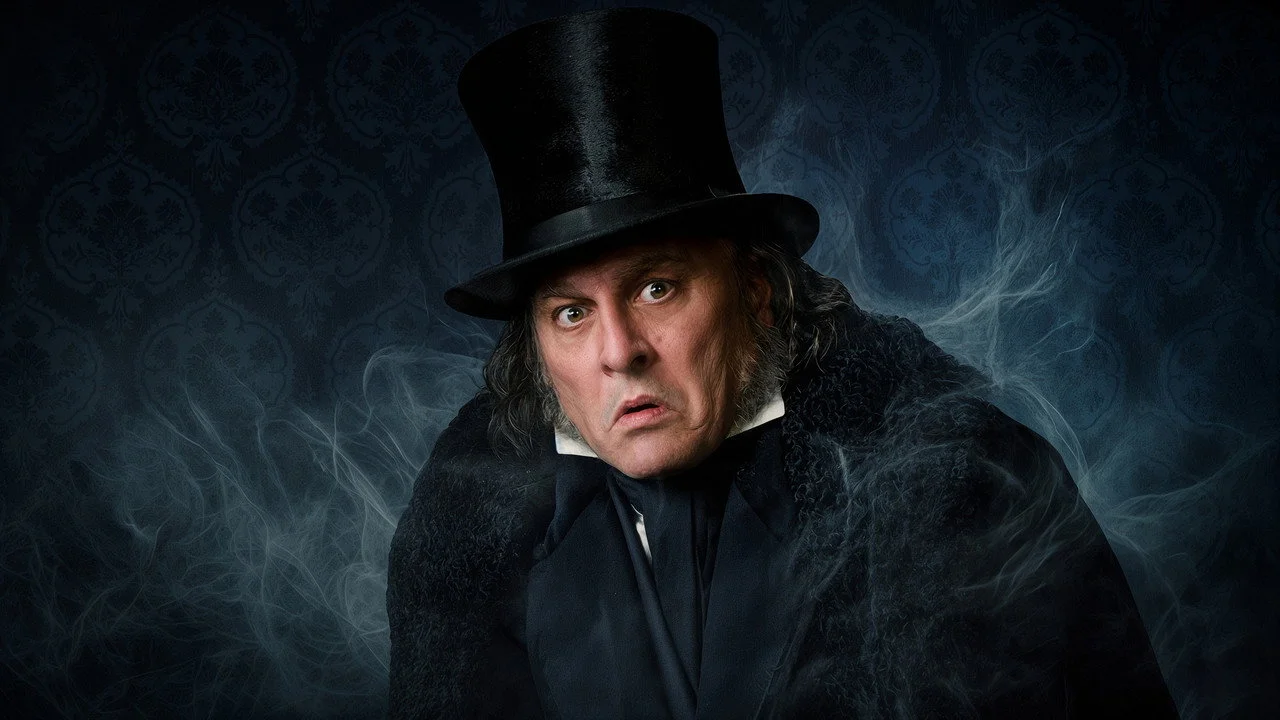
Johnny Depp plays Scrooge, the miser confronted by the ghost of his dead business partner Jacob Marley and the spirits of Christmas Past, Present and Future. The central dramatic purpose is unmistakable: the apparitions mean to redirect Scrooge before his cruelty condemns him. The film does introduce one meaningful wrinkle before the familiar night of hauntings begins. An opening scene places Scrooge and Marley together at work, reveling in a relationship that brings out the worst in both men. Crucially, the scene frames their bond as affectionate as well as corrupting, with the older, nastier Marley leading Scrooge further astray.
That choice gives the story a slightly sharper view of Scrooge’s moral history. Rather than treating miserliness as an abstract trait that simply exists at the opening bell, it suggests a social dimension to his descent. The affection between the two men makes their partnership more than a simple villainous alliance, while Marley’s influence offers Scrooge a concrete model for the person he has become. It does not turn the film into the promised origin-story overhaul, but it adds texture to a tale whose destination is deliberately well known.
Ghost story first, Christmas story second
Director Ti West brings a horror sensibility to the supernatural material, and that is where Ebenezer appears most alive. The ghosts are not handled as politely decorative guides. They are given distinct qualities and troubling physical or emotional details: Marley’s visit is followed by a vision of spectres filling the air as they rise from the earth; Christmas Past carries a corpse-like suggestion; and Christmas Present is defined not just by appetite for life, but by the pain of knowing that his own time to celebrate is brief, with anger simmering beneath his vitality.
The film also embraces one of Dickens’ strangest images in Ignorance and Want. Rather than remaining hidden in the folds of Christmas Present’s robes, the ghostly children emerge from his ribcage. It is a grisly, emphatic visual idea, and one that points to what this version understands especially well: the story’s seasonal warmth has always existed beside poverty, mortality, damnation and spiritual terror. The production’s scares are described as beautifully staged, suggesting that West can make the familiar procession feel tactile and ominous even without changing its basic route.
Not every apparition leaves the same mark. Christmas Future can barely raise a shudder, a limitation because the final spirit traditionally carries an enormous share of the story’s dread and moral pressure. The issue is specifically one of fright rather than an assertion that the character is less effective in every respect; still, a vision meant to confront Scrooge with the starkest consequences of his life benefits from a stronger jolt. The film’s horror design is therefore a substantial attraction, but not a uniformly escalating one.
Depp finds the character’s hard edges
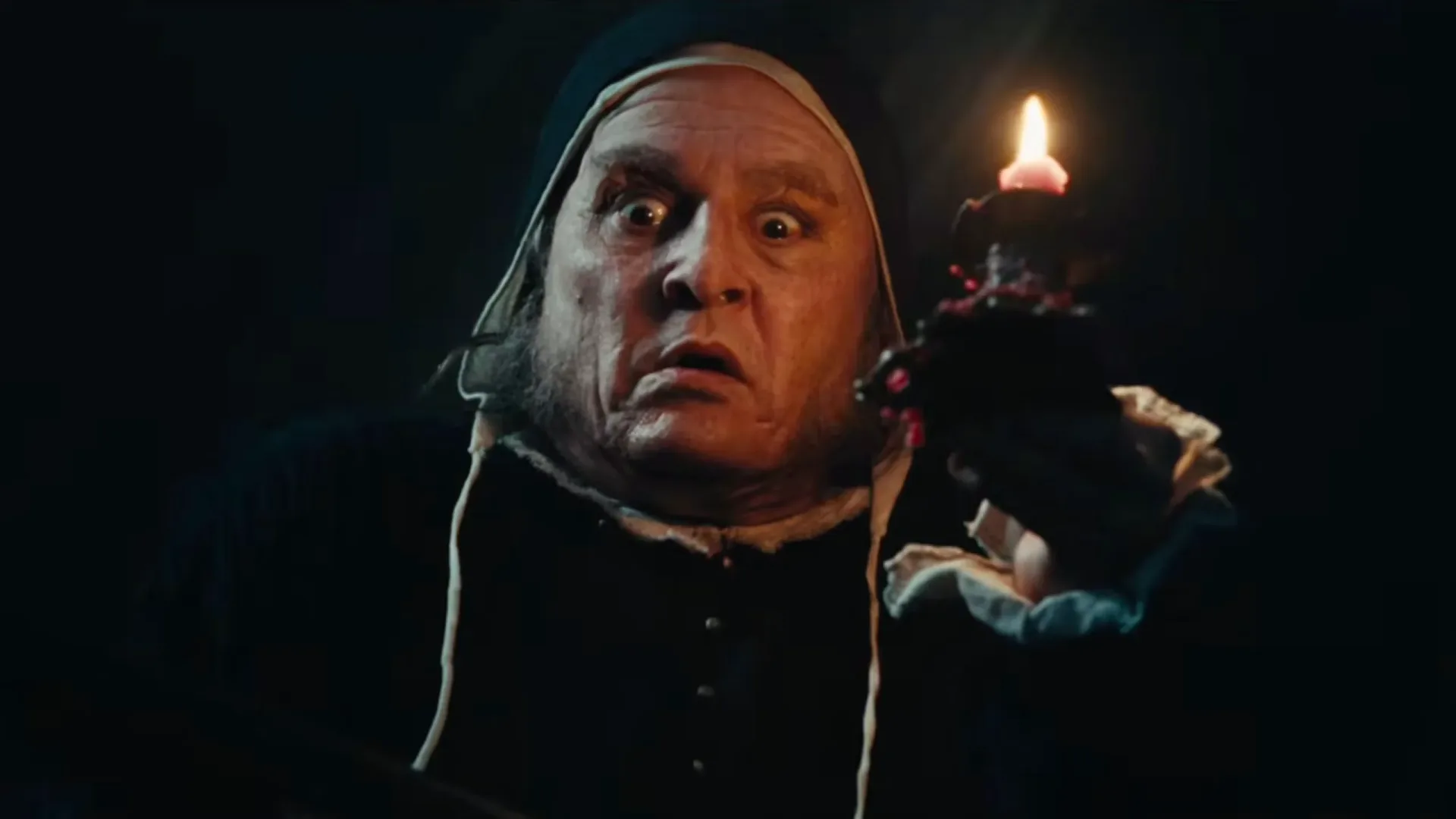
For much of the running time, Depp gives the film a secure centre. His performance leans into the prosthetics and into Scrooge’s theatrical unpleasantness: sneering, grumbling and delivering the character’s famous contempt with gusto. That broadness suits a role built from outsized selfishness and verbal sting. There is no indication here that the film completely reimagines Scrooge as an understated naturalist figure; its strength lies in allowing Depp to inhabit the old-fashioned severity of the part rather than apologising for it.
The supporting human warmth comes from Sam Claflin and Daisy Ridley as Scrooge’s nephew and the nephew’s wife. Their presence matters because the story requires an alternative to Scrooge’s isolation: a household and family connection that embody the generosity he has rejected. The warmth attributed to their portrayals makes them a useful emotional counterweight to the film’s spectral chill and to Depp’s deliberately abrasive opening mode. In an adaptation balancing frights, family reunions and moral transformation, that contrast is one of its more persuasive elements.
Still, solid individual moments do not fully solve the larger rhythm. The film is slow, at times ponderous, before abruptly hurrying toward its finale. A measured pace can serve Dickens when it allows each visitation to develop its own mood and ethical challenge. Here, however, the description of the pacing suggests that patience becomes drag, while the ending does not receive enough room to earn the emotional release it seeks. The result is an awkward contrast: carefully staged scares and reunions along the way, then a final movement that feels too hurried to turn accumulated lessons into a true celebratory surge.
A conventional adaptation with a darker pulse
That uneven pacing defines the recommendation. Ebenezer is not positioned as a bold structural reinvention of Dickens; viewers looking for the purportedly radical premise advertised by its tagline may instead find a conventional adaptation. But conventional need not mean careless. Its fidelity to the source, its attention to Dickens’ frightening imagery and its effective casting at the centre and around the family scenes give it a legitimate identity. The movie’s best interpretation of the material is not that Christmas has displaced horror, but that horror is part of what makes redemption urgent.
The limitation is that the film does not consistently convert that insight into a smoothly satisfying whole. The ghost scenes promise imaginative darkness, Depp supplies a committed Scrooge, and the nephew’s household brings needed tenderness. Yet the ponderous middle stretch and rushed conclusion leave the transformation without all the joy a Christmas miracle needs. This is a worthwhile option for viewers open to a traditional Christmas Carol told with grisly supernatural accents, provided they can accept a deliberately familiar framework and an uneven journey to the finish.