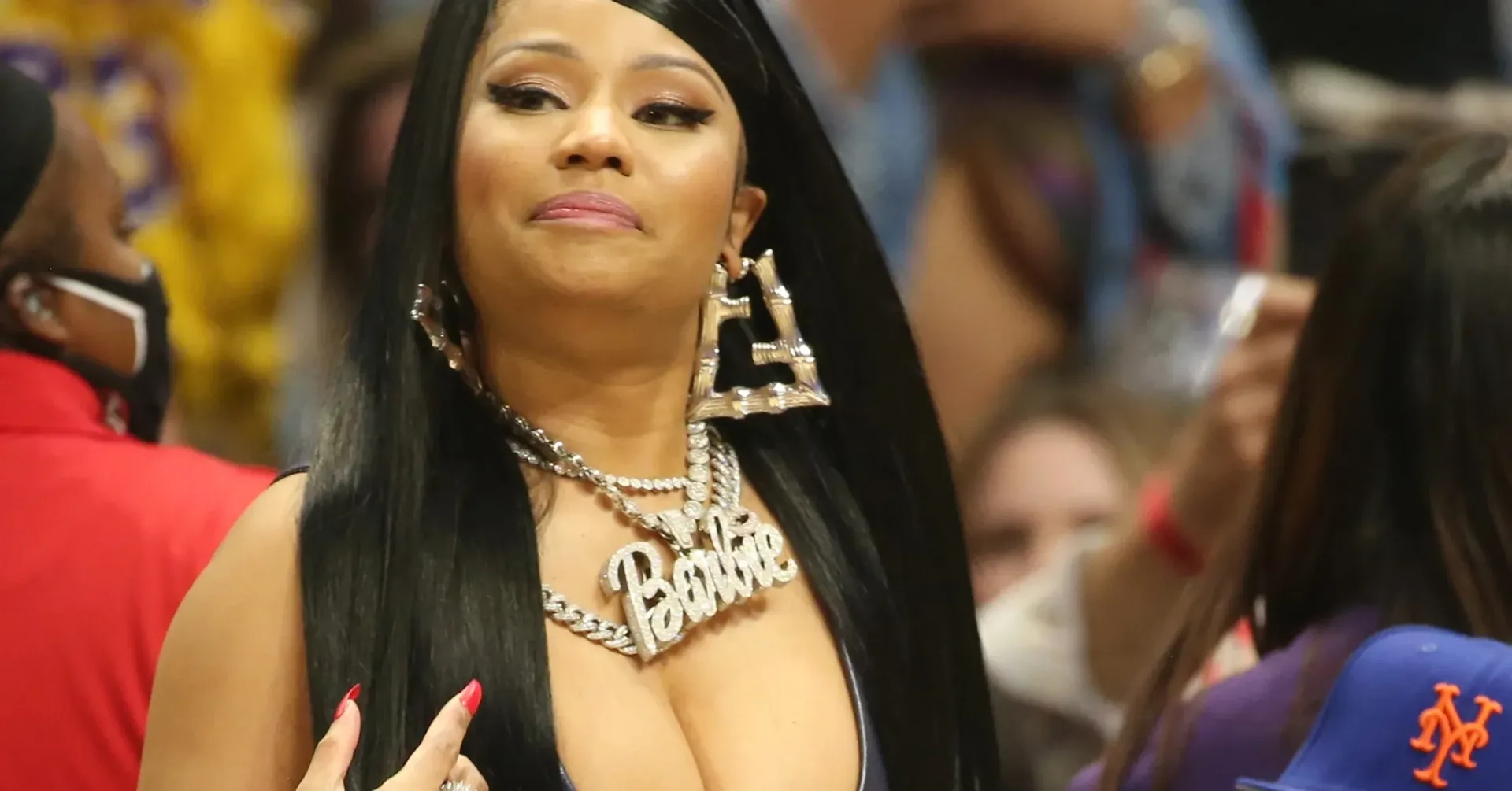
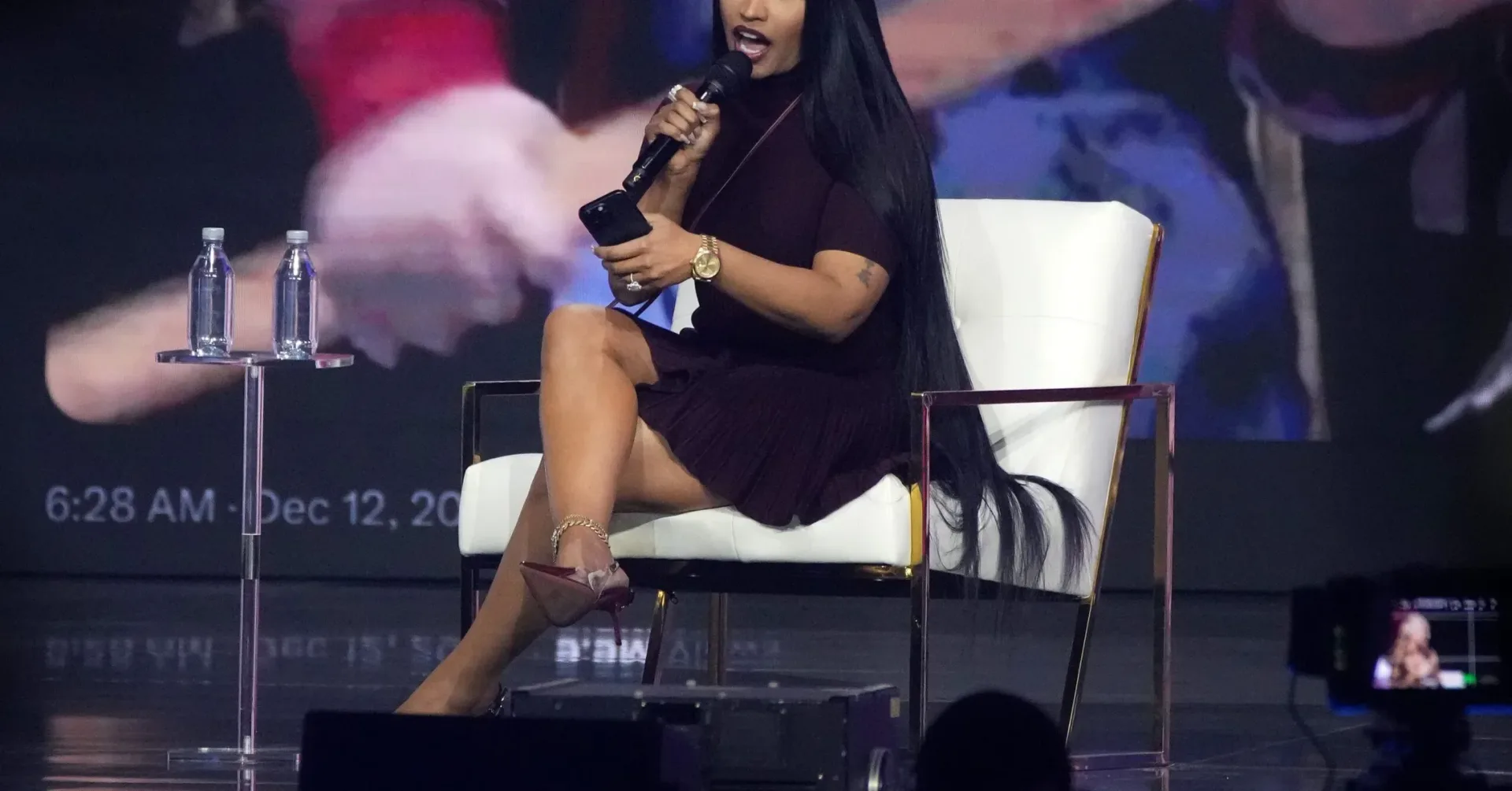
Nicki Minaj has responded to reported U.S. midterm-election gains for Democrats with a characteristically high-volume social-media post that rejects the premise that the result should be read as a personal or cultural defeat. Rather than engaging the reported seat totals point by point, Minaj built her message around declarations of persistence: Donald Trump remains president, her supporters remain loyal, her faith remains intact, and the online spaces where the argument is taking place are still very much open for business.
The post arrived after reports that Democrats had retaken the House and Senate, with the Senate tally described as moving from 47 seats to 54 and potentially higher depending on races in Alaska and Mississippi. House numbers were also described as rising from 214 seats to more than 250. Those figures, if finalized as described, would represent a substantial shift in congressional power. Minaj’s response, however, was not an election analysis. It was an exercise in message control: take the terms most likely to irritate opponents, repeat them, and make the refusal to concede emotional ground part of the performance.
A post designed around defiance, not concession
Minaj’s list repeatedly uses “still” as its central rhetorical tool. “Trump is STILL your PRESIDENT,” it begins, before pivoting to “The QUEEN is STILL your OBSESSION” and “Jesus is STILL LORD.” The structure matters. It does not dispute every reported result, nor does it explain why voters made their choices. Instead, it puts forward a different hierarchy of importance: presidency, celebrity, religious belief and personal loyalty are treated as more durable than a midterm result.
That is why the post reads less like a conventional political statement than an extension of the combative persona Minaj has long used online. The text moves between politics, fandom and provocation without asking readers to keep those categories separate. A congratulatory line for winners, including references to Rep. Luna and Byron Donalds, sits beside a compliment for the Barbz, Minaj’s fan community. A comment about campaign spending is followed by “I don’t vote, I VETO.” The apparent goal is not a tidy argument. It is a rallying cry for people who interpret public criticism as proof that their side still commands attention.
That approach also explains the post’s emphasis on being watched. Saying that someone is “still your obsession” reframes political or cultural opposition as involuntary fascination. It is a familiar celebrity-defense mechanism: criticism becomes evidence of relevance. In a political setting, though, that move can blur an important distinction. Attention is not the same thing as agreement, and a social-media trend is not the same thing as an electoral mandate.
What the reported midterm shift would mean
A midterm election is a congressional election held during a president’s term rather than alongside a presidential election. Control of the House and Senate matters because each chamber has its own role in advancing, changing or blocking federal legislation. The Senate also handles key confirmation responsibilities. So a reported Democratic takeover of both chambers is consequential even if the presidency does not change hands.
Minaj’s first line is technically aimed at that separation: congressional elections do not by themselves remove a sitting president. But the larger political question is not whether the office changes immediately. It is whether the results affect the president’s ability to set the agenda and whether voters are registering dissatisfaction with the party in power. A shift in both chambers, especially by the margins described in the reports, would plainly alter the governing environment.
That is the tension at the center of Minaj’s post. She is correct to distinguish the presidency from congressional control, but her response largely sidesteps the practical importance of Congress. Her framing treats the result as a fight over status. The political system treats it as a redistribution of institutional power.
Related coverage includes Nicki Minaj Responds to Midterm Results With Defiant Social Media Post.
Celebrity politics turns every reaction into a fandom test
Minaj’s recent support for Trump had reportedly intensified before the election, including an appearance at a polling location in New Hampshire. That visibility ensures that her response draws attention beyond the usual cycle of celebrity commentary. When an artist publicly attaches themselves to a political movement, fans and critics are likely to assess not only the candidate or party, but the artist’s judgment, credibility and willingness to own the result.
The post makes clear that Minaj is not interested in separating her star identity from that political stance. The line about the Barbz is more than a throwaway compliment: it places the fanbase inside the same emotional frame as the political argument. Supporters are invited to see criticism of Minaj and rejection of her preferred political side as connected pressures, while opponents are invited to react. Both responses keep the celebrity at the center of the conversation.
There is a practical downside to that strategy. Fans are not a monolith, and political endorsements can make a community built around music feel like a loyalty test. A listener can value an artist’s work while disagreeing with their political choices. Likewise, a political supporter does not automatically become part of an artist’s fandom. Social platforms encourage those distinctions to collapse into teams, but they remain different relationships.
Why Elon Musk and Grok appear in the same message
The final section of Minaj’s post broadens the scope again, this time to Elon Musk and Grok. She notes that people are posting on Musk’s platform and praises Grok as a product that has changed her life for the better. That endorsement is personal and should be understood as such: the post offers no details about which features she uses or how the tool produced that effect.
Grok is an AI chatbot, meaning software designed to generate conversational responses to prompts. Public figures mentioning AI tools can quickly turn into marketing moments because the recommendation travels through a pre-existing audience. But a celebrity’s enthusiasm is not a substitute for checking an AI system’s output. Chatbots can produce fluent text while being wrong, incomplete or overly confident. That is particularly important around elections, public policy and fast-moving news, where a polished answer may still require verification against reliable primary information.
The AI reference also fits the broader design of Minaj’s post. Politics, platform power, wealth, fan identity and technology are presented as one continuous argument about influence. For readers interested in the wider gaming and tech implications of AI-centered platforms, the debate over AI’s expanding role in creative technology shows why endorsements and claims about these tools deserve closer attention than a viral post usually allows.
Analysis: the message’s real target is the mood after the vote
Minaj’s post is best understood as an attempt to deny opponents the emotional payoff of seeing her retreat. Its all-caps emphasis, repeated “still,” and sign-off telling people to “stay mad” are designed to communicate invulnerability. The message does not need to persuade everyone; it needs to assure existing allies that a setback does not require silence or self-criticism.
That can be an effective engagement tactic. Defiance travels quickly online because it gives supporters a compact slogan and gives critics material to challenge. Yet it does little to clarify the reported election outcome, the policy stakes of congressional control, or the reasons voters may have acted as they did. It converts an institutional event into a cultural confrontation.
For Minaj, the immediate effect is likely to be another surge of attention around a political identity she has chosen to make public. For the broader conversation, it is a reminder that celebrity posts can shape the tone of a political moment without adding much factual understanding to it. The loudest response is not necessarily the most informative one—and in the aftermath of an election, those are two very different things.