
Gran Turismo (PlayStation) — Complete Strategy Guide (North American v1.1)
A practical start-to-finish strategy guide for the original Gran Turismo on PlayStation in the requested North American edition. Earn the B, A and International A licenses, build a reliable garage, complete every other GT League and Special Event championship as the full Simulation route, then win the six-race Gran Turismo World Cup and verify the ending movie or credits and GT Hi-Fi unlock. All-gold licenses, alternate prize-car collection and Arcade completion remain optional extended goals.

Find a copy
Gran Turismo Sony PlayStation
We may earn a commission if you buy through these links, at no extra cost to you. As an Amazon Associate I earn from qualifying purchases.
Opens retailer search results. Check the model, edition, seller, availability and current price before buying.
Before you begin
This guide covers the original Gran Turismo for Sony PlayStation in the requested North American edition, not a remake, remaster or later Gran Turismo release.
The core route is to earn the B, A and International A licenses, buy and tune suitable cars, win the available GT League and Special Event championships in license order, then win the Gran Turismo World Cup in Simulation Mode.
The guide distinguishes required Simulation championship progression from optional all-gold licenses, alternate prize-car collection and Arcade completion. No single prize car is treated as a universal key to the ending.
Use the event panels in your copy to confirm license, drivetrain, country, model, stock-condition and modification restrictions before spending credits.
Set yourself up for the run
Use the requested original North American PlayStation edition and create a fresh Simulation Mode memory-card save.
Start with an affordable, versatile car and preserve enough credits for entry fees, tires, tuning and a backup plan. The game does not require modern repair-bill budgeting between races.
Earn the B license before entering the early GT League route, then obtain A and International A as later events require them.
Work through every available Simulation championship as it becomes legal, including the Special Event series needed for the guide’s complete route before the GT World Cup. Read each event panel before purchasing a car or applying major modifications.
Keep useful prize cars until you have checked unfinished drivetrain, country, model and stock-condition events, but do not assume one specific prize is universally mandatory.
Use Time Trial, Machine Test, license tests and low-risk races to practice tracks and car behavior.
Save after licenses, championship results, major purchases and prize-car awards.
Quick Start: First 60 Minutes
Begin in Simulation Mode with a PlayStation memory card inserted, create a save through the game’s HOME and LOAD&SAVE menus, and keep the opening 10,000 credits under control. Buy one affordable car whose drivetrain and performance fit the events you intend to enter, then pass the National B-License before racing in the GT League. The Sunday Cup is the first main championship and runs at Autumn Ring Mini, High Speed Ring, and Grand Valley East. Your first-hour goal is a saved career, a usable starter car, a completed B-License, and a clean start toward your first prize car.
Create and verify a Simulation Mode save
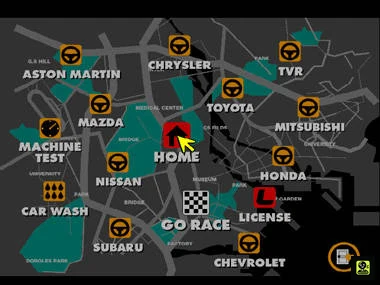
At the main menu, choose Simulation Mode. Insert a PlayStation memory card before saving. On the Simulation Mode map, move the cursor to HOME, press X, and select LOAD&SAVE. Choose SAVE and select the memory card slot. If the card has no Gran Turismo data, follow the on-screen prompt to create it, then confirm that the save completes before continuing.
The new career begins with 10,000 credits and no racing license. Save again after purchasing the car, after obtaining the B-License, and after completing a championship. Do not turn off the console while the save is being written. This game’s career data, garage, credits, licenses, and results are tied to the memory-card save.
- Simulation Mode selected
- PlayStation memory card inserted
- Save created through HOME and LOAD&SAVE
- Save successfully loaded or confirmed before making major progress
Choose a car without exhausting the opening budget
Visit the used-car dealerships and compare price, horsepower, drivetrain, and the car’s general behavior. A modest front-wheel-drive road car is a forgiving starting choice. The used Honda Civic 3-Door Si ’93 is a practical example when available; a used Honda Prelude is another commonly recommended option, although its higher price may leave less room for preparation. The Toyota MA70 Supra is also capable, but its rear-wheel-drive power makes it less forgiving for a newcomer and can consume most of the starting budget.
Do not choose solely by horsepower. Before buying, inspect the event restrictions in Go Race. The first B-License events include the Sunday Cup plus FF, FR, 4WD, and Lightweight special championships. An FF car qualifies for the FF Challenge but not the FR or 4WD events. A lightweight event requires a naturally light car; reducing the weight of a heavy car does not make it eligible. Keep enough credits for race entry costs and avoid buying upgrades until you know which event your car can enter.
- Drivetrain matches at least one intended event
- Price leaves a credit reserve
- Horsepower and vehicle restrictions checked in Go Race
- No expensive one-purpose car purchased
Pass the National B-License
From the map, enter the License Center and choose the National B-License. It contains eight tests. B-1 and B-2 are acceleration-and-stopping exercises; B-3 through B-5 test cornering at Deep Forest’s first hairpin; B-6 and B-7 test the S-curves at High Speed Ring; B-8 is the final High Speed Ring examination. The first seven tests can be attempted before the final test, but B-8 remains unavailable until all seven are passed.
For stopping tests, accelerate cleanly, lift before the braking marker, and brake in a straight line while aiming to stop inside the marked finish area. The heavier Mitsubishi GTO in B-2 needs earlier braking than the Mazda Demio in B-1. For the cornering tests, slow before turn-in, make one smooth steering input, and avoid running wide onto the grass. Manual transmission can help with the stopping exercises, but automatic transmission is acceptable if it produces more consistent results. You need passing results to obtain the license; gold on every test is optional and awards a bonus car rather than being required for early campaign progress.
- National B-License selected
- B-1 through B-7 passed
- B-8 unlocked and passed
- License result saved
Enter the first GT League championship
After earning the B-License, select Go Race and open the GT League. The Sunday Cup is the first main championship available. It has three two-lap races: Autumn Ring Mini, High Speed Ring, and Grand Valley East. There is no general drivetrain restriction, so use the best-qualifying car already in your garage rather than buying a new car immediately.
Read the event panel before entering and confirm the selected car is legal. In the races, brake early for the first hairpin at Autumn Ring Mini, keep the car stable through High Speed Ring’s sweeping bends, and prioritize clean exits onto the longer straights at Grand Valley East. Avoid wall contact and grass; a cautious podium is more useful than a failed attempt caused by an unnecessary overtake. If the car is not competitive, use a short Spot Race for practice and credits rather than spending the entire balance on power parts.
- Sunday Cup restrictions checked
- Autumn Ring Mini, High Speed Ring, and Grand Valley East completed
- Championship result recorded
- Credits remain for the next event or minor preparation
Handle the first prize and continue safely
Winning the Sunday Cup awards the Mazda Demio A-Spec. Save immediately and keep the car until you have checked the next events. It can serve as a backup, and selling a prize car should be a deliberate decision rather than an automatic one. If you receive multiple copies through repeated championships, sell only the surplus after confirming that no planned event requires that model or class.
The first-hour finish line is not maximum horsepower. You should have a working Simulation Mode save, one affordable primary car, a completed National B-License, and access to the Sunday Cup or another B-License event that matches your car. Continue by repeating a manageable event, building credits, and checking restrictions before every purchase.
- Mazda Demio A-Spec or another prize result reviewed
- Primary car remains usable
- Credit reserve preserved
- Next eligible B-License event identified
Before you move on
- A Gran Turismo Simulation Mode save loads successfully from the PlayStation memory card.
- The garage contains an affordable car that is legal for at least one B-License event.
- The National B-License has been obtained after passing all eight tests.
- The Sunday Cup or another eligible B-License event has been entered and completed.
- The result, credits, and any prize car have been saved.
References for this chapter
Game Modes and Campaign Structure
The original North American PlayStation release separates Arcade Mode from Simulation Mode. Arcade provides immediate races, time trials and its own progression, while Simulation is the campaign built around licenses, car purchases, modifications, credits, GT League championships and Special Events. The original license sequence is B, A and International A; it does not use Beginner, Amateur or Professional halls or an International B license. Event panels show the license and vehicle restrictions for each race, so check those panels before buying a car or installing parts. For the assigned full-route target, clear every GT League and Special Event championship before winning the six-race Gran Turismo World Cup. That Simulation victory unlocks the campaign ending sequence and Simulation GT Hi-Fi path. Arcade completion is separate and can independently unlock Arcade content, including its own ending and high-resolution or GT Hi-Fi-related features. Prize cars can cover restrictive events, but no single prize car is a universal key.
Start the campaign in Simulation Mode
Select Simulation Mode from the main menu when you want to advance the campaign. This is the mode that records your licenses, credits, garage, modifications, GT League results, Special Event results and prize cars. Begin with the B license, then buy an affordable eligible car and enter an available B-license event such as Sunday Cup or a suitable Special Event championship.
Progress is based on licenses and event results, not on a general experience level. When an event is locked, open its information panel and read every displayed condition. Check the license class, drivetrain, national restriction, stock or tuned status, lightweight requirement and any Racing Special Model restriction before spending credits. Do not assume that a particular manufacturer or prize car is required unless the event panel explicitly requires it.
- Use Simulation Mode for the campaign.
- Earn the B license before entering the opening B-license events.
- Read the complete event panel before buying a car or modifications.
Follow the original license and GT League structure
The original game uses B, A and International A licenses. Sunday Cup requires B. Clubman Cup and GT Cup require A. The Gran Turismo World Cup is a six-race championship associated with the International A stage; inspect its event panel to confirm the license and any qualifying GT League results required by the current save.
For the assigned complete-route objective, clear Sunday Cup, Clubman Cup and GT Cup, then clear the other GT League championships shown in the campaign before entering World Cup. This is a route-planning requirement for the guide, not a claim that every earlier championship is a universal hidden key. The game does not organize these events into Beginner, Amateur or Professional halls, so do not search for those menu names.
- Obtain B, A and International A licenses.
- Clear Sunday Cup, Clubman Cup and GT Cup.
- Clear the remaining GT League championships required by the full-route plan.
- Do not search for Beginner, Amateur, Professional or International B divisions.
Complete the Special Event championships
The first Special Event page contains FF Challenge, FR Challenge, 4WD Challenge and Light Weight Challenge. These are B-license championships with drivetrain or weight restrictions. The Japanese versus American, Japanese versus British and British versus American Sports Car Races, along with Mega Speed Race and Normal Car Race, use their own displayed A-license and vehicle conditions. Normal Car Race requires stock cars, so modifications that would make a car illegal must be avoided.
The later Special Event page contains Grand Valley 300, Tuned Car Race and the two SS Route 11 All Night Endurance championships, which require International A. Tuned Car Race and All Night Endurance II have restrictions involving Racing Special Models; read the panel before selecting a high-performance prize car. For the assigned full Simulation route, clear every Special Event, including both International A endurance events, before World Cup. This complete-route order should not be confused with a universal claim that every Special Event is a direct World Cup access gate.
- Match FF, FR, 4WD and lightweight restrictions before entry.
- Check national restrictions in each sports-car event.
- Use an unmodified car for Normal Car Race.
- Check Racing Special Model restrictions before Tuned Car Race and All Night Endurance II.
- Clear every Special Event for the assigned full-route goal.
Use Arcade Mode for practice and separate progression
Arcade Mode is the quick-play side of the original game. Use it for immediate races, time trials and circuit practice without spending Simulation credits or risking a championship result. It has its own car, course, class and difficulty progression. Arcade victories do not award Simulation credits, licenses, GT League results, Special Event results or Simulation prize cars.
Arcade completion is tracked independently. Depending on the goal being pursued, Arcade progression can unlock its own ending movie and high-resolution or GT Hi-Fi-related content after the required Arcade track and class goals are cleared. These rewards are not substitutes for Simulation completion, and a Simulation championship result does not satisfy an Arcade requirement. Keep a separate checklist for Arcade progress rather than counting practice races toward the campaign.
Winning the Gran Turismo World Cup in Simulation Mode unlocks the Simulation campaign's ending sequence and opens the Simulation GT Hi-Fi path in the Special Event area. This does not automatically complete Arcade Mode. Conversely, completing Arcade objectives does not advance the Simulation garage, licenses or championship record.
- Use Arcade for risk-free practice and time trials.
- Run official campaign races in Simulation Mode.
- Track Arcade class, track and difficulty goals separately.
- Do not count Arcade victories toward Simulation licenses, credits or championships.
- After winning World Cup, verify the Simulation ending sequence and GT Hi-Fi option.
- If pursuing broader completion, separately verify Arcade's ending and its own high-resolution or GT Hi-Fi-related unlocks.
Preserve useful prize cars
Championship victories can provide credits and prize cars. Inspect each prize car's drivetrain, national group, stock or modified status, performance and event eligibility before selling it. A car that seems redundant may be the easiest solution for a later FF, FR, 4WD, national, stock-car, tuned-car or no-Racing-Special-Model event.
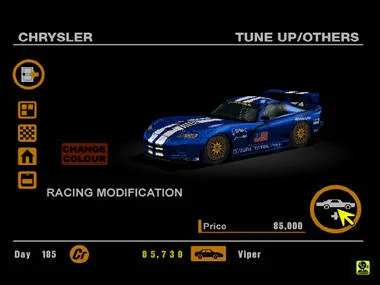
Prize cars are not all mandatory story keys, but selling one prematurely can force an expensive replacement. Keep distinctive cars until another vehicle is confirmed eligible for the same restriction and strong enough to win. The Toyota Chaser LM from GT Cup is a useful high-performance option, not a universal requirement. Let the event panel, rather than a presumed key car, determine what belongs in the garage.
- Inspect every prize car before selling it.
- Keep cars that cover a distinct restriction or performance role.
- Confirm a legal replacement before disposing of a prize car.
Reserve World Cup for the campaign finale
When the International A license and the qualifying GT League results shown by the World Cup event panel are complete, confirm that no displayed requirement remains. For the assigned full-route objective, enter World Cup only after every other GT League and Special Event championship has been cleared. Save before beginning the championship so an unfavorable points position can be retried without repeating the entire route.
The six World Cup races are High Speed Ring, Trial Mountain, Grand Valley Speedway, Special Stage Route 5, Deep Forest Racing Way and Special Stage Route 11. Treat the championship as one points campaign: avoid unnecessary contact, protect a lead instead of forcing risky passes and prioritize consistent finishes when a win is not safely available. Win the championship overall rather than relying on one race result. The Simulation reward is the ending sequence and GT Hi-Fi path, not a final prize car.
- Confirm the International A license and all requirements displayed by the World Cup event panel.
- Clear all other GT League and Special Event championships for the full-route goal.
- Complete all six World Cup races and win the championship overall.
- Verify the Simulation ending movie or credits sequence.
- Verify that Simulation GT Hi-Fi is available in the Special Event area.
Before you move on
- B, A and International A licenses are available.
- Sunday Cup, Clubman Cup and GT Cup are cleared.
- Every other GT League championship in the intended full-route plan is cleared.
- Every Special Event championship, including both International A endurance events, is cleared.
- The World Cup event panel accepts the selected car and shows no unmet requirement.
- All six World Cup races are completed and the championship is won overall.
- The Simulation ending movie or credits sequence appears.
- Simulation GT Hi-Fi is available in the Special Event area.
- Arcade progress remains separate; if pursuing it, independently verify its required track, class and difficulty goals, ending and high-resolution or GT Hi-Fi-related unlocks.
References for this chapter
- Gran Turismo PlayStation Software Manual
- Gran Turismo official product page
- Gran Turismo – FAQ – PlayStation – By BCampbell
- Gran Turismo – Translation Guide – PlayStation – By SDavis
- Gran Turismo - Compendium - PlayStation - By JCulbert
- Gran Turismo – Unlocking Guide – PlayStation – By Sal_89
- Gran Turismo PlayStation unlockables reference
License Center: Passing Every Test
The original North American PlayStation Gran Turismo uses three license groups: B, A and International A. There is no International B license in this edition. Each group contains seven preliminary tests followed by an examination, for eight tests total. You must pass the earlier tests in a group before its examination opens, and you need B before A and A before International A. A bronze-level result, or the game’s equivalent passing time, is enough for license access; all-gold results are optional. The all-gold rewards are the Dodge Concept Car for B, the TRD 3000GT for A and the Nismo 400R for International A. These are separate from the Gran Turismo World Cup reward: winning that Simulation Mode championship unlocks GT Hi-Fi in the Special Event menu. Arcade Mode completion is not part of the license or core Simulation campaign requirement.
1. Complete B-1 through B-7 in order
Enter the License Center from Simulation Mode and begin with B-1 through B-7. B-1 uses the Mazda Demio for a straight acceleration-and-stop test. Accelerate without steering and begin braking early enough to stop completely in the goal area. B-2 repeats the exercise with the heavier, more powerful Mitsubishi GTO, so start braking earlier than in B-1 and avoid entering the stopping zone too quickly.
B-3 through B-5 are single-corner exercises using the Honda CR-X del Sol, Nissan Silvia and Mitsubishi GTO. Brake before turn-in, use a smooth steering arc and avoid running beyond the marked course, which causes an immediate failure. B-6 uses the front-wheel-drive Mitsubishi FTO GPX through an S-curve; keep your inputs tidy and avoid carrying excessive speed into the second direction change. B-7 uses the rear-wheel-drive Nissan Silvia K’s on the same type of exercise. Let the car settle between the two turns instead of forcing a slide.
- Pass B-1, B-2, B-3, B-4, B-5, B-6 and B-7.
- Treat the listed vehicles as fixed test cars; garage upgrades do not apply to them.
- Do not spend time searching for an International B license, which this edition does not contain.
2. Pass B-8, the High Speed Ring examination
B-8 is one complete High Speed Ring lap in the Mazda Roadster V-Special. Learn the lap in sections: the opening bend, the tighter change of direction, the long sweeping turns and the final approach to the finish. Brake before the slower corners, keep the Roadster balanced through the long bends and prioritize a clean exit from the final turn because it leads directly onto the finishing straight.
The test fails if you miss the required time or leave the course. If you are close but unsuccessful, identify one specific loss: braking too late, turning in before the car is positioned, or accelerating while still asking for too much steering. Change only that part on the next attempt. Passing is sufficient for the B license; the faster gold threshold is an optional license reward goal.
- Pass B-8 after completing B-1 through B-7.
- Confirm that the B license is shown as earned before attempting A tests.
- Save after earning the license if you want to protect the completed test progress.
3. Complete A-1 through A-7 with controlled speed
The A tests require a B license and use faster cars, so braking points become more important. A-1 uses a Toyota Supra and A-2 a Toyota Supra RZ. Both reward slowing the car before turn-in rather than entering quickly and correcting with extra steering. A-3 uses a Mazda RX-7; brake smoothly through the approach so the car remains stable while the track changes direction.
A-4 uses a Nissan Skyline GT-R through a linked-corner section. Maintain a useful average speed instead of making a large correction at every turn. A-5 uses a Honda Prelude on a fast left-right sequence followed by a tight left; protect the exit of that final corner because it determines the run to the finish. A-6 uses a Toyota MR2 and asks for controlled braking while turning, so release the brake progressively and keep the line smooth.
A-7 uses a Subaru Impreza on a small five-lap test circuit. Turn the car quickly but do not create a large slide. If the rear begins to rotate, make a small correction and return to throttle only after the car is aligned. This test is about repeatable direction changes rather than maximum entry speed.
- Pass A-1 through A-7.
- Use the test’s replay or ghost information when available to find the corner where your time is being lost.
- Do not attempt A-8 until the first seven A tests are passed.
4. Pass A-8 in the Toyota Supra RZ
A-8 is the A-license examination in the Toyota Supra RZ. The test combines an opening right turn, a faster section and a tight right-hand hairpin before the finish. Set up on the correct side of the track before braking, slow the Supra in a straight line and use a late apex for the hairpin. Do not apply full throttle until the steering is opening; a slide on exit costs more time than a cautious entry.
If the Supra understeers, reduce entry speed rather than adding more steering lock. If the rear moves under acceleration, lift smoothly and regain a straight exit instead of making a sudden steering correction. Passing A-8 earns the A license and opens the International A tests, but it does not require an all-gold A record.
- Pass A-8 after A-1 through A-7.
- Confirm that the A license is recorded before entering International A tests.
- Keep the TRD 3000GT all-gold reward as an optional objective, not a campaign requirement.
5. Work through IA-1 to IA-7 as full-lap time attacks
The International A tests require the A license and are complete-lap time attacks. IA-1 is High Speed Ring in the TVR Griffith; IA-2 is Special Stage Route 5 in the Dodge Viper; IA-3 is Grand Valley Speedway in the Griffith; IA-4 is Deep Forest in the Viper; IA-5 is Autumn Ring in the Griffith; IA-6 is Trial Mountain in the Viper; and IA-7 is Special Stage Route 11 in the Griffith.
Treat the Griffith and Viper as different driving problems. The Griffith rewards a clean, stable line, while the Viper demands extra care with throttle application because rear-wheel drive and high power make exit slides expensive. For every test, learn the first major braking zone, the most technical middle section and the final corner before trying to improve the time. Brake in a straight line, turn once with a deliberate input and accelerate progressively as the car points toward the exit.
Machine Test can help you become comfortable with braking, steering and throttle response, while any available practice or replay view should be used to study the individual license circuit. Do not assume that a garage setup can be transferred to the supplied test car. The car and test conditions are fixed by the license event.
- Pass IA-1 through IA-7.
- Keep separate practice notes for the Griffith and Viper.
- Save after difficult passed tests if you want to avoid repeating a completed section.
6. Finish IA-8 on Grand Valley Speedway Reverse
IA-8 is the International A examination. It uses the Dodge Viper on Grand Valley Speedway Reverse and becomes available only after IA-1 through IA-7 are passed. Because the circuit runs in the unfamiliar direction, do not rely on forward-lap braking memories. First identify the opening complex, the braking area after the bridge, the slower middle hairpin and the final high-speed section.
Use the same method as the earlier time attacks: make a conservative familiarization lap, then improve one braking zone at a time. The Viper should be straight before heavy braking, and throttle should be delayed until the steering is nearly unwound. Avoid wall contact, grass and large slides; a clean lap with stable exits is more reliable than attacking every corner.
If repeated attempts fail, finish the lap and identify the first section where the run became unrecoverable. On the next attempt, change one variable only: brake earlier, delay turn-in, choose a later apex or reduce exit throttle. Passing IA-8 earns International A and unlocks the license-gated Simulation events. The Nismo 400R requires all-gold IA results and is optional.
- Pass IA-8 after IA-1 through IA-7.
- Confirm that B, A and International A are all displayed as earned.
- Check the Simulation event panels for newly available International A races.
- Remember that license all-gold rewards are separate from the GT Hi-Fi unlock obtained by winning the Simulation Mode Gran Turismo World Cup.
- Arcade Mode completion is not needed for this license chapter or for the requested core Simulation campaign.
Before you move on
- The License Center shows B, A and International A as earned.
- B-8, A-8 and IA-8 have been passed after their respective preliminary tests.
- The Simulation event list exposes the International A events available in the player’s copy.
- No International B license is missing from this edition.
- If pursuing optional license rewards, every B test is gold for the Dodge Concept Car, every A test is gold for the TRD 3000GT and every IA test is gold for the Nismo 400R.
- For the core Simulation goal, separately verify the later Gran Turismo World Cup victory and GT Hi-Fi unlock; do not use Arcade Mode completion as a substitute.
Garage & Economy: Buying, Selling and Budgeting
Gran Turismo’s early economy favors one affordable, versatile car over a collection of expensive machines. Use the used-car lots to compare drivetrain, horsepower, weight and price, then check the event description before buying parts or committing to a car. A Honda Civic 3-Door Si ’93 or Nissan Primera 2.0Te is a dependable beginner route; an inexpensive used Toyota Supra MA70 is a stronger but less forgiving alternative. Begin with B License and Sunday Cup, use the Mazda Demio A-SPEC prize to build funds, then move toward Clubman Cup and GT Cup. There are no modern repair bills, but you still need credits for cars, upgrades and entry fees. Prize cars are not individually mandatory for championships, yet they can efficiently satisfy restricted events, so inspect their specifications before selling them.
1. Compare the used-car lots before spending
From the Simulation Mode home map, enter a manufacturer dealership and open its Used Car section. The available stock changes, so if the model you want is absent, check the other dealers or return later. Use the displayed specifications to compare drivetrain, horsepower, weight and price. These figures matter more than the car’s appearance: a light FF car is usually easier for a newcomer to control, while a powerful FR car can be quick but punishes early throttle in corners.
For a safe opening purchase, the Honda Civic 3-Door Si ’93 is a documented beginner choice. The Nissan Primera 2.0Te is another sensible FWD option. If you already control rear-wheel-drive cars, the used Toyota Supra MA70 gives you more performance and can remain useful after several upgrades. These are recommendations, not requirements; choose a car that appears in your current lot and leaves money for parts.
- Open the Used Car section rather than buying the first expensive showroom model.
- Compare drivetrain, horsepower, weight and price.
- Keep enough credits for an upgrade and the next event entry fee.
2. Build one primary car around the first events
After buying, earn the B License and enter the Sunday Cup. Its three races are Autumn Ring Mini, High Speed Ring and Grand Valley East, and it is deliberately suitable for an inexpensive starter. Do not buy several ordinary cars before you know what your first car cannot do. Run the Sunday Cup repeatedly if necessary and use the winnings to improve the car that is already eligible.
For early upgrades, address the problem you can actually observe. If the car slides or takes too long to stop, improve tires, brakes or suspension before adding a large power package. If it is stable but loses badly on straights, then consider engine or turbo work. A full-race gearbox can also be adjusted later: a setting that favors acceleration helps tighter circuits, while a setting that favors top speed is more useful on High Speed Ring.
- Use Sunday Cup as the first dependable income source.
- Upgrade handling when cornering or braking is the weakness.
- Do not spend the whole balance on horsepower.
3. Use prize cars to finance progression
Winning Sunday Cup awards the Mazda Demio A-SPEC as its championship prize, in addition to race and championship credits. Compare the Demio with your current car before selling anything. Keeping one copy is a reasonable safety measure, while duplicate ordinary cars can be sold if you need funds. After your starter is competitive, move to Clubman Cup, whose races are Autumn Ring, Clubman Stage Route 5 and Trial Mountain. Its prize is the Chevrolet Camaro Z28 30th Anniversary, a useful step up when properly tuned.
GT Cup follows as a more demanding league event. Its races are Grand Valley Speedway, Deep Forest Racing Way, Special Stage Route 5 and Trial Mountain, and its prize is the Toyota Chaser LM. If your original car is a small, lightly powered FWD model, do not force it into GT Cup immediately; use Clubman winnings or a suitable prize car to obtain a faster machine first.
- Use Sunday Cup winnings before making a major purchase.
- Keep useful prize cars until you have checked their specifications and event eligibility.
- Treat Clubman Cup as the normal funding bridge before GT Cup.
4. Match purchases to restricted events
Later Special Events are organized around categories such as FF cars, FR cars, 4WD cars, Lightweight cars, country-versus-country contests, Megaspeed and Normal Cars. Before buying a vehicle, open the intended event and read its entry condition. A car can be excellent in open competition and still be useless for a drivetrain- or country-restricted event.
Build the garage gradually: retain the versatile starter, add a suitable prize car, then buy a dedicated vehicle only when the event list shows a real gap. For example, a 4WD car is useful for the 4WD event, while a strong stock FR car can serve the Normal Cars championship. Do not apply the Racing Modification casually: it makes a car ineligible for Tuned and All-Night II events, so leave that conversion until you have completed those restrictions or have another qualifying car.
- Read the event restriction before buying a vehicle or part.
- Add cars to cover missing categories instead of collecting duplicates.
- Delay Racing Modification if you still need Tuned or All-Night II.
5. Sell only after checking the remaining event list
Gran Turismo has no modern damage-repair bill between races. Your financial risks are purchase prices, tuning parts and entry fees, so maintain a reserve rather than reducing the balance to zero. If funds are low, repeat a race you can win reliably instead of selling the only car that covers a restricted category.
There is no rule that a later championship requires one particular prize-car model. However, a prize car may be the cheapest or most convenient vehicle for a drivetrain, national or performance category. Before selling, check whether it is your only FF, FR or 4WD car, whether it is your only qualifying car for a country event, and whether its modifications have already made it competitive. Sell duplicate ordinary cars first; sell a unique prize only after you have confirmed that another qualifying car is available.
- Keep a reserve for the next entry fee and one useful upgrade.
- Check category coverage before selling any unique car.
- Sell duplicates before irreplaceable or specially modified vehicles.
Before you move on
- You own one reliable car that can enter the next planned event.
- You have completed or can consistently win Sunday Cup and have a funding route toward Clubman Cup.
- Your garage covers the event categories you currently intend to enter, or you know exactly which category still needs a purchase.
- You have retained enough credits for the next entry fee and a targeted upgrade.
- Any car marked for sale has been checked against the remaining event restrictions and is not your only qualifying vehicle.
Tuning & Upgrades: Make Affordable Cars Competitive
In the original North American PlayStation Gran Turismo, tune for the weakness that is actually costing time instead of automatically buying maximum horsepower. Check the event's displayed entry rules before modifying a car, then improve grip, braking and stability before adding major power. Use the Machine Test or a low-risk race to evaluate one change at a time. A balanced car that remains eligible and finishes every race is more useful in Simulation Mode than a faster but difficult car.
Check the event and the car before spending credits
Open the target race or championship information before visiting the Tune-Up Shop. Confirm the license requirement and every displayed entry restriction, including drivetrain, country, model, race-modification or other vehicle requirements. Do not assume that a championship has a horsepower limit simply because another Gran Turismo game does; use the rules shown by this original game. If the event requires an unmodified or particular type of car, keep a separate eligible car rather than tuning your only entry beyond the rules.
In the garage, note the car's drivetrain, horsepower, weight and current equipment. Plan the complete purchase instead of buying parts blindly, and leave enough credits for race fees and a backup plan. A used car that needs several expensive parts may be a worse campaign investment than a modest car that only needs tires, brakes and a basic suspension upgrade.
- Read the target event's actual entry rules.
- Confirm the car remains eligible after each major modification.
- Keep credits available for fees and recovery.
Improve grip and braking before chasing power
Start with tires when the car is losing time through corner entry, exit traction or repeated slides. Softer tires provide more grip but wear faster, so use them for short races and consider harder tires when a longer event makes pit stops or tire life important. Do not buy the softest option automatically for every championship; a tire that loses effectiveness quickly can make a long race less consistent.
Buy sports brakes when the car cannot stop cleanly or repeatedly wanders under heavy braking. If the car has an adjustable brake balance, begin with slightly more braking force at the front. Forward weight transfer unloads the rear tires, so too much rear braking can make the car rotate or slide under braking. If the front locks or the car refuses to turn, reduce front bias in small steps rather than making a large change.
- Use tire grip to solve traction and corner-entry problems.
- Add sports brakes when stopping consistency is limiting lap time.
- Start brake balance slightly toward the front and adjust gradually.
Install suspension and make one adjustment at a time
Use a sports, semi-racing or racing suspension when body roll, slow direction changes or poor control over elevation changes remains after the tire and brake upgrade. The more advanced suspension packages expose more settings, but they do not make an extreme setup automatically faster. Stiffer springs and dampers reduce roll and sharpen response, yet excessive stiffness can reduce grip over bumps and make the car unstable when it unloads over a crest.
For understeer, first try a slower entry and a later apex. If the problem remains, soften the front suspension or front stabilizer slightly rather than changing every setting at once. For oversteer, increase front brake bias for braking instability, or make a small stabilizer or suspension change that adds rear stability. Test one setting, run several clean laps, and keep the previous setting if the result is unclear.
- Use suspension to solve a demonstrated handling problem.
- Avoid maximum stiffness as a default.
- Change one setting at a time and test several clean laps.
Add engine power and turbo boost in controlled stages
Once the car turns and stops predictably, add modest engine upgrades such as intake, exhaust or a low-stage naturally aspirated tune. Recheck the displayed horsepower and handling after every purchase. More power is useful only when the tires can transmit it and the driver can apply the throttle without constant wheelspin. Weight reduction is also worthwhile because it improves acceleration, braking and direction changes, but a very light car can become less forgiving over bumps or during abrupt weight transfer.
Turbo upgrades change more than the horsepower number. Higher boost can produce stronger high-rpm performance while making low-rpm response slower because of turbo lag. A lower boost setting is more manageable on tracks with frequent slow corners; higher boost is better suited to layouts with long straights when the car is already stable. If the car becomes difficult to launch or recover after an off-track moment, reduce boost before adding further power.
- Use low-stage power upgrades before maximum engine work.
- Treat weight reduction as a handling decision, not an automatic purchase.
- Reduce boost when turbo lag harms slow-corner acceleration.
Set the final drive for the circuit
Final-drive tuning is the simplest transmission adjustment in this game. A larger final-drive ratio shortens the gearing, improving acceleration but reducing the speed available before redline. A smaller ratio lengthens the gearing, increasing potential top speed but weakening acceleration. Use a shorter setting for a tight circuit with repeated slow corners and a longer setting for a high-speed layout with extended straights.
Test the longest straight after each small adjustment. Near the end of that straight, the car should be in its highest gear and approaching—but not spending excessive time against—the redline. If it reaches the limiter too early, lengthen the gearing. If it never reaches the useful upper rev range, shorten it. Individual gears usually do not need attention until a particular shift or turbo power band creates a clear problem.
- Use larger final-drive values for acceleration.
- Use smaller final-drive values for top speed.
- Test the longest straight and watch for early redlining.
Account for downforce and validate the complete setup
If the car has a race modification, wing or front air dam with adjustable downforce, use it to stabilize the car before making drastic suspension changes. More rear downforce reduces oversteer, while more front downforce helps front response and can reduce understeer. The tradeoff is straight-line speed, so reduce downforce only when the car is already secure through the important corners and is losing too much time on straights.
Finish with a Machine Test or a low-risk race on a similar circuit. Confirm that the car brakes straight, turns without persistent understeer, accelerates without continuous wheelspin and remains legal for the intended event. For a championship with mixed tracks, favor a stable compromise instead of a setup optimized for one circuit. Save the setting only after a short run produces repeatable laps.
- Use downforce to stabilize race-modified cars when available.
- Test braking, cornering and acceleration after tuning.
- Confirm event eligibility again before entering the championship.
Before you move on
- The car still satisfies the target event's displayed entry rules after tuning.
- The car brakes straight, turns predictably and accelerates without constant wheelspin.
- The final-drive setting lets the car use its highest gear effectively on the longest straight.
- A Machine Test or low-risk race produces several consistent laps rather than one fast lap followed by mistakes.
- You still have enough credits for the planned entry and a recovery option.
Driving Fundamentals: Braking, Apexes and Weight Transfer
Gran Turismo rewards clean, repeatable inputs more than dramatic slides or last-second braking. Approach from the outside, brake while the car is mostly straight, turn toward a controlled apex, and add throttle as the steering unwinds. Front-wheel-drive cars tend to push wide when the front tires are overloaded, rear-wheel-drive cars can become loose when braking or accelerating aggressively, and four-wheel-drive cars still lose speed when entered too quickly. Use Time Trial or Machine Test to repeat difficult corners before returning to a championship race. The goal is not one spectacular lap; it is a stable line you can reproduce throughout an event.
1. Confirm a controllable input setup
With the original PlayStation Analog Controller in its default racing configuration, the left stick steers, X accelerates, Square brakes, L2 shifts down, and R2 shifts up when using manual transmission. The game allows these assignments to be changed in the Options menu. If you use the standard digital controller, the directional buttons steer instead of the left stick. Choose the setup that lets you make small steering and throttle corrections without moving your hand during a corner.
Begin practice with automatic transmission if shifting distracts you from the racing line. Move to manual transmission when you can consistently brake at the correct point; selecting a lower gear before the exit can then help keep the engine responsive, but a missed shift should not be allowed to ruin the corner.
- Use the left stick or directional buttons for predictable steering.
- Confirm the accelerator and brake assignments before practice.
- Change to manual transmission only after braking and cornering are consistent.
2. Set up each corner from the outside
Move toward the outside of the track before braking, leaving room to turn toward the inside. This creates a wider arc and reduces the steering angle required to make the corner. Do not begin every turn tight against the inside curb; that usually produces an early apex and leaves no room to correct the exit.
Use fixed landmarks such as signs, curbs, walls, marshal posts, or a change in track surface to select a braking point. Start earlier than necessary, then move the point later in small steps after you can make the corner cleanly several times. A repeatable reference is more valuable than guessing based on the car ahead.
- Approach from the outside where the track allows it.
- Choose a visible braking landmark.
- Leave space for the exit instead of aiming immediately at the inside curb.
3. Brake before turn-in and release progressively
Apply most of the braking while the car is straight. Heavy braking combined with a sharp steering input can overload the tires and make the car run wide or become unstable. Finish the main slowdown before turning, then release the brake smoothly as steering angle increases.
A small amount of braking can be carried into the beginning of a tight corner, but treat this as a control technique rather than a reason to brake later every time. If the car refuses to turn, reduce entry speed or release the brake sooner. If the rear moves around under braking, complete more of the braking before turn-in and avoid abrupt steering corrections. The original game's driving guidance specifically emphasizes braking on corner entry and recognizes that braking shifts weight toward the front of the car.
- Do most braking before the steering input becomes large.
- Release the brake progressively as the car turns.
- If the rear becomes unstable, brake earlier and make the turn more gently.
4. Use a late apex and adapt throttle to the drivetrain
For medium- and high-speed corners, turn in slightly later and aim to reach the inside near the latter part of the turn. This sacrifices some entry speed but points the car toward the exit sooner. Add throttle as the steering begins to unwind. An early apex commonly sends the car wide before the corner is finished or puts the outside tires onto grass.
Front-wheel-drive cars commonly understeer when power is applied while the front tires are still heavily loaded. Brake a little earlier, use a calm turn-in, and wait for the car to point toward the exit before applying full throttle. If it runs wide, lift slightly rather than adding more steering.
Rear-wheel-drive cars can become loose when braking removes load from the rear tires or when throttle is applied before the car is straight. Feed in power progressively and avoid a sudden lift or snap of opposite lock if the rear starts to slide. Four-wheel-drive cars generally give stronger traction on exit, but they still understeer or run wide when corner entry speed is excessive. The original Gran Turismo compendium describes these drivetrain tendencies in terms of traction and weight transfer.
- Use a late apex when the exit leads onto a straight.
- FWD: delay full throttle to protect front-tire grip.
- RWD: apply power smoothly and avoid abrupt corrections.
- 4WD: use its traction without carrying excessive entry speed.
5. Isolate one problem corner in practice
Enter Time Trial or Machine Test with the same car and track used in the event. Do not begin by chasing a record lap. Instead, repeat the troublesome corner or sequence and concentrate on three separate tasks: identify the braking landmark, reach the intended apex, and apply throttle without forcing the car wide.
Run several consecutive laps using the same references. Change only one variable at a time: brake earlier, release the brake sooner, turn in later, or delay full throttle. If the car goes off track, reset your reference rather than improvising a large correction. The tuning guidance for the original game likewise recommends changing one adjustment at a time and testing the result, a useful principle for driving practice as well.
Return to the championship only when the corner is clean on repeated laps. During the race, prioritize a safe exit and consistency over a single aggressive pass. A clean, slightly slower lap is more useful than one fast lap followed by grass, wall contact, or a spin.
- Repeat the same corner or sequence for several laps.
- Change one input or braking reference at a time.
- Return to the event after the line becomes repeatable.
- Favor consistent race pace over one risky fast lap.
Before you move on
- You can approach a representative corner from the outside, brake before turn-in, and reach a controlled late apex without touching grass or a wall.
- You can repeat the same braking landmark and corner exit over several practice laps.
- You can explain how your current car's drive type changes braking and throttle use.
- You can finish a race with smooth steering and throttle instead of relying on emergency corrections.
- You can use Time Trial or Machine Test to diagnose one corner before risking another championship attempt.
Early Simulation Route: GT League and Special Events
Begin Simulation Mode with the B-license Sunday Cup and use its credits and prize car to establish a dependable garage. After earning the A License, clear Clubman Cup and GT Cup, then work through the B- and A-license Special Events while matching each event’s drivetrain, nationality, stock-car or other displayed restriction. The three GT League cups are only the opening portion of the campaign. Keep affordable backup cars, avoid spending every credit on power, and test prize cars before modifying them. International A unlocks the later Tuned Car Race and endurance events, but the Gran Turismo World Cup belongs to the later finale route. This chapter prepares the car, licenses and event knowledge needed for that finale without claiming to complete it.
Begin with Sunday Cup and build a reliable garage
Earn the B License, then enter Sunday Cup from GT League with an eligible road car. Its three races are Autumn Ring Mini, High Speed Ring and Grand Valley East. There are no special car regulations, so a controllable compact starter is preferable to an expensive high-power purchase. Winning the championship awards the Mazda Demio A Spec.
Buy tires and improve braking before spending heavily on engine parts. At Autumn Ring Mini, prioritize clean exits from the short corners. At High Speed Ring, use smooth steering through the fast bends rather than repeated corrections. At Grand Valley East, brake before the tighter turns and keep the car on the paved surface. Do not force a late pass if it risks contact; championship points reward consistency across all three races.
A poor qualifying position does not require a restart. If a race goes badly, finish if the car remains controllable and use the next race to recover points. Wall contact costs speed and can spoil the following corner, but this release does not use modern mechanical-damage repair bills. Keep the Demio until you have checked future restrictions, and preserve enough credits for tires or moderate upgrades.
- Earn the B License.
- Win Sunday Cup overall.
- Receive the Mazda Demio A Spec.
- Keep a dependable primary car and a credit reserve.
Earn A License, then win Clubman Cup
Complete the A License before entering Clubman Cup. Its three races are Autumn Ring, Clubman Stage Route 5 and Trial Mountain. Clubman Cup has no special car regulations, so use the car with which you can finish consistently rather than assuming the Camaro prize is required. Winning awards the Chevrolet Camaro Z28 30th Anniversary.
Upgrade in a controlled order: tires, brakes, suspension and then moderate engine work. The faster field makes poor braking more costly than in Sunday Cup. At Trial Mountain, reduce speed before the blind crest and complete the turn without an abrupt steering change. On Clubman Stage Route 5, leave room beside the barriers and prioritize exits from the slower bends.
After winning, test the Camaro in Machine Test or a low-risk race. Compare its braking, traction and corner balance with your original car before buying parts. It may be a useful step toward faster events, but a prize car is not automatically legal for a drivetrain, country or body-style restriction. Keep the Demio or another inexpensive backup until the Camaro proves reliable.
- Earn the A License.
- Enter Clubman Cup only after the A License is recorded.
- Win Clubman Cup overall.
- Receive and test the Chevrolet Camaro Z28 30th Anniversary.
Complete Gran Turismo Cup and open the broader route
Gran Turismo Cup also requires the A License. Its four races are Grand Valley, Deep Forest, Special Stage Route 5 and Trial Mountain. The prize is the Toyota Chaser LM Edition. Grand Valley and Special Stage Route 5 reward acceleration out of slower corners, while Deep Forest and Trial Mountain punish excessive entry speed and late braking.
Use tires, brakes and suspension before maximum engine parts. If an opponent is faster on a straight, gain time by exiting the preceding corner earlier and straighter instead of attempting a dangerous late-braking pass. Deep Forest is narrow, so extra power helps only when the car can stop reliably. Keep the Chaser LM while you inspect later restrictions; it is a useful high-performance option, not a universal campaign key.
Do not stop after the three early GT League cups. For the complete-route target, work through the Special Event menu as the licenses and event panels permit: FF Challenge, FR Challenge, 4WD Challenge, Lightweight Challenge, Japanese versus American Sports Car Race, Japanese versus British Sports Car Race, British versus American Sports Car Race, Mega Speed Race, Normal Car Race, Tuned Car Race, SS Route 11 All Night Endurance I, SS Route 11 All Night Endurance II and Grand Valley 300.
- Win Gran Turismo Cup overall.
- Receive the Toyota Chaser LM Edition.
- Inspect the Special Event menu after each license and championship milestone.
- Record which events are available in the current save.
Handle restricted championships without overspending
With the B License, FF Challenge accepts front-wheel-drive cars, FR Challenge accepts front-engine rear-wheel-drive cars, 4WD Challenge accepts four-wheel-drive cars and Lightweight Challenge accepts eligible lightweight cars. Check the event panel before buying or modifying anything. Weight reduction should not be treated as a way to turn an otherwise ineligible heavy car into a Lightweight entry.
For FF cars, brake slightly earlier and feed in throttle progressively to limit understeer. For FR cars, slow the entry and avoid sudden throttle on exit. For 4WD cars, use the traction advantage to accelerate cleanly rather than entering every corner too fast. Lightweight cars reward momentum, so avoid contact and unnecessary steering corrections.
After earning A License, the three country-versus-country championships and Mega Speed Race provide useful credits and prize opportunities. Match the displayed nationality restrictions before buying a car. Normal Car Race requires stock cars, so reserve an unmodified qualifying vehicle. Tuned Car Race requires International A and does not allow Racing Special Models. Grand Valley 300 and both SS Route 11 All Night Endurance events also require International A; SS Route 11 All Night Endurance II likewise excludes Racing Special Models. Keep separate qualifying cars when necessary rather than repeatedly undoing modifications.
- Clear FF, FR, 4WD and Lightweight Challenge when available.
- Complete the three country-restricted championships according to their displayed rules.
- Complete Mega Speed Race after earning A License.
- Reserve an unmodified car for Normal Car Race.
- Earn International A before Tuned Car Race and the endurance events.
Prepare for the later World Cup route
Finish the B- and A-license events listed in this chapter, then continue into the International A license and the later endurance and tuned-car championships. Do not enter the Gran Turismo World Cup as part of this early-route chapter. The six-race finale is handled in the later endurance and finale chapters after the required preparation is complete.
While progressing, retain a suitable candidate for the finale and confirm that it can receive the required racing modification without violating the World Cup event panel. Do not assume that the Camaro, Chaser LM or any other named prize car is universally required. The direct finale requirements must be checked in the event panel and include the International A license, qualifying GT League results and an accepted race-modified entry.
Run practice laps before the later championship. Brake early for Trial Mountain’s elevation changes, keep Deep Forest entries controlled, and prioritize clean exits from the slower corners at Grand Valley and Special Stage Route 5. At Special Stage Route 11, leave margin beside the walls through the high-speed sections. Gold licenses, alternate prize-car outcomes, Arcade completion and the World Cup victory remain later or optional goals, not completion checks for this chapter.
- Sunday Cup, Clubman Cup and Gran Turismo Cup are recorded as overall wins.
- The B- and A-license Special Events listed in this chapter are completed where available.
- International A is identified as the prerequisite for the later Tuned Car Race and endurance events.
- A legal race-modified candidate is retained for the later World Cup route.
- The World Cup, GT Hi-Fi verification and ending sequence are deferred to the finale chapters.
Before you move on
- Sunday Cup is recorded as a win and the Mazda Demio A Spec has been received.
- A License is earned before Clubman Cup and Gran Turismo Cup are attempted.
- Clubman Cup and Gran Turismo Cup are won, with their prize cars recorded.
- FF, FR, 4WD and Lightweight Challenge are cleared when available.
- The three country championships, Mega Speed Race and Normal Car Race are completed for the full-route target.
- International A is earned before Tuned Car Race, Grand Valley 300 and both SS Route 11 endurance events.
- A suitable race-modified World Cup candidate is retained and its eligibility can be checked in the later event panel.
- The World Cup, GT Hi-Fi and ending sequence are explicitly deferred to the later finale chapters.
- All-gold licenses, alternate prize-car collection and Arcade completion remain optional extended goals.
A-License Route: Clubman Cup, GT Cup and Special Events
Earn the A license, win Clubman Cup and GT Cup, then clear the A-license Special Events while preparing the cars needed for the International A route. The B-license FF, FR, 4WD and Lightweight events belong earlier in the campaign; do not treat them as A-license events. After passing International A, complete the non-endurance high-level event available to you, then leave Grand Valley 300 and both Special Stage Route 11 endurance championships for the dedicated endurance chapter. Before moving to the finale, verify that Sunday Cup, Clubman Cup and GT Cup each show at least third place overall and prepare a race-modified candidate accepted by the Gran Turismo World Cup panel. The World Cup itself is not completed here: its six three-lap races and ending sequence belong to the finale chapter.
1. Earn the A license, then win Clubman Cup
Complete the A license before selecting Clubman Cup. The championship uses Autumn Ring, Clubman Stage Route 5 and Trial Mountain, with two laps at each circuit and no car-type restriction. Use the quickest controllable car in your garage, but do not spend all of your credits on power alone.
Improve tires and brakes before making a large engine investment. Autumn Ring rewards a stable car through its linked corners, Clubman Stage Route 5 punishes poor high-speed entries, and Trial Mountain demands early braking for elevation changes, crests and blind approaches. Enter the championship only when the car can finish all three races consistently, because one weak result can cost the overall title.
Win the championship to receive the Chevrolet Camaro Z28 30th Anniversary. Save the game after accepting the prize. Keep at least one normal road car available because later events reject racing special models or require stock equipment.
- A license completed.
- Clubman Cup won at Autumn Ring, Clubman Stage Route 5 and Trial Mountain.
- Chevrolet Camaro Z28 30th Anniversary received and saved.
2. Win GT Cup with a balanced high-performance entry
GT Cup requires the A license and has no manufacturer or drivetrain restriction. Its four races are Grand Valley Speedway, Deep Forest Racing Way, Special Stage Route 5 and Trial Mountain. The field is faster than Clubman Cup, so enter with a properly developed car rather than relying on eligibility alone.
The Camaro Z28 30th Anniversary can be developed into a useful all-rounder, but another sufficiently fast road car is also acceptable. Prioritize braking, tires and stability before maximum horsepower. Grand Valley and Special Stage Route 5 reward acceleration on long straights, while Deep Forest and Trial Mountain expose cars that are too powerful or unstable through technical sections.
Take the overall championship to receive the Toyota Chaser LM. It is a useful race car for unrestricted events and may help with later preparation, but it is not a universal key. Keep a separate qualifying road car for Normal Car Race, Tuned Car Race and any manufacturer-restricted event.
- GT Cup completed on Grand Valley Speedway, Deep Forest Racing Way, Special Stage Route 5 and Trial Mountain.
- Toyota Chaser LM received and saved.
- A separate normal road car remains available for restricted events.
3. Put the B-license Special Events in the correct place
FF Challenge, FR Challenge, 4WD Challenge and Lightweight Sports Battle Stage are not A-license events. They require the B license and should be cleared earlier if the goal is a complete Simulation route. If they are still unfinished, return to Special Events and complete them with a legal entry before treating the A-license route as complete.
FF Challenge accepts front-wheel-drive cars, FR Challenge accepts rear-wheel-drive cars, 4WD Challenge accepts four-wheel-drive cars, and Lightweight Sports Battle Stage requires a qualifying lightweight car. Select the event first and read the displayed restriction before buying parts or choosing a vehicle. A powerful car with the wrong drivetrain or excessive weight will not qualify.
For these short championships, favor predictable handling over maximum output. A front-drive car needs smooth braking and throttle to limit understeer, a rear-drive car needs measured throttle on exits, and a four-wheel-drive car still needs straight-line braking because traction does not remove corner-entry understeer.
- FF Challenge completed with a legal front-wheel-drive car.
- FR Challenge completed with a legal rear-wheel-drive car.
- 4WD Challenge completed with a legal four-wheel-drive car.
- Lightweight Sports Battle Stage completed with a legal lightweight car.
4. Clear the A-license country and speed events
After earning A, complete US-Japan Sports Car Championship, Anglo-Japanese Sports Car Championship and Anglo-American Sports Car Championship. These events use the named manufacturer-country combinations, so confirm the car's classification in the entry panel. The three championships visit Trial Mountain, Special Stage Route 5, High Speed Ring, Grand Valley East and Special Stage Route 11, including reverse layouts.
Complete Megaspeed Cup after the country events. It has no car regulation and uses High Speed Ring, Test Course and High Speed Ring in reverse. Choose a car with strong top speed, but upgrade braking and stability so it remains controllable when the course changes direction. Do not follow an opponent into a braking error simply to gain a draft advantage.
Finish Normal Car World Speed Contest with a completely stock qualifying vehicle. Do not use engine, tire, suspension, transmission, weight-reduction or racing-modification parts on this entry. If the event rejects the car, inspect its modification state rather than replacing it immediately.
- US-Japan Sports Car Championship completed.
- Anglo-Japanese Sports Car Championship completed.
- Anglo-American Sports Car Championship completed.
- Megaspeed Cup completed.
- Normal Car World Speed Contest completed with a stock-legal car.
5. Pass International A and complete the non-endurance high-level event
Pass International A after the A-license work. The eight-test license uses High Speed Ring, Special Stage Route 5, Grand Valley Speedway, Deep Forest, Autumn Ring, Trial Mountain, Special Stage Route 11 and Grand Valley Speedway in reverse. Bronze-level passes are sufficient for access; all-gold results and license prize cars are optional.
Once International A is available, complete Hard-Tuned Car Speed Contest if your garage contains a qualifying modified road car. This event prohibits racing special models, so use a modified normal car rather than the Toyota Chaser LM or another full racing model. Confirm the restriction before entering because a car that is fast enough may still be illegal.
Do not begin Grand Valley 300, SS Route 11 All-Night Endurance I or SS Route 11 All-Night Endurance II as part of this chapter's route. Those three IA-license endurance events require separate tire, pit-stop and time commitments and are handled in the endurance chapter. SS Route 11 All-Night Endurance I permits racing cars; SS Route 11 All-Night Endurance II prohibits racing special models.
- International A completed.
- Hard-Tuned Car Speed Contest completed with a legal non-racing-special entry.
- Grand Valley 300 is left for the endurance chapter.
- SS Route 11 All-Night Endurance I is left for the endurance chapter.
- SS Route 11 All-Night Endurance II is left for the endurance chapter.
6. Verify World Cup readiness without entering the finale
Before leaving this chapter, verify the direct World Cup requirements rather than entering the championship. International A must be complete, and Sunday Cup, Clubman Cup and GT Cup must each show at least third place overall. Re-run a championship if one of those records is below third, even if you have already won the individual races you need for other progress.
Prepare a race-modified candidate and confirm that the World Cup entry panel accepts it. The World Cup allows only race-modified cars; a stock car, a normally tuned road car or an unmodified prize car is not enough. The Toyota Chaser LM can be useful, but no single prize car is mandatory. Another accepted race-modified car may be used.
The finale contains six three-lap races in this order: High Speed Ring, Trial Mountain, Grand Valley Speedway, Special Stage Route 5, Deep Forest Racing Way and Special Stage Route 11. Use this chapter to practice those circuits and establish a reliable setup, but defer the championship itself until the endurance events are complete and the finale chapter begins. The World Cup awards credits rather than a prize car; its GT Hi-Fi unlock and ending sequence are completion checks for the next chapter.
- International A completed.
- Sunday Cup, Clubman Cup and GT Cup each show at least third place overall.
- A race-modified candidate is accepted by the World Cup entry panel.
- The six World Cup circuits and race order are noted for finale preparation.
- Grand Valley 300 and both SS Route 11 endurance championships are complete before beginning the finale chapter.
Before you move on
- A license is complete.
- Clubman Cup is won and the Chevrolet Camaro Z28 30th Anniversary has been received.
- GT Cup is won and the Toyota Chaser LM has been received.
- FF Challenge, FR Challenge, 4WD Challenge and Lightweight Sports Battle Stage are complete if pursuing the full Simulation route.
- US-Japan, Anglo-Japanese, Anglo-American, Megaspeed and Normal Car World Speed Contest are complete.
- International A is complete.
- Hard-Tuned Car Speed Contest is complete with a legal non-racing-special entry.
- Grand Valley 300 and both SS Route 11 endurance championships remain assigned to the endurance chapter.
- Sunday Cup, Clubman Cup and GT Cup each show at least third place overall.
- A legal race-modified World Cup candidate is accepted by the event panel.
- The World Cup has not yet been entered; victory, GT Hi-Fi and the ending sequence are verified in the finale chapter.
- All-gold licenses, alternate prize-car collection and Arcade completion remain optional.
References for this chapter
Endurance & Special Events: Strategy for Long Races
After earning the International A license, complete Special Stage Route 11 All-Night Endurance Race 1, Special Stage Route 11 All-Night Endurance Race 2 and Grand Valley 300 as part of the complete Simulation route. Race 1 and Race 2 are 30-lap events, while Grand Valley 300 is a 60-lap race. Tire wear is active, so smooth driving and sensible pit timing matter more than maximum power. Race 1 and Grand Valley 300 have no car regulations. Race 2 is a tuned-car event: it excludes racing-special or race-modified models, so use a normally purchased road car with ordinary tuning and confirm that the entry panel accepts it. These victories provide route progress and prize cars, but they are not by themselves proof of every World Cup access condition. Check the Gran Turismo World Cup panel separately before entering the six-race finale.
Earn International A and locate the endurance events
Complete the B and A license progression, then earn the International A license. From Simulation Mode, open the Special Event area and locate Special Stage Route 11 All-Night Endurance Race 1, Special Stage Route 11 All-Night Endurance Race 2 and Grand Valley 300.
Race 1 is held on Special Stage Route 11 for 30 laps. Race 2 is held on the Route 11 II layout for 30 laps and applies the tuned-car restriction. Grand Valley 300 uses Grand Valley Speedway for 60 laps. These are single-race endurance events rather than multi-race championships, so record each win individually on the full-route checklist.
- International A license earned.
- All three endurance events located.
- The 30-, 30- and 60-lap distances checked in the event panels.
- Each victory tracked separately from World Cup access.
Prepare an unrestricted car for Race 1 and Grand Valley 300
Race 1 and Grand Valley 300 have no car regulations. Select a fast, controllable car already in the garage instead of purchasing a model solely for one event. A racing-special car is legal in these unrestricted races, but its power and braking response must remain manageable over a long stint.
Prioritize tires, braking stability and predictable suspension behavior before adding every available engine upgrade. Excess power can increase wheelspin and sliding, which costs time and makes barrier contact more likely. A slightly slower car that produces repeatable laps is usually a safer endurance choice than a peak-power build that becomes difficult to control.
Test the entry in Machine Test or a shorter Simulation race. The car should brake without repeated lockups, accelerate without constant wheelspin and complete a clean lap without using the walls as braking markers.
- An unrestricted entry is selected.
- Tires, brakes and suspension have been considered before maximum power.
- Several clean practice laps completed.
- The car remains stable for a full lap without routine contact.
Reserve a legal tuned-car entry for Race 2
Race 2 is not a production-car-only event. Its restriction is that racing-special or race-modified models are not allowed. The safest preparation is a normally purchased road car fitted with ordinary tuning parts, then verified through the event entry panel before starting.
A purchased Nissan Skyline GT-R is one practical foundation because it can accept substantial conventional tuning while remaining a road-car entry. It is not mandatory. Other purchased road cars may also qualify if their tuning does not turn them into a prohibited special model.
Do not use an LM Edition, Castrolized racing entry, race-modified car or another model that the game rejects at the entry screen. Ordinary engine, brake, tire, suspension and drivetrain upgrades should be checked after installation. The panel’s decision takes priority over assumptions based on the car’s name or appearance.
- A normally purchased road car is reserved for Race 2.
- The entry has ordinary tuning rather than a racing modification.
- No LM, Castrolized or other prohibited special model is selected.
- The event panel confirms eligibility before the race begins.
Practice Route 11, Route 11 II and Grand Valley Speedway
Treat Special Stage Route 11 and Route 11 II as separate driving tasks. Practice Race 1 on the layout displayed for that event, then practice Race 2 on the Route 11 II layout. Do not substitute the ordinary course or assume that braking references transfer unchanged between layouts.
On Route 11, brake while the car is settled and mostly straight before the tight direction changes. Turn in only after the entry speed is under control, then prioritize a clean exit toward the next straight. The urban barriers leave little room to correct an early or overly fast turn-in.
For Grand Valley 300, rehearse the opening hairpin area, the technical middle section and the final corners before the main straight. Brake early enough to secure a stable exit. Over 60 laps, avoiding one major mistake is usually worth more than an aggressive pass that gains a position but causes contact.
- The Race 1 Route 11 layout is familiar.
- Route 11 II is practiced separately for Race 2.
- Grand Valley’s major braking and exit zones are consistent.
- A complete practice lap is possible without major contact.
Manage tire wear and pit stops by handling changes
Tire wear is active in these endurance events. Watch for longer braking distances, increasing understeer, rear-end movement and wheelspin on corner exits. When these symptoms cost more time than a pit stop, enter the pits at the end of the lap rather than continuing until the car becomes unpredictable.
Harder tires generally support longer stints, while softer tires provide more grip but may wear sooner. The best choice depends on the car and driving style, so judge the car during the opening laps. Do not copy a fixed pit lap from another vehicle without checking your own tire condition.
Approach pit entry under control and leave enough margin to avoid scraping a barrier or missing the lane. After rejoining, use the first corners to confirm the new grip level before returning to full pace. This original PlayStation release does not use later-series fuel-management, mechanical-damage or mid-race-save systems, so focus on tire condition, pit-stop time and clean laps.
- Pit timing is based on observed handling changes.
- Hard and soft tire options have been considered.
- Pit entry and exit can be taken without contact.
- The first lap after a stop is driven cautiously.
Keep unrestricted and restricted entries separate
A racing-special model may be excellent for Race 1 or Grand Valley 300 while being unusable in Race 2. Conversely, a normal road car that seems slower can be valuable because it remains eligible for the tuned-car event. Keep both types available until all relevant restrictions have been checked.
Do not sell a prize car simply because another entry is faster. First inspect the remaining Special Events for country, drivetrain, car-category and racing-model restrictions. Preserve at least one legal ordinary road-car option until Race 2 is complete.
The three endurance races belong on the complete-route checklist. That does not make each one a separately confirmed universal World Cup gate. After earning International A and clearing the required GT League results, open the World Cup panel and follow the requirements displayed there.
- At least one eligible ordinary road car remains available.
- Useful prize cars have not been sold prematurely.
- Restricted and unrestricted entries are kept separate.
- All three endurance wins are recorded as route objectives.
Recover from mistakes and failed attempts
If an off-track moment costs time but the car remains controllable, settle into a consistent pace. A 30- or 60-lap race gives opportunities to recover when opponents pit or make mistakes. Do not force an overtake while the tires are sliding; one rushed pass can create several lost laps through contact.
If the car repeatedly hits barriers, loses time in every corner or becomes unstable as the tires wear, end the attempt and change the car or setup. More laps will not fix a fundamentally unsuitable entry. Recheck tire selection, power delivery, braking stability and Race 2 eligibility before restarting.
There is no modern mid-race save or accelerated endurance feature in this release. Begin a serious attempt only when enough uninterrupted time is available to finish. A conservative finish can reveal setup problems, but first place is required for the listed prize car. Replay the event if the prize is needed and the initial attempt does not win.
- Recoverable mistakes are handled without reckless overtaking.
- Enough uninterrupted time is available for the race.
- The setup is changed when instability persists.
- A failed prize-car attempt is replayed.
Before you move on
- Special Stage Route 11 All-Night Endurance Race 1 is won over 30 laps and the Nissan S14 Silvia LM Edition prize is awarded.
- Special Stage Route 11 All-Night Endurance Race 2 is won over 30 laps on Route 11 II with an eligible normally purchased, ordinarily tuned car, and the NISMO GT-R LM Road Going Version '95 prize is awarded.
- Grand Valley 300 is won over 60 laps on Grand Valley Speedway and the Toyota Castrol Supra GT prize is awarded.
- All three victories are recorded in the Special Event section.
- The complete pre-finale Simulation checklist includes all three endurance races.
- International A and the separate six-race Gran Turismo World Cup are completed for the main ending route, with World Cup rewards checked separately.
- Winning the World Cup unlocks GT Hi-Fi time-trial content; all-gold licenses, duplicate prize cars and broader collection goals remain optional.
References for this chapter
- Gran Turismo – Translation Guide – PlayStation – By SDavis
- Gran Turismo - Compendium - PlayStation - By JCulbert
- Special Stage Route 11 All-Night Endurance Race 1
- Special Stage Route 11 All-Night Endurance Race 2
- Grand Valley 300 km Endurance Race (GT1)
- Gran Turismo - Complete Car List - PlayStation - By DConnoy
- Gran Turismo 1 – Playthrough Part 20 – GT World Cup
International A Route and the Gran Turismo World Cup
The original North American PlayStation release uses B, A and International A licenses. The direct Gran Turismo World Cup gate requires International A, at least third place overall in Sunday Cup, Clubman Cup and Gran Turismo Cup, and a legal race-modified car. The World Cup itself contains six three-lap races. For the assigned complete Simulation Mode route, also win every other GT League championship and every Special Event championship, including Grand Valley 300, Tuned Car Race and both SS Route 11 All Night Endurance events. The World Cup does not award a prize car. Winning it in GT Mode unlocks GT Hi-Fi and the ending or credits sequence. Arcade Mode has separate progress and does not replace the Simulation campaign. All-gold licenses, alternate prize-car outcomes and Arcade completion remain optional.
1. Confirm the World Cup access conditions
Open GT Mode and inspect the event panels on your save. This original game uses B, A and International A licenses. Do not substitute later series terminology such as Professional Hall, Amateur Hall or International B.
Earn the International A license, then verify that Sunday Cup, Clubman Cup and Gran Turismo Cup each show at least a third-place championship result. These three results are the direct GT World Cup qualification requirements listed by the event. Winning all three is preferable because it also satisfies the broader route objective.
The full-route target is wider than the direct World Cup gate. Track every GT League championship and every Special Event championship separately. The Special Event list includes FF Challenge, FR Challenge, 4WD Challenge, Lightweight Challenge, Japanese vs. American Sports Car Race, Japanese vs. British Sports Car Race, British vs. American Sports Car Race, Mega Speed Race, Normal Car Race, Grand Valley 300, Tuned Car Race, SS Route 11 All Night Endurance I and SS Route 11 All Night Endurance II.
Do not describe every one of those championships as an individual World Cup access requirement. They are required here because the assigned goal is the complete Simulation Mode route, while the direct World Cup panel checks International A, the three qualifying GT League results and an eligible race-modified car.
Use Arcade Mode, Time Trial, Spot Race and Memory Card Battle for practice only. Their results do not count as GT Mode championship victories.
- B license earned.
- A license earned.
- International A license earned.
- Sunday Cup finished at least third, preferably won.
- Clubman Cup finished at least third, preferably won.
- Gran Turismo Cup finished at least third, preferably won.
- All GT League and Special Event championships tracked separately from Arcade results.
2. Earn International A and complete the newly available events
The International A license requires the A license first. Pass IA-1 through IA-7, then attempt IA-8 on Grand Valley Speedway Reverse with the Dodge Viper. The preliminary tests use High Speed Ring, Special Stage Route 5, Grand Valley Speedway, Deep Forest, Autumn Ring, Trial Mountain and Special Stage Route 11. Bronze or better is sufficient for license progression; gold results and the license prize car are optional.
After IA-8 is passed, complete the four International A Special Event championships for the full-route goal: Grand Valley 300, Tuned Car Race, SS Route 11 All Night Endurance I and SS Route 11 All Night Endurance II. The World Cup also becomes available once its license and GT League qualification conditions are satisfied.
Read each event’s restriction panel before entering. Grand Valley 300 and SS Route 11 All Night Endurance I have no car-type restriction. Tuned Car Race and SS Route 11 All Night Endurance II prohibit Racing Special Models, so enter those events with a legal tuned production car. Do not assume that a car eligible for the World Cup is legal for either of these restricted events.
The endurance events include pit stops. Preserve tires and braking performance, pit before the car becomes difficult to stop or turn, and use a conservative pace after an excursion or poor opening stint. This original PlayStation campaign does not use modern mechanical-damage repair bills. Budget for cars, parts, tires and replacement purchases instead.
- IA-1 through IA-7 passed.
- IA-8 Grand Valley Speedway Reverse passed.
- International A recorded in the license menu.
- Grand Valley 300 completed.
- Tuned Car Race completed with a legal non-Racing Special Model.
- SS Route 11 All Night Endurance I completed.
- SS Route 11 All Night Endurance II completed with a legal non-Racing Special Model.
3. Prepare a legal race-modified World Cup car
The Gran Turismo World Cup is restricted to race-modified cars. A stock road car and an ordinary tuned road car cannot enter, even if either car is fast enough to win. Before selecting Enter, use the event panel to confirm that the car is classified as race modified and is accepted by the championship.
Choose a race-modified car that remains predictable on both technical and high-speed circuits. A racing special model can be suitable for the World Cup, but do not assume that the same car is legal in Tuned Car Race or SS Route 11 All Night Endurance II, where Racing Special Models are prohibited.
Before adding maximum power, fit the best available tires and improve braking and stability. Check that the car does not lock its front tires, push wide under braking, spin when power is applied or reach the end of its gearing before the end of a straight. Correct those weaknesses before adding more engine output.
Test the selected car on one tight circuit and one fast circuit. Make only one setup change at a time so you can identify whether braking, gearing, traction or corner entry is causing the problem. Save before starting the championship. If the event panel rejects the car, do not try to force entry; return to the garage and select a car with the required race-modified classification.
- A race-modified car selected.
- The World Cup event panel accepts the selected car.
- Tires, brakes, suspension and gearing checked.
- Car tested on both technical and fast sections.
- Save made before beginning the championship.
- Restricted Special Events still use legal non-Racing Special Models where required.
4. Win the six-race Gran Turismo World Cup
Enter the World Cup from GT Mode’s GT League menu after confirming the International A license, the three qualifying cup results and the race-modified entry. The championship contains six three-lap races: High Speed Ring, Trial Mountain, Grand Valley Speedway, Special Stage Route 5, Deep Forest Racing Way and Special Stage Route 11.
At High Speed Ring, keep the car settled through the long bends and avoid unnecessary steering corrections. At Trial Mountain, brake before crests and elevation changes so the car is stable when the track disappears from view. At Grand Valley Speedway, prioritize clean braking for the major corners and chicanes because a poor exit costs speed along the following straight.
At Special Stage Route 5, hold a stable line through the linked fast corners and protect the exits onto the longer accelerations. At Deep Forest Racing Way, stay on the paved surface through the narrow and off-camber sections; a grass excursion can surrender several positions. At Special Stage Route 11, brake earlier than feels necessary for the technical sections and avoid low-percentage overtakes that leave the car badly positioned for the next corner.
The championship is decided by overall points rather than one isolated race. A run of wins or podiums is safer than forcing contact-heavy passes in every event. If the race-modified car is difficult to control, restart the championship after correcting the setup or choosing a more predictable eligible car. The World Cup has no prize car, so the objective is the overall championship result and its GT Mode completion rewards.
- High Speed Ring completed.
- Trial Mountain completed.
- Grand Valley Speedway completed.
- Special Stage Route 5 completed.
- Deep Forest Racing Way completed.
- Special Stage Route 11 completed.
- World Cup won on overall championship points.
5. Verify GT Mode completion and separate Arcade progress
After the final results screen, confirm that the Gran Turismo World Cup was won overall in GT Mode. Winning the World Cup does not award a prize car. Its relevant GT Mode reward is GT Hi-Fi, and the GT Mode ending or credits sequence becomes available after the championship victory.
Open the GT Mode Special Event or bonus-content area and confirm that the GT Hi-Fi entry is present. Allow the ending sequence to play or verify it through the available completion or bonus menu. If GT Hi-Fi is missing, first recheck the final championship result, then confirm that the event was completed in GT Mode rather than Arcade Mode and that the result was saved.
Arcade Mode has separate completion tracking, including its own course and manufacturer goals and separate ending or Hi-Fi conditions. Arcade progress neither replaces the GT Mode World Cup nor proves that the Simulation campaign is complete.
The core completion check is B, A and International A; qualifying third-place-or-better results in Sunday Cup, Clubman Cup and Gran Turismo Cup; every other GT League and Special Event championship; overall victory in the six-race World Cup with a legal race-modified entry; the GT Mode GT Hi-Fi entry; and the GT Mode ending sequence. Gold licenses, alternate prize-car outcomes, Arcade completion and extra Time Trial records remain optional.
- Qualifying third-place-or-better results confirmed in all three prerequisite cups.
- All GT League cups won for the full-route objective.
- All Special Event championships completed.
- A legal race-modified car used to enter the Gran Turismo World Cup.
- Gran Turismo World Cup won overall in GT Mode.
- GT Mode GT Hi-Fi appears.
- GT Mode ending sequence is available or has played.
- Arcade completion and gold-license goals remain separately tracked.
Before you move on
- B, A and International A licenses are complete.
- Sunday Cup, Clubman Cup and Gran Turismo Cup each have at least the qualifying third-place result, with championship wins preferred.
- Every other GT League championship is won.
- Every Special Event championship is won, including Grand Valley 300, Tuned Car Race, SS Route 11 All Night Endurance I and SS Route 11 All Night Endurance II.
- A race-modified car is accepted by and used in the Gran Turismo World Cup.
- The Gran Turismo World Cup is won overall across High Speed Ring, Trial Mountain, Grand Valley Speedway, Special Stage Route 5, Deep Forest Racing Way and Special Stage Route 11.
- GT Mode GT Hi-Fi appears in the appropriate menu.
- The GT Mode ending or credits sequence is available or has played.
- Arcade Mode completion, gold licenses, alternate prize cars and extra Time Trial records are optional separate goals.
Track Guide & Key Hazards: Original PlayStation Circuits
The original North American PlayStation Gran Turismo includes Autumn Ring, Autumn Ring Mini, Deep Forest, Grand Valley East, Grand Valley Speedway, High Speed Ring, Clubman Stage Route 5, Special Stage Route 5, Special Stage Route 11 and Trial Mountain, plus separately listed II layouts and special Hi-Fi variants. Apricot Hill is not part of this first game. Always check the event panel for the exact course name, including whether it specifies a II layout. Do not assume that familiarity with the standard course gives you the correct braking points for its II counterpart. Use Time Trial, Spot Race, a license test or the relevant Simulation event to practice. Build speed from clean exits, brake before blind crests and downhill sections, and treat grass or wall contact as a recovery problem rather than usable track space.
Set up practice around the exact event listing
Before entering a championship, read the complete course name shown in the event panel. Gran Turismo lists standard tracks and II versions separately, so record the name exactly: for example, Special Stage Route 11 and Special Stage Route 11 II are different event layouts. Practice the listed layout rather than selecting the nearest-looking course in Arcade Mode.
Use Time Trial or Spot Race when the circuit is available there. If the track is unavailable in Arcade Mode, rehearse it through the corresponding license test or Simulation event. Start with five clean laps in a car whose drivetrain, power and tire level resemble the championship car. Use the first lap to identify braking landmarks, then repeat the corner that cost the most time. If the car leaves the pavement, lift smoothly, keep it pointed along the road and rejoin without cutting across the racing line.
- Confirm the full track name and whether it includes II.
- Practice with a comparable car and tire level.
- Use clean exits and controlled recovery as the first targets.
Trial Mountain: settle the car over elevation changes
Trial Mountain is difficult because several corners arrive near uphill crests, descents and partially hidden approaches. Brake before an uphill crest when the turn is not yet fully visible. The car can become light over the rise, so avoid a sharp steering input while the suspension is unloaded. Enter slightly slower if necessary and let the car settle before applying power.
After the tunnel, prepare for downhill braking with the car straight. Use a late apex and leave room at the outside exit instead of cutting toward the grass. If the rear begins to move, reduce throttle progressively and straighten the steering. A sudden lift or large countersteer can turn a manageable slide into contact with the barrier.
- Brake before blind crests rather than at the visible apex.
- Complete most downhill braking before turn-in.
- Keep the car stable before accelerating out of the corner.
Deep Forest: protect momentum through narrow and off-camber corners
Deep Forest rewards a tidy line. Brake in a straight line for the opening sequence, make one deliberate steering input and wait until the car is aimed at the exit before using full throttle. The forest section is narrow, leaving little space to correct an early turn-in or a slide toward the outside.
Off-camber corners push the car outward when entered too quickly. Leave a small margin from the inside edge if the car feels unsettled, then feed in throttle as the steering unwinds. If two wheels reach the grass, ease off the accelerator and keep the car parallel to the pavement. Rejoin gradually; do not swing across the course in front of the next corner.
- Keep all four wheels on the racing surface whenever possible.
- Use a slower entry for off-camber turns.
- Accelerate only after the car is aligned with the exit.
Grand Valley Speedway and Grand Valley East: win time in the braking zones
Grand Valley Speedway alternates long acceleration zones with heavy braking and direction changes. Move to the correct side of the track before braking and slow the car while it is straight. Enter each chicane conservatively. Turning aggressively for the first direction change often leaves the car badly positioned for the second and ruins the following straight.
The final technical section controls the run onto the main straight. Sacrifice entry speed if required, rotate the car without sliding and apply throttle progressively as the steering unwinds. Grand Valley East is shorter, but its linked corners still reward a clean exit. Do not chase an inside curb if doing so forces the car wide; the speed carried onto the next straight matters more than a small gain at turn-in.
- Brake before the direction change, not while making it.
- Prioritize the exit leading to a long straight.
- Ease brake pressure if the front tires lock before adding steering.
High Speed Ring and Autumn Ring: maintain balance through linked corners
High Speed Ring is a momentum circuit. Approach its long curves with the car settled, use one smooth steering arc and avoid repeated throttle lifts. If braking is necessary, complete most of it before turn-in. Leave a margin from the outside wall because a small slide has little room for recovery. Unwind the steering before applying maximum power.
Autumn Ring is tighter and requires rhythm through its slower corners. Brake early, use a late apex and prioritize the next exit rather than carrying excessive entry speed. A front-wheel-drive car tends to push wide under power, so delay full throttle until the steering is opening. A rear-wheel-drive car needs the same patience on exit because early throttle can break traction.
- Avoid abrupt lifts in fast High Speed Ring curves.
- Leave recovery space near outside walls.
- Use late apexes in the slower Autumn Ring corners.
Clubman Stage Route 5 and Special Stage Route 5: control the city-course rhythm
Clubman Stage Route 5 is the shorter city circuit and is useful for learning the basic rhythm of wall-lined racing: brake from a straight line, turn once and accelerate only after the outside barrier is no longer a threat. Special Stage Route 5 adds faster running and longer approaches to its braking zones. Brake decisively before the slower corners instead of relying on the wall to stop the car.
If the event lists a II layout, select and practice that named layout separately. Treat its corner sequence as its own course: identify the first braking zone, the tightest direction change and the exit that leads to the longest acceleration section. Do not transfer braking points from the standard listing without checking the approach speed and corner order.
- Distinguish Clubman Stage Route 5 from Special Stage Route 5.
- Practice the exact standard or II listing used by the event.
- Keep the car away from the wall during both entry and exit.
Special Stage Route 11 and its II layout: prepare for the hardest street sections
Special Stage Route 11 combines high-speed approaches, tight 90-degree corners, linked direction changes and narrow wall-lined exits. Brake before the first major turn while the car is straight, then use a controlled out-in-out line. The chicane later in the lap is especially costly if entered too quickly: reduce speed before the first direction change and aim through both parts without mounting the inside obstruction or running into the outside barrier.
Special Stage Route 11 II is listed as a separate layout in the original game. Practice it as its own course rather than assuming the standard route supplies the correct sequence. Before a championship attempt, learn its opening braking zone, tightest linked section and longest acceleration exit. If a lap goes wrong, lift, regain control and rejoin parallel to the road. Do not chase the lost time by forcing the next corner.
- Brake before the first major SSR11 corner, not at the wall-lined apex.
- Treat the chicane as one controlled sequence.
- Practice Special Stage Route 11 II independently when the event specifies it.
Use a repeatable sector drill before a championship
For each required layout, choose one difficult sector and run five to ten consecutive clean laps. On every lap, change only one factor: braking point, turn-in position or throttle timing. This makes it easier to identify whether the lost time comes from entering too fast, clipping the wrong curb or accelerating before the car is aligned.
After the sector drill, complete several full laps without pursuing a personal-best time. The goal is to repeat the same braking landmarks and exits under race conditions. In a championship, a clean second-place finish is usually more valuable than recovering one lost corner with an aggressive move that causes a spin or barrier contact.
- Run five to ten clean sector laps.
- Change one driving variable at a time.
- Finish with full laps at a repeatable race pace.
Before you move on
- You can complete five consecutive clean practice laps on every layout needed for the next championship.
- You know the first major braking landmark, the most dangerous exit and the main acceleration point for each practiced course.
- You have practiced the exact standard or II layout shown by the event listing.
- You can recover from grass contact or a small slide without crossing abruptly into the racing line.
- Your car remains stable under braking and no longer requires excessive power to compensate for missed exits.
- You can complete the relevant championship race at a consistent pace without repeated wall contact or avoidable off-track excursions.
Championship-by-Championship Strategy (Selected High-Impact Events)
Use each event panel to confirm its license, entry restrictions, race list and rewards before spending credits. For the full Simulation route, clear every GT League and Special Event championship, but distinguish that broad completion plan from the direct Gran Turismo World Cup gate. To enter the World Cup, earn International A, finish at least third overall in Sunday Cup, Clubman Cup and GT Cup, and bring a legal race-modified car. The World Cup is a six-race points championship and awards GT Hi-Fi and the ending sequence rather than a prize car. Build for braking, tires and stability before maximum power, check legality after every major modification, and protect the championship total with consistent finishes.
Map restrictions before spending credits
Open the information panel for every championship and record its license requirement, country or drivetrain restriction, stock or tuned-car rule, circuit list, prize information and championship bonus. Use those details to select the next event rather than buying a car first and discovering that it is illegal. The original Simulation structure contains three GT League cups before the World Cup plus multiple Special Event championships.
If you are following the complete-route objective, clear every listed GT League and Special Event championship. That is a thorough completion plan, not a claim that every earlier event is an independent direct gate. For the World Cup itself, track three specific standings: finish at least third overall in Sunday Cup, Clubman Cup and GT Cup. A single race win is not enough if the final championship position is fourth or lower.
Recheck legality after installing parts or a racing modification. A stock-only event can reject a modified car, while the World Cup requires a race-modified entry. Save after recording championship results, and keep useful prize cars until the remaining event panels have been checked. Do not sell a car merely because a faster prize car has entered the garage.
- Record each event’s license, restrictions, races and rewards.
- Finish at least third overall in Sunday Cup, Clubman Cup and GT Cup.
- Distinguish the broad full-route plan from direct World Cup requirements.
- Check legality again after tuning or installing a racing modification.
- Save after championship results are recorded.
Use Normal Car Race as a credit bridge
Normal Car Race is a five-race stock-car Special Event. Because racing modifications are prohibited, enter with a legal production car and leave it unmodified for this event. A stable, naturally quick road car is more useful than an unstable high-power choice. Check the panel before entry because the event’s stock-car rule matters more than the car’s headline horsepower.
The races use Autumn Ring Mini II, Grand Valley East II, Clubman Stage Route 5 II, Deep Forest Racing Way II and Special Stage Route 11. Brake before the tighter turns at Autumn Ring Mini II and Deep Forest, keep the car settled through direction changes, and prioritize clean exits over desperate late passes. On Special Stage Route 11, slow the car early for the hairpin and accelerate only after it is pointed toward the exit. Avoid grass and wall contact because lost momentum is difficult to recover on these narrow circuits.
This series can provide repeatable income and one of its listed prize cars. Treat any stated maximum payout as a best-case result based on race wins, pole bonuses and the championship bonus, not as a guaranteed amount on every attempt. Record the prize car actually awarded and keep it until later restrictions have been checked.
- Enter with a legal production road car.
- Do not install a racing modification for this stock-car event.
- Use early braking and clean exits on narrow circuits.
- Treat the maximum payout as conditional, not guaranteed.
- Record and retain the awarded prize car.
Prioritize nation-versus-nation championships for strong prizes
US vs. Japan uses Trial Mountain II, Special Stage Route 5, High Speed Ring, Grand Valley East II and Special Stage Route 11. Improve tires, braking and suspension before adding maximum power. Trial Mountain and Special Stage Route 11 punish a car that cannot settle after braking, so a slightly slower stable setup is often the safer championship choice. Listed prize outcomes include the Dodge Viper GTS-R and Mitsubishi FTO LM Edition.
Japan vs. UK uses the same five-track sequence and lists the TVR Cerbera LM Edition and Honda del Sol LM Edition. US vs. UK also follows this track sequence and awards one of its listed prizes according to the event’s result table. These championships can supply strong later-game cars, but no single prize should be treated as a universal key for the World Cup or the Special Events.
For points championships, aim for a clean opening race instead of forcing an early overtake. Identify the strongest rival and push hardest on circuits that suit your car. A controlled second or third place is preferable to a retirement while the standings remain close. If you need a particular prize outcome, verify the event’s result conditions before repeating the series.
- Tune stopping and cornering before maximum power.
- Use stable lines through Trial Mountain and Special Stage Route 11.
- Check prize conditions before repeating a championship.
- Protect the points total instead of forcing every pass.
Separate high-speed events from Tuned Car Race
Megaspeed Race uses High Speed Ring, Test Course and High Speed Ring II. Prepare acceleration and top speed for the long straights, then test the car through High Speed Ring’s slower bends. A developed Mitsubishi GTO, Nissan Skyline, Toyota Supra RZ or NSX Type S can be effective if the event panel permits it. If the car is quick only on Test Course, improve stability and corner exits before entering.
Tuned Car Race is one five-race Special Event. It uses High Speed Ring II, Grand Valley Speedway II, Clubman Stage Route 5 II, Autumn Ring II and Special Stage Route 11 II. Racing Special Models are not allowed. Enter with a heavily tuned road car that remains legal, then prioritize tires, brakes, suspension and gearing rather than installing a prohibited racing body. A high-power GTO or Viper can work, but excessive power makes the urban sections difficult when traction is poor.
Run at least one practice lap on a fast circuit and one on a technical circuit before committing to Tuned Car Race. If the car wins the straights but loses time in every braking zone, reduce the power emphasis and make the setup easier to control. Use the North American menu’s single Tuned Car Race entry; do not split it into invented sub-events.
- Use acceleration and top speed for Megaspeed Race.
- Enter Tuned Car Race with a legal tuned road car.
- Do not use a Racing Special Model in Tuned Car Race.
- Test the car on both fast and technical circuits.
- Prefer controllable exits to excessive horsepower.
Prepare the legal race-modified car and enter the World Cup
Earn International A before attempting the World Cup. Then verify the final positions in Sunday Cup, Clubman Cup and GT Cup: each must show at least third place overall. If one result is fourth or lower, replay that entire championship and improve the final standings before returning to the World Cup panel.
The World Cup accepts only race-modified cars. An untouched production car and an ordinary tuned road car are not valid entries, even if either is fast enough to win. Install a legal racing modification on a car that suits the six circuits, then check the entry panel again. Do not assume that every racing model is legal for other Special Events; Tuned Car Race, for example, excludes Racing Special Models.
The six races are High Speed Ring, Trial Mountain, Grand Valley Speedway, Special Stage Route 5, Deep Forest Racing Way and Special Stage Route 11. Bring one dependable race-modified car rather than a narrowly specialized car for each circuit. At High Speed Ring, exploit acceleration without scraping the outside wall. At Trial Mountain, brake before elevation changes and blind crests. At Grand Valley, prioritize stable braking into the technical sections. At Deep Forest, stay off the grass through narrow and off-camber portions. At Special Stage Route 11, sacrifice entry speed for the hairpin and the following exits.
- International A has been earned.
- Sunday Cup, Clubman Cup and GT Cup each show at least third overall.
- The selected car has a legal racing modification.
- The World Cup entry panel accepts the modified car.
- The six-race route has been recorded before starting.
Play the World Cup as a six-race points campaign
Check the cumulative standings after every race. If you lead, protect the points with clean finishes and avoid unnecessary contact. If behind, target wins on tracks that suit your car instead of taking risks in every corner. The objective is first place in the final championship table, not merely one race victory.
Use the same reliable braking references throughout the series. High Speed Ring rewards clean acceleration and a controlled line through the bends. Trial Mountain requires caution over elevation changes and blind crests. Grand Valley rewards early positioning before its technical sections. Special Stage Route 5 punishes late braking into its tighter corners. Deep Forest favors smooth transitions and careful exits. Special Stage Route 11 rewards patience at the hairpin and strong acceleration afterward.
Complete all six races, allow the championship result and bonus to register, and confirm first place in the final standings. The World Cup awards GT Hi-Fi and the ending movie or credits sequence rather than a prize car. Save after the result is recorded, then check the Special Race menu for GT Hi-Fi and advance through the relevant result screens to confirm the ending sequence.
- Standings are checked after every race.
- All six World Cup races are completed.
- The final points table shows first place.
- The championship bonus has been credited.
- GT Hi-Fi is selectable after the result screens.
- The ending movie or credits sequence is available.
Before you move on
- The chosen full-route plan has completed the preceding GT League and Special Event championships if pursuing broad Simulation completion.
- Normal Car Race has been completed, its awarded prize car has been recorded and its conditional credits have been collected.
- Tuned Car Race has been completed as one five-race event without using a Racing Special Model.
- International A has been earned.
- Sunday Cup, Clubman Cup and GT Cup each show at least third place overall.
- The World Cup entry panel accepts a car with a legal racing modification.
- All six World Cup races have been completed with first place in the final points table.
- The World Cup championship bonus has been credited.
- GT Hi-Fi is selectable and the ending movie or credits sequence is available.
- All-gold licenses, alternate prize-car collection and Arcade completion remain separate optional goals.
Money: Reliable Credit Farming and Prize Maximization
Build credits by repeating races you can win consistently instead of buying the most powerful car available. The Sunday Cup is the safest starting income source, followed by the Clubman Cup after earning the A license. The main mid-game farm is the Normal Car Race in Special Events: an eligible stock road car can earn up to 400,000 credits by taking pole and winning all five races. Its result-dependent prize can include the Subaru Impreza Sedan WRX-STi Version III or Toyota Supra RZ, but neither should be assumed guaranteed. Keep unique prize cars until you have checked unfinished event restrictions. Their resale value is modest compared with the replacement cost of a useful race or restricted car. Reserve credits for tires, tuning parts, eligible cars and a backup plan before making a major purchase.
Build the first bankroll through the Sunday Cup and Clubman Cup
Earn the B license, buy an affordable used car and enter the Sunday Cup in GT League. Its three races are Autumn Ring Mini, High Speed Ring and Grand Valley East. The championship provides race and pole-position earnings, a 15,000-credit championship bonus and the Mazda Demio A-Spec prize car. Repeat the cup when you need safe early income, but only after your car can finish first consistently. Use the winnings for tires or modest tuning while keeping enough credits to enter another suitable event.
Earn the A license before moving to the Clubman Cup. Its races are Autumn Ring, Clubman Stage Route 5 and Trial Mountain. The championship provides a 20,000-credit bonus and the Chevrolet Camaro Z28 30th Anniversary prize car. Choose a car that remains predictable over elevation changes and narrow sections. Keep the Camaro after winning it until you have checked your unfinished events; it can be useful in unrestricted races and may help with later car restrictions. These cups are reliable because they use short three-race formats and do not require specialized machinery.
- Keep enough credits for the tires and tuning parts needed for the next event.
- Prefer one versatile car over several expensive specialists early in the campaign.
- Save after receiving a useful prize car or completing a profitable championship.
Use Normal Car Race as the main mid-game credit farm
Once Normal Car Race is available and you own a suitable road car, enter it from the Special Events menu. The event requires a stock, commercially available car, so do not install performance upgrades, racing modifications or other changes on the vehicle you intend to use. Check the event panel before entering because an otherwise strong race car or tuned road car will not satisfy the restriction.
The five races are Autumn Ring Mini II, Grand Valley East II, Clubman Stage Route 5 II, Deep Forest Racing Way II and Special Stage Route 11. Each race awards 10,000 credits for pole position and 50,000 credits for the win. The championship bonus is 100,000 credits. Taking every pole and winning all five races therefore produces 50,000 credits in pole bonuses, 250,000 credits in race wins and 100,000 credits for the championship, for a maximum of 400,000 credits.
The prize is result-dependent rather than universally fixed. The award can include the Subaru Impreza Sedan WRX-STi Version III or the Toyota Supra RZ, so plan your finances around the cash payout rather than one expected model. A stock Dodge Viper RT/10, Viper GTS Coupe or TVR Cerbera is a commonly recommended type of choice, but use the eligible car you can control most consistently. If you cannot win reliably, return to the Sunday Cup or Clubman Cup instead of repeatedly risking your available funds.
- Confirm that the chosen car remains stock before entering.
- Practice the braking zones at Autumn Ring Mini II and Deep Forest Racing Way II before committing to a full championship.
- Treat the Subaru Impreza and Toyota Supra as possible prizes, not guaranteed rewards.
- Save after collecting the championship payout and the prize car.
Treat nation-versus-nation events as prize-car opportunities
US-Japan Sports Car Championship, Anglo-American Sports Car Championship and Anglo-Japanese Sports Car Championship pay less consistently than Normal Car Race but can award valuable race cars. Their prize pools include cars such as the Viper GTS-R, FTO LM Edition, RX-7 A-Spec LM Edition, Dodge Concept Car Racing, del Sol LM Edition and Cerbera LM Edition. Enter these events when you need a car for a country restriction, drivetrain restriction or later high-level event rather than using them as your routine credit farm.
The game can select a reward from the event's prize pool, so do not buy a car or plan your budget around receiving one particular model. Record the car you actually receive, test it in an unrestricted event and keep it if it fills an unfinished restriction or would be expensive to replace. Repeat the championship only when its credit payout and possible prize justify the time.
- Record the prize car received before selling anything.
- Keep at least one competitive car for each important country or drivetrain restriction still unfinished.
- Do not repeat a long championship solely because you expect a specific reward.
Apply a strict sell-or-keep rule
Prize cars generally have a low resale value compared with their usefulness. A prize road car can sell for 10,000 credits, or 12,000 credits when sold through its manufacturer's dealership. That difference is rarely worth giving up a unique LM, race-modified or restriction-specific car. Keep the first example of every rare or powerful prize until you have checked the complete unfinished event list.
Sell duplicate prizes, replaced starter cars and weak cars only after confirming that another usable example remains. If a prize has a country, drivetrain or car-type advantage, treat it as a garage asset rather than quick cash. Save before selling so an accidental decision can be reversed without repeating a championship.
- Keep unique LM, race-modified and restriction-specific cars.
- Sell duplicates only after confirming that another usable example remains.
- Check unfinished events and save before confirming a sale.
Set a purchase buffer before spending
Before buying a performance car, reserve the cost of the next event's tires, any necessary tuning parts and an alternative car if the purchase proves unsuitable. Where an event lists an entry cost, include that amount as well. Keeping those expected costs plus a reserve of roughly half the car's purchase price is a budgeting safeguard, not an in-game requirement.
Do not force one expensive car into every event. Keep a cheap backup for license practice, low-tier cups and restrictions that reject your main machine. When an event is stock-only, country-limited or drivetrain-limited, switch to the appropriate car instead of spending credits on an incompatible build. After a successful Normal Car Race run, keep part of the payout untouched until the next required purchase and restriction check are complete.
- Have a usable backup car before making a major purchase.
- Do not spend the entire Normal Car Race payout immediately.
- Reserve credits for tires, tuning parts, applicable event costs and a replacement-car plan.
Before you move on
- You can repeat the Sunday Cup or Clubman Cup and finish first without risking your full bankroll.
- You have the A license and a stock-legal car capable of winning Normal Car Race consistently.
- You have recorded the prize car actually awarded by Normal Car Race instead of assuming it will be the Subaru Impreza or Toyota Supra.
- You have retained useful cars for the major country and drivetrain restrictions still on your event list.
- After your next purchase, you still have funds for tires, tuning parts, applicable event costs and a replacement-car plan.
- You have checked unfinished events before selling every unique prize car.
Failure Recovery: What to do When You Flunk a Test or Lose a Championship
A failed license test costs no credits and does not damage the garage. Retry it with the assigned test car, isolate the corner or braking mistake, and aim for bronze first; higher medal grades are optional for campaign progression. A lost championship can be entered again, so diagnose the race that caused the points deficit before buying more parts. If money is low, repeat a short event already unlocked and reliably winnable. The Special Event Normal Car Race is a later option, not an emergency activity from the start: it requires the A License, allows only completely stock cars, and should be used only when you have a legal car that can win consistently. Save explicitly to the PlayStation memory card after licenses, completed championships, important purchases and prize-car awards. Keep a second-card copy when possible, especially before selling a valuable prize car or spending most of the account.
1. Turn a failed license test into focused practice
A failed test does not remove credits, cars or an already-earned license. Retry the same test and identify the actual cause: late braking, an early turn-in, a cone strike, leaving the course or losing too much speed on corner exit. The License Center assigns the vehicle and conditions for each test, so changing cars in the garage is not a solution for that individual attempt.
Begin with clean, controlled runs instead of chasing the target time immediately. Brake earlier, keep the car inside the marked course and complete several attempts without a major mistake. Once the line is repeatable, move the braking point later in small steps. For a full-lap test, divide the lap into visible sections and decide where time is being lost before changing technique.
Practice the related circuit elsewhere when a suitable event is available, but do not confuse that practice with the actual test. Machine Test can help you understand acceleration and top speed, yet it does not reproduce the license route or its assigned car. Return to the License Center for the final attempts. In the original game, bronze on every test is sufficient to earn the license; silver and gold are optional goals.
Save after the license has been awarded and you have returned to a normal Simulation Mode menu. Do not shut off the console while the memory-card save is being written.
- Identify the specific action that caused the failure.
- Practice with the assigned license-test car.
- Secure bronze on every required test before pursuing silver or gold.
- Make an explicit memory-card save after earning the license.
2. Retry a lost championship after finding the cause
A championship loss is not a permanent campaign failure. Return to the event list and enter the series again when the car and budget are ready. First identify whether the deficit came from insufficient speed, weak braking, difficult handling, inconsistent corner exits or a single incident that dropped you several positions.
If the car is quick enough but hard to control, improve tires, brakes or suspension before adding another large power upgrade. Check the event panel after every purchase: a horsepower, drivetrain, country, model or stock-car restriction can make an upgraded vehicle ineligible. For a championship with several races, protect the points total. A clean second-place finish is usually better than forcing one risky pass, spinning and finishing at the back.
The game’s series can be attempted again, and a failed attempt does not permanently remove the prize opportunity. Save completed championships and important awards before starting another expensive run. This gives you a confirmed recovery point if the next attempt also fails.
- Identify the race that created the points deficit.
- Check event eligibility after every upgrade.
- Use a stable setup before adding more power.
- Retry the series only after the car is legal and consistently controllable.
3. Rebuild credits through a reliably winnable event
If the balance is too low for the next entry fee or purchase, do not gamble the remaining credits on an event that is only theoretically winnable. Choose the shortest suitable event already available where your current car can regularly finish near the front. A repeatable win is more useful than a larger payout with a high risk of failure.
After earning the A License and unlocking the relevant Special Events, the Normal Car Race can become an effective recovery and farming option. It is a five-race series requiring stock cars: no engine parts, tires, weight reduction, racing modification or other upgrades. Use it only with a completely stock car that is legal for the event and reliably competitive. A tuned car or racing special model is not a valid entry for this purpose.
Earlier in the campaign, repeat the best short Beginner or Amateur event already unlocked instead. Do not buy a Viper or another specialist solely because a later guide recommends it; confirm that you can afford the car, that it is stock-legal for Normal Car Race, and that you can control it consistently before committing your remaining funds.
Gran Turismo does not use modern mechanical-damage repair bills as a normal campaign expense. Contact still costs time, positions and championship points, while cars, parts and tires cost credits. Stop upgrading when the account is nearly empty and rebuild a buffer first.
- Choose an event whose entry fee cannot exhaust the balance.
- Prefer a repeatable win over an uncertain high payout.
- Use Normal Car Race only after earning A License and owning a competitive stock-legal car.
- Reserve money for the next planned purchase and entry.
4. Save completed progress and keep a backup
The PlayStation version stores Simulation Mode progress on a memory card. Make an explicit save after earning a license, completing a championship, receiving a prize car, making a major purchase or reaching a useful credit milestone. Return to the game’s normal save-capable menu and wait for the memory-card operation to finish before switching off the console.
If you have a second memory card, keep a separate known-good copy before selling a valuable prize car, spending nearly all credits or beginning a difficult championship. Do not overwrite that backup immediately after a risky decision. A second copy is especially useful if a purchase turns out to be illegal for the event you intended to enter.
Treat an unfinished championship cautiously. The safest recovery plan is to complete the current race, leave through the game’s normal menus and perform an explicit save. If you cannot confirm that the current championship position has been written, assume you may need to repeat the series rather than relying on an assumed autosave.
- Leave the memory card inserted until saving is complete.
- Keep a second-card copy when available.
- Back up before selling prize cars or spending most of the account.
- Confirm progress from a normal save-capable menu.
5. Recover from a bad purchase or an empty garage
If a newly purchased car performs badly, stop adding parts to it. Return to a proven car and use that vehicle in a short repeatable event. Before buying again, compare drive type, power, price and the intended event’s restrictions. A modest car that qualifies for several races is safer than a powerful specialist that cannot enter the next target.
Keep prize cars until you have checked their possible future uses. Selling one is not automatically fatal, but it can remove a useful option for a restricted event. If you have already sold a needed car and have no backup save, rebuild through repeatable races instead of trying to recover instantly with an expensive purchase.
Recovery is complete when the garage contains at least one reliable race car, the next intended event is legal, and the account retains enough credits for that entry without risking total collapse. Resume the campaign from the last confirmed save rather than chasing a single prize or upgrade with the final funds.
- Use a proven car to restore income.
- Stop upgrading a car that cannot qualify for the next target.
- Keep useful prize cars until their future role is clear.
- Resume progression only after rebuilding a cash reserve.
Before you move on
- The failed license test has been passed at bronze or higher and the license appears as earned after leaving the test area.
- The retry plan identifies the problem race, legal upgrades and a stable car setup.
- Normal Car Race is identified correctly as an unlocked A-License Special Event with a stock-car restriction, if it is being used for recovery.
- You have enough credits for the next planned entry, purchase or upgrade without emptying the account.
- A recent explicit save contains the latest licenses, race results, garage and credits.
- A second-card backup exists if available.
- You have a reliable car capable of winning a short repeatable event if another setback occurs.
Optional: Prize Car Collection and 100% Checklist
Prize-car collection, alternate prize outcomes, all-gold licenses and Arcade completion are optional goals after the core Simulation campaign. First finish the intended GT League and Special Event route, then confirm the Gran Turismo World Cup requirements and win the six-race championship with a legal race-modified car. Preserve unusual prize cars until every remaining restriction has been checked. All-gold B, A and International A licenses award trophy cars but are not required for the Simulation ending. Arcade Mode has separate course, manufacturer, ending and GT Hi-Fi progress, so record it independently instead of treating Arcade results as proof that Simulation is complete.
1. Finish the intended Simulation route before collecting duplicates
Use the Simulation event panels as your master checklist. For the full-route target, win the Sunday Cup, Clubman Cup and GT Cup, then complete the Special Events required by your chosen collection plan. The original North American event names include FF Challenge, FR Challenge, 4WD Challenge, Lightweight Challenge, Japanese vs. American Sports Car Race, Japanese vs. British Sports Car Race and British vs. American Sports Car Race.
Continue with Mega Speed Race, Normal Car Race, Tuned Car Race, Grand Valley 300, SS Route 11 All Night Endurance I and SS Route 11 All Night Endurance II. Grand Valley 300 is the menu event; its race is a long Grand Valley endurance event rather than a separate modern career mode. Use the event panel in your copy to confirm the exact car restriction before entering.
Earn International A before attempting events that require it. Finish the intended championships before beginning collection replays so that every prize source, restriction and remaining license requirement is recorded. The full-route collection target is broader than the direct World Cup gate, so do not claim that every earlier Special Event is individually required to make the World Cup appear.
- Sunday Cup, Clubman Cup and GT Cup are won.
- The intended FF, FR, 4WD and Lightweight championships are won.
- The three country-versus-country championships are won.
- Mega Speed, Normal Car, Tuned Car and Grand Valley 300 are won.
- Both SS Route 11 All Night Endurance championships are won.
- International A is passed before its gated events are attempted.
2. Meet the World Cup gate, then confirm the Simulation rewards
Before entering the Gran Turismo World Cup, verify all of its direct requirements: you must hold the International A license, finish at least third overall in the Sunday Cup, Clubman Cup and GT Cup, and use a car with racing modification. The World Cup is not an unrestricted road-car event. A stock road car, even a powerful one, is not a legal entry; install the required race modification on an eligible car and confirm that the event panel accepts it before committing to the championship.
The World Cup contains six races. Prepare a dependable race-modified car rather than a setup that is fast on only one circuit. Check gearing, tires and handling in practice or Machine Test, and save before entry if your normal save routine allows it. Aim for consistent points across all six races instead of risking a crash for one additional victory.
Win the championship overall. The event does not award a prize car; its Simulation reward is GT Hi-Fi. After the final standings appear, enter the Special Event area and verify that GT Hi-Fi is available. Also confirm the ending or credits sequence. If the event is locked, recheck the International A license, the three required GT League standings and the race-modification category shown by the event panel.
- International A is passed.
- Sunday Cup, Clubman Cup and GT Cup each show at least third overall.
- The selected World Cup car has legal racing modification.
- All six World Cup races are complete.
- The World Cup result is first overall.
- The Simulation ending or credits sequence is confirmed.
- GT Hi-Fi is available in the Simulation Special Event area.
- No intended GT League or Special Event championship remains unfinished.
3. Inventory and protect useful prize cars
Record every prize car's model, color and awarding event after each championship. Several Special Events can provide different prize outcomes depending on the overall result pattern, so winning once may not provide every available model or color. Replay the event only after noting the current result, then record the replacement or alternate outcome immediately.
Keep at least one usable FF, FR and 4WD car while corresponding restrictions remain unfinished. Also retain a lightweight car, a stock road car for Normal Car Race and separate tuned or racing-modified cars for events that require those categories. The Dodge Concept Car, TRD 3000GT, Nismo 400R, TVR Cerbera LM Edition, Dodge Viper GTS-R and Mitsubishi FTO LM Edition are useful collection or event options, not universal keys.
Do not sell an unusual prize car merely because it is currently unused. Review every remaining event restriction first. Once one qualifying car is safely preserved, duplicate wins can be used for alternate colors or replacement copies without risking the only car that satisfies a restriction.
- Each current prize car has a recorded source event.
- An FF, FR and 4WD car remain available.
- A lightweight car remains available if needed.
- A stock road car remains available for Normal Car Race if needed.
- Tuned and racing-modified cars are kept distinct from stock entries.
- No restricted prize car is sold before the remaining event panels are checked.
4. Sweep B, A and International A for all-gold rewards
The original North American release uses B, A and International A licenses. It does not use the later International B tier. Passing these licenses supports normal Simulation progression, but making every test gold is a separate optional objective.
Return to the License Center one tier at a time and inspect every displayed medal. All-gold B, A and International A licenses award the Dodge Concept Car, TRD 3000GT and Nismo 400R respectively. These are trophy rewards, not requirements for winning the Simulation campaign or entering the World Cup when the direct gate has otherwise been met.
When a test repeatedly fails, practice its circuit and driving conditions separately. Isolate the braking point, steering input or corner exit that costs time, then retry the individual test. Do not restart an entire license tier merely because one test needs more work.
- Every B test is passed.
- Every A test is passed.
- Every International A test is passed.
- All tests are gold if strict license completion is selected.
- The three all-gold license rewards are present if that optional target is selected.
5. Track Arcade completion independently
Keep separate records for Simulation completion, license completion, prize-car collection and Arcade completion. Core Simulation completion means the intended GT League and Special Event route is won, the Gran Turismo World Cup is won overall with a legal race-modified entry, and the ending and Simulation GT Hi-Fi reward are confirmed. All-gold licenses and every prize-car variant are additional goals.
Arcade Mode begins with a limited course and manufacturer selection. Winning the available courses with the A, B and C classes unlocks additional courses and manufacturers; the four commonly tracked course unlocks are Autumn Ring, Deep Forest, Special Stage Route 5 and Grand Valley Speedway. Use the in-game Arcade progress and Bonus Items screens as the authority for the exact remaining unlocks.
For a thorough optional Arcade sweep, clear every unlocked course with each available class and repeat the sweep on Hard difficulty if you want the strongest completion check for the Arcade ending and Arcade GT Hi-Fi. Do not use that result as evidence that Simulation is complete. Finish the core Simulation route first, then pursue duplicate cars, alternate colors, all-gold medals and Arcade progress with the strongest garage you have retained.
- The selected Simulation campaign route is complete.
- The World Cup was won with a legal race-modified car.
- The Simulation ending and GT Hi-Fi are confirmed.
- All-gold licenses are complete only if selected.
- The intended prize-car list matches the garage.
- Alternate colors and duplicate cars are tracked separately.
- All unlocked Arcade courses are cleared with the intended classes if Arcade completion is wanted.
- The Hard-difficulty Arcade sweep is completed if the Arcade ending and GT Hi-Fi are wanted.
Before you move on
- Every selected GT League and Special Event championship is won.
- International A is passed.
- Sunday Cup, Clubman Cup and GT Cup each show at least third overall before World Cup entry.
- The World Cup entry is a legal race-modified car.
- The six-race Gran Turismo World Cup is won overall.
- The Simulation ending or credits sequence is confirmed.
- Simulation GT Hi-Fi appears in the Special Event area.
- All license tests are gold only if strict optional license completion is intended.
- The garage inventory matches the selected prize-car and alternate-color targets.
- Arcade ending progress is tracked separately.
- Arcade GT Hi-Fi is tracked separately and the Hard-difficulty sweep is completed if that optional target is selected.
Final Checklist: Ending the Campaign and Confirming Completion
For the original North American PlayStation release, confirm the B, A and International A licenses, complete the three GT League championships, clear all thirteen Special Events, and win the six-race Gran Turismo World Cup. The direct World Cup gate is the International A license, at least third place overall in Sunday Cup, Clubman Cup and GT Cup, and a race-modified car that satisfies the event panel. The full-route target additionally calls for completing every Special Event championship. After the World Cup standings are processed, view the ending sequence and confirm GT Hi-Fi in the Special Event menu. Gold licenses, alternate prize-car outcomes, complete prize-car collection and Arcade Mode progress are optional extended goals.
Confirm the three Simulation Mode licenses
Open Simulation Mode’s License Center and verify that the save contains the B Class, A Class and International A Class licenses. These are the license tiers used by the original PlayStation game. Do not search for an International B license; that tier belongs to later entries in the series.
Bronze-or-better results are sufficient for normal license access. Gold results and license-prize goals are optional unless you have chosen an extended completion target. If an event is locked, open its event panel and read the displayed requirement. Check the listed license, drivetrain, country, stock-condition, weight or racing-model rule for that individual event rather than assuming that one prize car unlocks everything.
- B Class license obtained
- A Class license obtained
- International A Class license obtained
- No International B license assumed
- Gold license results tracked separately
Finish Sunday Cup, Clubman Cup and GT Cup
Complete Sunday Cup, Clubman Cup and GT Cup as full championships rather than isolated races. Sunday Cup requires the B license and runs at Autumn Ring Mini, High Speed Ring and Grand Valley East. Clubman Cup requires the A license and runs at Autumn Ring, Clubman Stage Route 5 and Trial Mountain. GT Cup requires the A license and runs at Grand Valley Speedway, Deep Forest Racing Way, Special Stage Route 5 and Trial Mountain.
After the final race in each series, continue through the championship-results screen until the overall result and prize are processed. A Spot Race victory does not count as a championship result. The direct World Cup requirement is at least third place overall in each of these three championships, but the full-route target calls for winning all three.
- Sunday Cup completed with at least third place overall
- Sunday Cup championship win recorded
- Clubman Cup completed with at least third place overall
- Clubman Cup championship win recorded
- GT Cup completed with at least third place overall
- GT Cup championship win recorded
- Championship results and prizes processed
Clear all thirteen Special Events
For the assigned full-route target, complete FF Challenge, FR Challenge, 4WD Challenge, Lightweight Challenge, Japanese vs. American Sports Car Race, Japanese vs. British Sports Car Race, British vs. American Sports Car Race, Mega Speed Race, Normal Car Race, Tuned Car Race, Grand Valley 300, SS Route 11 All Night Endurance I and SS Route 11 All Night Endurance II. In shorthand guides, the three national events may also appear as US vs. Japan, UK vs. Japan and UK vs. US.
Use each event’s own panel to confirm legality before entering. The first four events restrict drivetrain or vehicle weight. The three national events restrict the participating countries. Normal Car Race requires stock cars. Tuned Car Race requires International A and does not allow Racing Special Models. Grand Valley 300 and both All Night events require International A; All Night Endurance II also disallows Racing Special Models.
The endurance layouts are distinct. Grand Valley 300 uses Grand Valley Speedway, SS Route 11 All Night Endurance I uses Special Stage Route 11, and SS Route 11 All Night Endurance II uses the reversed Special Stage Route 11 layout. Check the event panel in your copy before starting so that a guide’s shorthand does not cause you to enter the wrong course.
Save before an endurance event. Preserve tires and brakes with smooth inputs, avoid unnecessary contact, and pit when the event’s tire condition makes continued laps slower or unsafe. If the race begins to go badly, settle into a conservative pace and finish rather than abandoning the event. This original game does not use the modern mechanical-damage repair-bill system, so repairs are not a normal campaign expense.
- FF Challenge complete
- FR Challenge complete
- 4WD Challenge complete
- Lightweight Challenge complete
- Japanese vs. American Sports Car Race complete
- Japanese vs. British Sports Car Race complete
- British vs. American Sports Car Race complete
- Mega Speed Race complete
- Normal Car Race complete
- Tuned Car Race complete
- Grand Valley 300 complete
- SS Route 11 All Night Endurance I complete
- SS Route 11 All Night Endurance II complete
Verify the direct Gran Turismo World Cup gate
Open the Gran Turismo World Cup event panel after earning International A. Confirm that the game recognizes the International A license and at least third place in Sunday Cup, Clubman Cup and GT Cup. These are the direct progression conditions for the original game; the complete Special Event sweep is a separate broader completion target.
The World Cup accepts race-modified cars. A normal stock road car or an ordinary tuned road car cannot enter, even if it has enough power to be competitive. Select a car already carrying the race-modified designation, or buy Racing Modification for an eligible road car before entering. Then reread the event panel to confirm that the selected car is accepted.
If the event remains locked, inspect the overall results of the three GT League championships, not merely individual race wins. If the car is rejected, check that it is genuinely race modified rather than merely fitted with racing tires, engine parts or suspension upgrades. Do not assume that one specific prize car is a universal key.
- International A license recognized
- Sunday Cup overall result is at least third
- Clubman Cup overall result is at least third
- GT Cup overall result is at least third
- Selected car is race modified
- World Cup panel accepts the selected car
- No ordinary stock or tuned road car used
Prepare for and win all six World Cup races
Enter Gran Turismo World Cup with the accepted race-modified car and complete all six races in this order: High Speed Ring, Trial Mountain, Grand Valley Speedway, Special Stage Route 5, Deep Forest Racing Way and Special Stage Route 11. The objective is first place in the overall championship standings, not merely a single-race victory.
Use a race-modified car that is stable across both fast and technical circuits. Confirm its tires, gearing, brakes and power before committing to the championship, but do not spend every remaining credit on unnecessary upgrades. The event has no tire restriction, so select a dependable setup rather than chasing a fragile maximum-power build.
Prioritize clean exits at High Speed Ring and Special Stage Route 5, brake before the elevation changes at Trial Mountain, and keep the car settled through Deep Forest’s narrow sections. At Grand Valley Speedway and Special Stage Route 11, favor controlled braking and traction over desperate late moves. Because the races are short, avoiding a spin or wall impact is usually more valuable than forcing a risky pass.
If one race goes badly, finish it and protect the remaining points. The later rounds can recover a championship position, whereas abandoning the series forfeits that opportunity. Continue through the final standings after the sixth race. The World Cup awards no prize car; its key Simulation Mode rewards are the ending sequence and GT Hi-Fi.
- Race-modified car entered legally
- High Speed Ring completed
- Trial Mountain completed
- Grand Valley Speedway completed
- Special Stage Route 5 completed
- Deep Forest Racing Way completed
- Special Stage Route 11 completed
- Overall World Cup standings show first place
Process the Simulation ending and confirm GT Hi-Fi
After the sixth race, continue through the final standings and allow the ending movie or credits sequence to play. Winning the Gran Turismo World Cup in Simulation Mode is sufficient for the Simulation campaign ending. Arcade victories, Time Trial results and Memory Card Battle results do not substitute for the Simulation World Cup or its GT League prerequisites.
Return to the Simulation Mode Special Event menu and check that GT Hi-Fi is available. The World Cup unlock is a time-attack bonus mode rather than a prize car. Save after the championship result has been processed, then reload the completed save as a practical confirmation that the victory and unlock remain recorded.
- World Cup victory processed
- Final standings viewed
- Simulation ending movie or credits sequence viewed
- GT Hi-Fi visible in the Special Event menu
- Completed Simulation save recorded
- Victory remains present after reload
Keep Arcade Mode as a separate completion goal
Arcade Mode has separate course, car-class and difficulty progression. Arcade results do not count toward Simulation Mode, so do not use an Arcade win as evidence that the GT League campaign is complete. If you pursue the optional Arcade goals, use the game’s unlock or bonus display to record which course, class and difficulty requirements remain.
The ending and bonus conditions associated with Arcade Mode are separate from the Simulation World Cup route. Verify the wording shown by the North American game rather than transferring a condition from a later Gran Turismo title or another regional release.
- Arcade unlocks tracked separately
- Arcade difficulty requirements checked in the game
- Arcade results not counted as Simulation results
- Simulation World Cup completion confirmed independently
Keep other optional goals separate
All-gold licenses, alternate prize-car outcomes, complete prize-car collection and Arcade Mode progress are separate objectives. They are not required for the core Simulation ending check. Track them independently so an unfinished gold test or missing alternate prize does not obscure a completed campaign.
For the assigned goal, the decisive confirmations are the three licenses, the three GT League championship results, the complete thirteen-event Special Event route, the overall World Cup victory, the Simulation ending sequence and visible GT Hi-Fi. If you continue toward collection completion, verify future prize conditions before selling unusual cars.
- Gold licenses tracked separately
- Alternate prize-car goals tracked separately
- Prize-car collection tracked separately
- Arcade ending and bonus progress tracked separately
- Core Simulation completion kept distinct from optional goals
Before you move on
- B Class, A Class and International A Class licenses are obtained.
- Sunday Cup, Clubman Cup and GT Cup show completed overall championship results, with at least third place in each.
- FF Challenge, FR Challenge, 4WD Challenge and Lightweight Challenge are complete.
- Japanese vs. American Sports Car Race, Japanese vs. British Sports Car Race and British vs. American Sports Car Race are complete.
- Mega Speed Race and Normal Car Race are complete.
- Tuned Car Race is complete.
- Grand Valley 300, SS Route 11 All Night Endurance I and SS Route 11 All Night Endurance II are complete.
- The World Cup panel recognizes International A and the qualifying GT League results.
- The selected World Cup entry is race modified and accepted by the event panel.
- The All Night Endurance II course shown by the event panel was completed.
- All six Gran Turismo World Cup races are complete.
- The final World Cup standings show an overall championship victory.
- The Simulation ending movie or credits sequence has been viewed.
- Simulation GT Hi-Fi is visible in the Special Event menu.
- The completed Simulation result remains recorded after saving and reloading.
- Arcade course, class and difficulty progress is tracked separately if optional Arcade completion is desired.
- Gold licenses, alternate prize cars and complete collection are tracked separately as optional goals.
Finishing up
The core campaign is complete when the save has B, A and International A licenses, every prior required GT League and Special Event championship is cleared, the direct World Cup requirements are satisfied, a legal race-modified car is used to win the Gran Turismo World Cup overall, and the ending movie or credits sequence and GT Hi-Fi are available.
All-gold license rewards, alternate prize-car collection and Arcade unlocks are optional extended-completion goals after the required Simulation championship route.
Confirm that the final championship result and unlocks were saved. Keep cars still needed for optional collection or remaining restricted objectives, but do not treat a specific prize car or a repair reserve as a universal ending requirement.
Choose your next gameScreenshots & video
Game imagery for reference. Follow the written chapters above for the route and strategies.
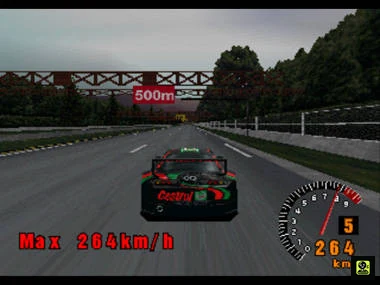
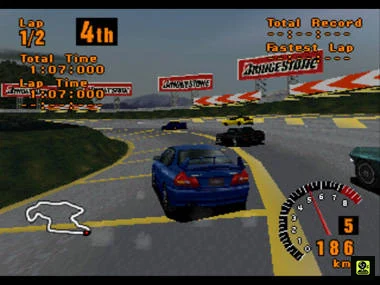
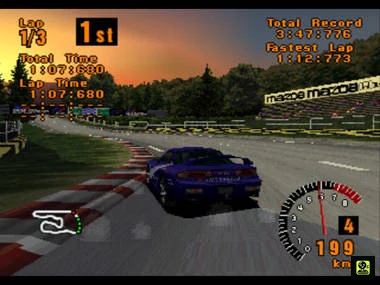
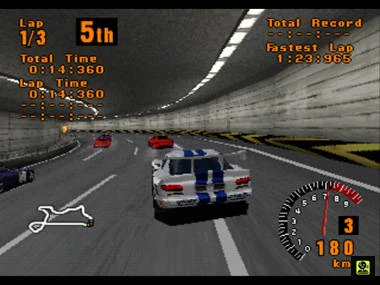
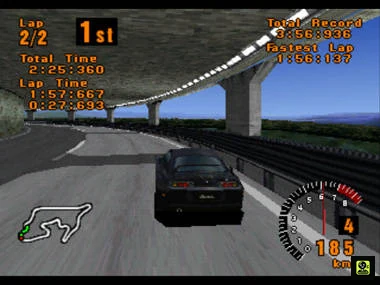
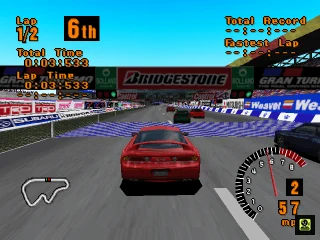
Sources & references
Our original guide draws on the references below. Check the edition at the top of this page before following controls or unlock requirements.
- Gran Turismo official product page
- Gran Turismo Software Manual
- Gran Turismo — B-Class License Guide, PlayStation, North American version
- Gran Turismo – FAQ, PlayStation, KLee
- Gran Turismo - FAQ - PlayStation - By DC
- Gran Turismo – Unlocking Guide – PlayStation – By Sal_89
- Gran Turismo PlayStation Software Manual
- Gran Turismo – FAQ – PlayStation – By BCampbell
- Gran Turismo – Translation Guide – PlayStation – By SDavis
- Gran Turismo - Compendium - PlayStation - By JCulbert
- Gran Turismo PlayStation unlockables reference
- Gran Turismo – License Test Guide, PlayStation, FAtsushi
- Gran Turismo - A-Class License Guide - PlayStation - By MKim
- Gran Turismo - IA-Class License Guide - PlayStation
- Gran Turismo Software Manual
- Gran Turismo – Quick Cash Guide, PlayStation, MKim
- Gran Turismo – Tuning FAQ – PlayStation – By BChmilnitzky
- Gran Turismo Instruction Manual
- Gran Turismo FAQs, Walkthroughs, and Guides for PlayStation
- Gran Turismo reference guide
- Gran Turismo - Complete Car List - PlayStation - By DConnoy
- Gran Turismo World Cup (GT1)
- Special Events (GT1)
- Special Stage Route 11 All-Night Endurance Race 1
- Special Stage Route 11 All-Night Endurance Race 2
- Grand Valley 300 km Endurance Race (GT1)
- Gran Turismo 1 – Playthrough Part 20 – GT World Cup
- Gran Turismo (PlayStation) Track List
- Special Stage Route 11 — Gran Turismo Wiki
About the game & collecting notes
- Platform
- Sony PlayStation
A practical start-to-finish strategy guide for the original Gran Turismo on PlayStation in the requested North American edition. Earn the B, A and International A licenses, build a reliable garage, complete every other GT League and Special Event championship as the full Simulation route, then win the six-race Gran Turismo World Cup and verify the ending movie or credits and GT Hi-Fi unlock. All-gold licenses, alternate prize-car collection and Arcade completion remain optional extended goals.
Darryl Polo
Darryl Polo loves tinkering with emulation and revisiting retro games. He enjoys exploring how old favorites play on different setups and sharing what he learns along the way. At Joking Joystick, he writes about the games, hardware, and small discoveries that keep the hobby fun.
Our editorial standardsFound a step that needs another look? Help us improve this guide.