A Polish distributor searches for a different digital future
GOG’s history begins with CD Projekt, the Polish company founded by Marcin Iwiński and Michał Kiciński in 1994. The two had met in high school and began importing computer games into Poland, initially selling foreign releases through Warsaw’s computer bazaar. At the time, Poland’s consumer software market was still developing. Official releases could be delayed, poorly localized, expensive, or simply unavailable, while unauthorized copying was common. CD Projekt’s early business therefore developed around access: obtaining legitimate games, importing them, packaging them for local customers, and gradually making official distribution more attractive than informal alternatives.
That experience shaped the company’s later attitude toward digital distribution. CD Projekt did not invent the idea that convenience could encourage legitimate purchases, but its early business gave the principle a practical foundation. Customers needed reasonable prices, reliable access, understandable packaging, and support after the sale. The company later became a publisher and developer, but its roots remained in distribution. When the PC market began shifting from boxed software toward downloads, CD Projekt was already familiar with the legal, commercial, and logistical problems involved in bringing games from rights holders to players.
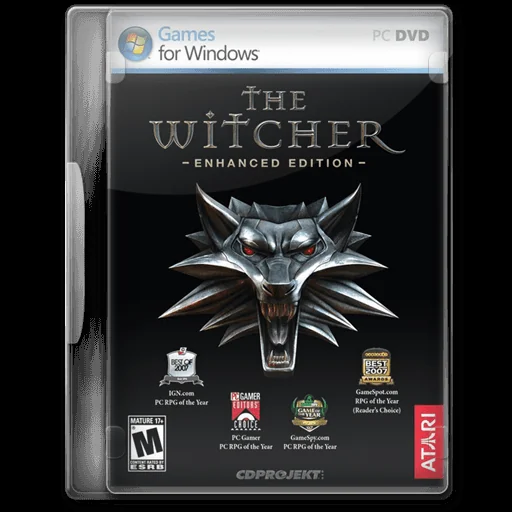
The company’s development ambitions expanded in the early 2000s. CD Projekt Red began work on The Witcher, which eventually became a major international role-playing franchise. That success gave the wider group more capital and visibility, but GOG was not simply a by-product of The Witcher. It addressed a separate problem: large numbers of important older PC games were difficult to buy, difficult to run, or unavailable through an official channel. GOG was created as a digital distribution platform, not as a console, computer, operating system, or piece of gaming hardware. Its platform identity has always been based on software files, licensing, catalog management, and support.
The 2008 launch and the classic PC catalog
Good Old Games entered public beta in September 2008. Its first purpose was narrow and concrete: revive older PC games and prepare them to run on contemporary computers. The initial catalog concentrated on titles from publishers whose older libraries still had cultural value but were no longer consistently available through retail stores. Role-playing games, strategy titles, adventures, simulations, and action games formed the center of the early selection. The store’s appeal came from curation rather than sheer size. It promised that a customer would find a particular classic in an authorized, usable form instead of having to search for a second-hand disc or an uncertain fan-made package.
The original name, Good Old Games, expressed the project’s focus. These were not necessarily the oldest games ever made, nor were they all technically abandoned. They were games that had accumulated a reputation among PC players but had become awkward to purchase or operate. The service combined rights licensing with technical preparation. A release might include an installer configured for DOSBox, compatibility fixes, updated launch settings, or a wrapper that allowed older graphics and sound routines to function on newer systems. The customer generally did not need to understand why the original program failed; the point was to make installation and play practical again.
GOG also tried to reproduce some of the generosity associated with boxed PC games. Downloads could be accompanied by manuals, maps, soundtracks, wallpapers, artwork, reference material, and other extras. These additions were not merely decorative. Manuals often explained controls and systems that modern players could otherwise find opaque, while maps and design documents helped preserve the historical context of a release. The package presented the game as a cultural artifact rather than only as an executable file. This combination of legal access, technical preparation, and supplementary material became one of GOG’s clearest differences from ordinary gray-market downloads.
DRM-free distribution and the meaning of ownership
Digital rights management, or DRM, is a set of technologies used to control how software is accessed. A game may require a disc, serial number, activation check, launcher, account connection, or recurring communication with a server. GOG’s central policy was to sell games without mandatory DRM wherever its agreements allowed. Customers could download offline installers from the website, save them locally, and install many games without making the Galaxy client part of the basic experience. This did not make every feature independent of the Internet. Multiplayer servers, cloud saves, social functions, and external services could still rely on networks or third-party infrastructure. The important distinction was that optional online conveniences did not have to be the foundation of a single-player purchase.
The policy responded to specific weaknesses in older PC software. Many classic games had originally used disc checks, code wheels, printed passwords, hardware keys, or other systems designed for an environment that no longer existed. Optical drives became uncommon, manuals went missing, and old protection schemes could conflict with modern operating systems. A game might remain legally valuable while its original security system made it unusable. Removing or bypassing that protection under license, then distributing a tested build, could preserve access without requiring the customer to reconstruct the original technical environment.
GOG’s approach also offered a philosophical contrast with client-centered stores. A launcher can be useful: it can manage updates, achievements, cloud saves, multiplayer invitations, and social features in one place. But a launcher may also make a purchase feel like a continuing permission rather than a file the customer can preserve. GOG’s offline installers gave customers a more tangible form of control. They did not eliminate copyright, licensing, or the need for a functioning business to host downloads, but they reduced dependence on a mandatory authentication service. The distinction between a DRM-free file and a permanently guaranteed service remained important throughout GOG’s history. A customer could control a downloaded installer more directly than an account-bound license, yet the storefront still depended on contracts, servers, staff, and financial viability.
The 2010 shutdown scare and the end of the beta period
In September 2010, GOG replaced its normal website with messages suggesting that the service was closing. Customers were alarmed because the event appeared to challenge the platform’s central promise. If the store vanished, would buyers retain access to their purchases and bonus material? The company soon explained that the apparent closure was connected to a relaunch and the end of the beta phase. GOG restored the service, described the episode as a marketing stunt, and reiterated that existing customers would be able to download their games and extras without DRM.
The incident became a defining lesson about digital ownership. DRM-free software can operate independently after it has been downloaded, but the customer may still depend on a store’s servers to obtain that software again. The event did not prove that GOG’s approach was meaningless; it demonstrated the difference between technical independence and institutional permanence. An offline installer can remain usable without the storefront, while a customer who never saved that installer may still need the storefront to retrieve it. GOG’s response therefore mattered not only as public relations but also as an explanation of what its promise did and did not cover.
The relaunch also gave the company an opportunity to improve its infrastructure and presentation. GOG was no longer merely a small experiment in selling old games. The platform needed to support more customers, more publishers, a wider catalog, and more complex account and download systems. Reports from the period described substantial backend redevelopment. The service emerged with a more ambitious identity: it would continue restoring classics, but it would also seek newer releases that could be sold under the same broad principles of consumer choice, optional clients, downloadable ownership, and DRM-free access.
From Good Old Games to GOG.com
By 2012, the name Good Old Games had become too restrictive for the business the company wanted to build. The service began using GOG.com as its main identity, preserving the older name as the origin of the acronym and as a label associated with classic titles. The rebranding did not discard the archive. It acknowledged that the store now wanted to sell newer independent games and selected contemporary releases as well as older software. A catalog limited to recovered classics might be culturally valuable, but a sustainable storefront also needed a continuing flow of new products.
Expansion brought GOG into direct competition with Steam and other digital PC stores. Steam’s strength was scale, infrastructure, and a large network of users, publishers, communities, and online features. GOG’s answer was not to duplicate every part of that model. It emphasized a curated catalog, offline installers, technical preparation for older software, bonus content, and a strict preference for DRM-free releases. These qualities appealed particularly to players who valued single-player games, long-term backups, historical software, or freedom from mandatory launchers.
The broader catalog also exposed GOG to the complications of regional distribution. Digital stores operate across countries with different currencies, taxes, incomes, laws, payment systems, and publisher agreements. A price that looks reasonable in one market may be inaccessible in another, while a publisher may insist on regional terms that conflict with a store’s preferred simplicity. GOG’s early reputation was associated with consumer-friendly pricing and a relatively straightforward international storefront, but expansion required more complicated arrangements. The issue demonstrated that DRM policy was only one part of digital distribution. A store could oppose restrictive copy protection while still having to negotiate commercially realistic prices and regional rights.
The technical work behind a classic release
Preserving a PC game is more complicated than uploading its original executable. PC software was designed for a shifting collection of processors, memory limits, sound cards, display standards, drivers, input devices, and operating systems. A DOS game might expect a particular memory arrangement or sound card. A Windows game might depend on obsolete versions of DirectX, old video interfaces, unusual installers, or fixed screen resolutions. GOG’s technical work begins by identifying those assumptions and determining how to make the program behave correctly on a modern computer without requiring the player to own the hardware of the original era.
Emulation is one important tool. DOSBox can reproduce enough of a DOS environment for many older games to run, while configuration files and launchers can hide much of the complexity from the customer. Other releases may use compatibility layers, updated libraries, rendering wrappers, fan-created fixes used with permission, or small changes to configuration and startup behavior. The approach differs from game to game. A strategy title may need corrected timing, an adventure may require a video codec, and a three-dimensional Windows game may need a wrapper that translates an old graphics interface into one supported by current hardware.
Modernization requires judgment because a technically improved release can also depart from the original. A higher resolution may make a menu easier to read but reveal artwork designed for a smaller display. A modern controller layout may be more accessible but feel unfamiliar to a player who remembers keyboard commands. Fixed bugs can improve reliability while changing behavior that some enthusiasts regard as part of the original version. GOG’s work is therefore a form of interpretation as well as engineering. The objective is usually not to remake the game, but to preserve its essential behavior while removing avoidable obstacles to running it.
Publishers, developers, and landmark releases
GOG’s early identity was strengthened by catalogs from publishers that had shaped PC gaming. Interplay’s role was particularly significant because its library included influential role-playing and strategy games that remained widely discussed long after retail distribution had faded. Fallout and Fallout 2 became important examples of the store’s purpose: celebrated games could be legally obtained, packaged with necessary support files, and introduced to new players without requiring original discs or period hardware. Similar treatment was valuable for series such as Ultima, Might and Magic, Heroes of Might and Magic, Commandos, and other games whose reputation outlasted their physical availability.
LucasArts releases broadened the service’s audience further. Classic adventure games and Star Wars titles carried strong recognition beyond the specialist community that already knew how to configure DOSBox. Their arrival demonstrated that GOG could negotiate for globally valuable properties rather than only obscure or neglected software. It also showed how licensing could affect preservation. A game may be technically easy to distribute but still unavailable because rights to its characters, music, technology, or publishing agreement are divided among several parties. Securing a famous catalog can require more legal and commercial coordination than preparing the files themselves.
GOG’s relationship with new developers became equally important. Independent studios could choose a storefront that offered a DRM-free audience and a culture of curation. Selected contemporary releases showed that GOG was not a museum operating only in the past. The Witcher series and later CD Projekt Red releases helped connect the store to a modern publisher, while independent role-playing games, adventures, strategy games, and experimental projects gave the catalog variety. The result was an unusual mixture: a player could purchase a decades-old classic and a newly released game from the same storefront, with the shared principle that the basic installation should not be inseparable from a mandatory client.
Galaxy and optional online services
GOG announced Galaxy in June 2014 as an optional client for customers who wanted modern online conveniences. The client could manage installations and updates, organize a library, provide achievements and friends features, and support multiplayer for compatible games. GOG presented it as an answer to a practical problem: many customers wanted the freedom of DRM-free distribution but also wanted the convenience of automatic updates, social tools, and easier online play. The company’s solution was not to make the client the only route to a game. Website downloads and offline installers remained central to the store’s identity.
Galaxy also promoted cross-play where individual games supported it. The goal was to let players on GOG interact with players using other PC storefronts, particularly Steam, instead of forcing every member of a multiplayer community into the same commercial ecosystem. This was technically dependent on each game’s networking design and on the continuing operation of servers, but the principle was significant. GOG positioned itself as a platform that could coexist with other services rather than requiring a completely closed network.
The distinction between the game and its online services remained unavoidable. A title can be DRM-free and still lose multiplayer when a developer closes servers, a third-party service changes its terms, or a community becomes too small to sustain matchmaking. Cloud saves and achievements similarly depend on infrastructure. Galaxy made GOG more convenient for customers who wanted those functions, but it did not remove the limitations of networked software. The optional-client model therefore became a compromise between independence and convenience: the store could offer a modern interface without making every single-player installation permanently dependent on it.
Operating systems, indie development, and PC diversity
GOG is a software distribution platform, so its reach depends on the operating systems and builds supplied by developers. Windows became the dominant target for the catalog, but GOG also offered selected releases for macOS and Linux. These versions were not automatic consequences of purchasing a game. A developer or publisher had to provide a compatible build, and older software could require separate preparation. The catalog therefore varied by title: one purchase might include Windows and macOS files, another might offer Linux support, and a third might be Windows-only.
Linux support had particular symbolic importance because it challenged the assumption that commercial PC games had to be tied to Windows. GOG offered selected native Linux releases and documentation for developers preparing Linux builds, although distribution differences and the size of the Linux gaming market limited coverage. The store did not solve the general problem of supporting every Linux distribution, and GOG Galaxy itself was not historically available as a full Linux client. Nevertheless, the presence of Linux installers gave users a legal commercial route for some games and encouraged discussion about portable engines, open standards, and compatibility layers.
macOS support presented different difficulties as Apple changed processor architectures, graphics technologies, security rules, and operating-system behavior. A game that worked on one generation of Macs might need a new build or compatibility treatment on another. These changes illustrated an important fact about PC preservation: the platform is not one fixed machine. Windows, macOS, and Linux evolve separately, and a preserved game may require continuing intervention for each environment. GOG’s catalog can therefore include a game in one operating-system version without guaranteeing equivalent support across all three.
The film experiment and the limits of expansion
In August 2014, GOG extended its DRM-free philosophy beyond games by launching a small film and television initiative. The initial selection emphasized documentaries and works relevant to gaming and internet culture, including films that could be downloaded or streamed. This cautious approach reflected the difficulty of negotiating with major film studios. GOG reported that larger rights holders were reluctant to become the first prominent company to release substantial film catalogs without DRM, even when individuals involved in the industry acknowledged that copy protection did not prevent unauthorized copying.
The experiment made sense as a branding exercise. GOG already had an audience interested in digital ownership, independent creators, and technology culture. It could offer films with supplementary material and a straightforward download model, much as it had offered manuals and soundtracks with games. But movies and television carried different rights structures, release windows, regional restrictions, music clearances, and studio expectations. The business conditions that made a classic PC game practical to repackage did not automatically apply to mainstream audiovisual media.
Film distribution did not become the defining direction of GOG. The episode nonetheless clarified the limits of the company’s proposition. DRM-free distribution could be persuasive when rights holders controlled an old game with a fragmented audience and a relatively modest commercial risk. It was much harder to apply to entertainment properties with complex licensing and large financial stakes. GOG returned its primary focus to games, where its technical experience, customer base, and preservation argument were strongest.
Cultural impact, delistings, and the fragility of digital libraries
GOG changed how many players thought about old PC games. Before the service, a classic might be available only as a used disc, an unofficial download, or a copy requiring specialist knowledge of obsolete hardware. GOG presented it as a licensed product with a modern installer, support documentation, bonus material, and a recognizable store page. That presentation helped move classic PC games from the category of forgotten software into an active cultural library that could be bought, reviewed, discussed, and played alongside new releases.
The platform also made preservation visible to ordinary customers. Archives and museums may preserve source code, packaging, design documents, prototypes, and development records, but players often experience preservation through a basic question: can the game still run? GOG operates between commercial distribution and archival work. It does not preserve every physical edition or every historical variant, and a modernized package may differ from the original release. However, negotiating rights and maintaining playable software can rescue works that would otherwise remain inaccessible because of obsolete technology, missing documentation, or uncertain ownership.
Digital availability remains fragile even when the files are DRM-free. Games can leave a storefront when licenses expire, publishers change strategy, music rights are disputed, or a company decides that maintaining a release is not worthwhile. A customer who already downloaded an installer may retain practical access, but a new customer may no longer be able to buy it. Online features can disappear even when the single-player executable remains available. GOG’s history therefore complicates simple claims about ownership. Offline files provide meaningful control, but long-term preservation still depends on backups, compatible hardware, legal rights, technical maintenance, and institutions willing to keep the material available.
Competition, corporate change, and the preservation program
GOG operated in an increasingly crowded PC market. Steam remained the largest general-purpose competitor, while Epic Games Store, publisher launchers, Microsoft’s PC services, itch.io, Humble, subscriptions, and direct sales all sought customers and developer attention. GOG could not win by matching every rival feature or every promotional budget. Its distinctive position remained the combination of curation, classic-game expertise, DRM-free distribution, offline installers, and a preference for a library that did not require permanent client dependence. That position earned strong loyalty but also imposed commercial limits. Some major releases were unavailable because their publishers required DRM or preferred another distribution model.
The ownership relationship with CD Projekt also changed. CD Projekt had created GOG and maintained close cooperation with it for many years, including distributing CD Projekt Red games through the store. In December 2025, CD Projekt announced that co-founder Michał Kiciński had acquired all GOG shares, making the distribution business independent of the CD Projekt Group while preserving an intention to continue cooperation on CD Projekt titles. The transaction marked a major organizational transition. GOG’s identity had been shaped by its parent company, but its future now depended more directly on its own management, catalog strategy, partnerships, and ability to sustain preservation work.
GOG formalized that preservation mission in November 2024 with the GOG Preservation Program. The program began with more than one hundred classic games and placed a recognizable preservation label on selected releases. GOG said that designated games would receive extensive quality testing, compatibility improvements, technical support, bonus-content checks, and continuing attention as modern systems changed. The program gave a formal name to work the platform had performed since 2008, while acknowledging that preservation is not completed by a single upload. Installers may need updates, missing content may need restoration, and compatibility problems may reappear when operating systems or hardware change.
GOG’s lasting influence on PC gaming
The Preservation Program’s significance lies in its practical scope. It does not promise to preserve every version of every game, restore every discontinued online service, or make all historical peripherals available. Instead, it defines a narrower responsibility: keep selected games installable, playable, and supported on modern computers where possible. That may involve repairing a crash, improving controller support, updating an emulator, restoring content, or testing a build against current operating systems. The work resembles conservation in other media, where a preserved object needs monitoring and intervention rather than a single act of storage.
GOG also influenced the wider discussion about digital ownership. Its existence demonstrated that a commercial store could compete through trust, curation, and customer choice rather than relying only on lock-in. It helped normalize the idea that new games could be released without mandatory DRM, that older games deserved professional technical treatment, and that bonus material and documentation were valuable parts of a digital package. Other stores and publishers did not adopt every part of the model, but GOG made DRM-free distribution visible as a serious business option.
The platform’s legacy is not that it solved digital ownership completely. A customer still buys under a license, a store can lose rights, a server can disappear, and an operating system can break an old program. GOG’s contribution is a workable compromise between commercial reality and player independence. It licenses games, prepares them for changing computers, provides offline installers where available, and offers optional online services without making those services the entire basis of the purchase. From its Polish distribution roots to its post-CD Projekt independence, GOG remains a case study in how software can be sold as a continuing cultural collection rather than only as access controlled by a single launcher.