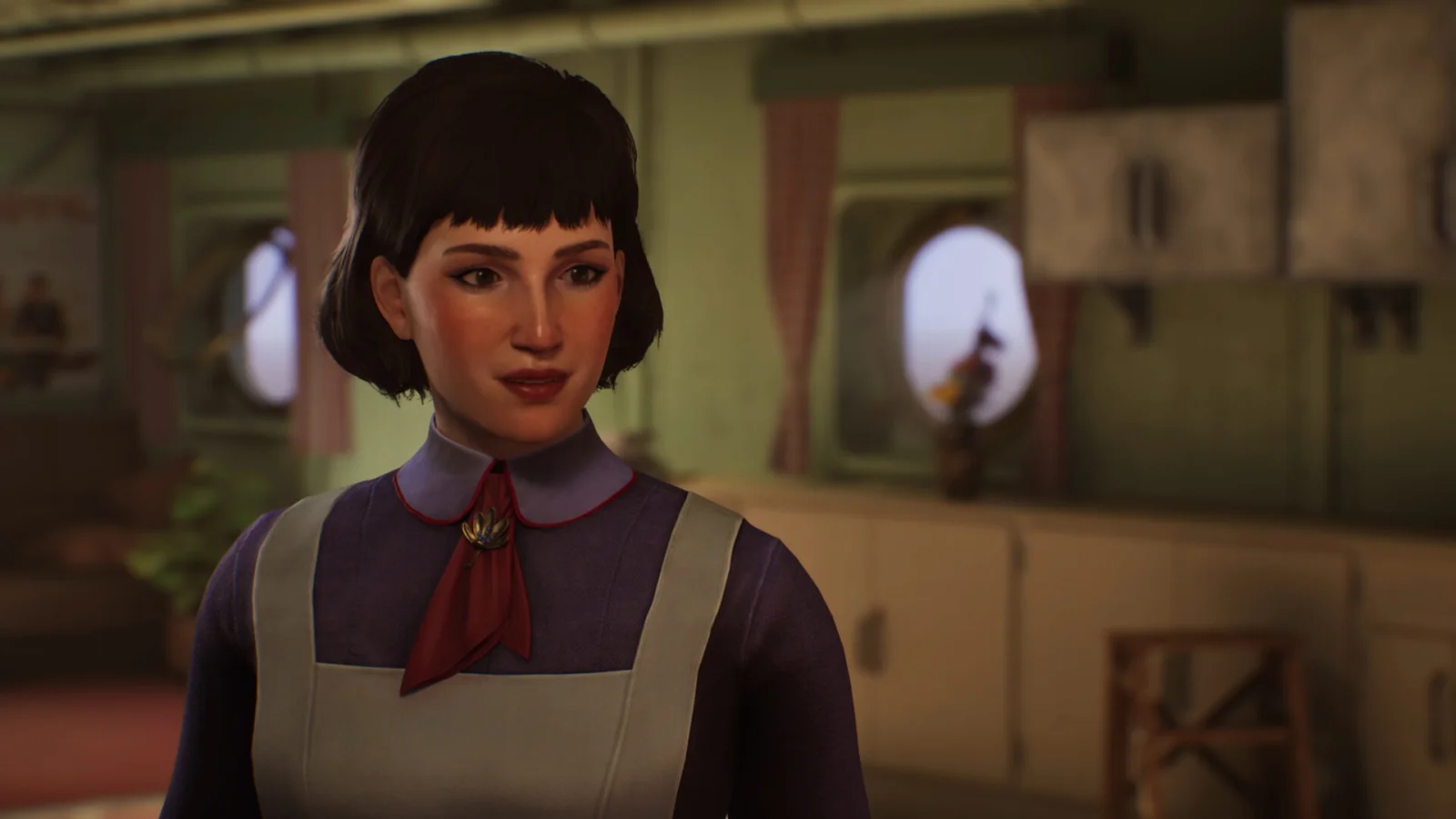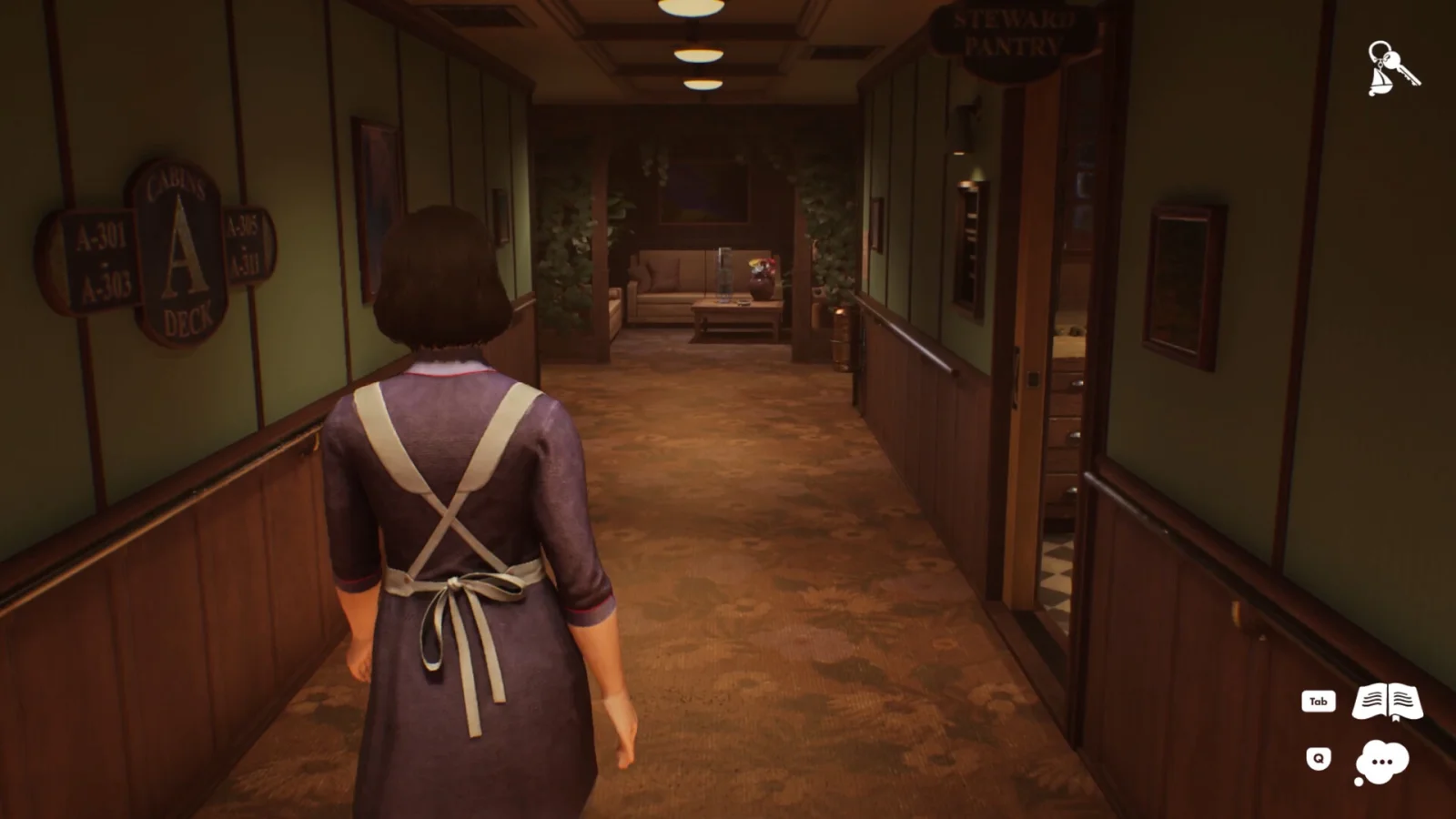
Lost & Found: A This Bed We Made Story is a compact, standalone narrative mystery from developer and publisher Lowbirth Games. Released for Windows on August 5, 2026, it returns to the world of This Bed We Made without requiring knowledge of that earlier game. Sophie is now a stewardess aboard the transatlantic passenger ship Orpheus in 1964, where a theft turns ordinary work into an investigation. The official outline promises cabin searches, object examination, clue-following, dialogue and investigative decisions, and consequences that may lead to multiple outcomes.
That is an attractive setup because it understands that a mystery does not need an enormous map to create pressure. A passenger ship is a naturally bounded setting: people live in close quarters, private spaces sit beside public corridors, work schedules create patterns, and every cabin can suggest a life just outside the investigator’s view. At the same time, the advertised one-to-two-hour scope defines the terms of the experience before the case even begins. Lost & Found is presenting itself as a deliberately small story, not a full-scale successor built to match the length or dramatic reach players may associate with its predecessor.
The central tradeoff is therefore unusually clear. Concentration can be a virtue for a mystery game. A contained ship, a limited number of spaces, and readable objectives can keep attention on the investigation rather than on travel, clutter, or a sprawling cast. But a short format also has little spare room. It may limit escalation, the amount of character development possible around the central case, and the opportunity for its mechanics to evolve beyond their opening ideas. Players deciding whether to board should treat that tension as the assessment’s defining point rather than as a footnote.
A setting built for close observation
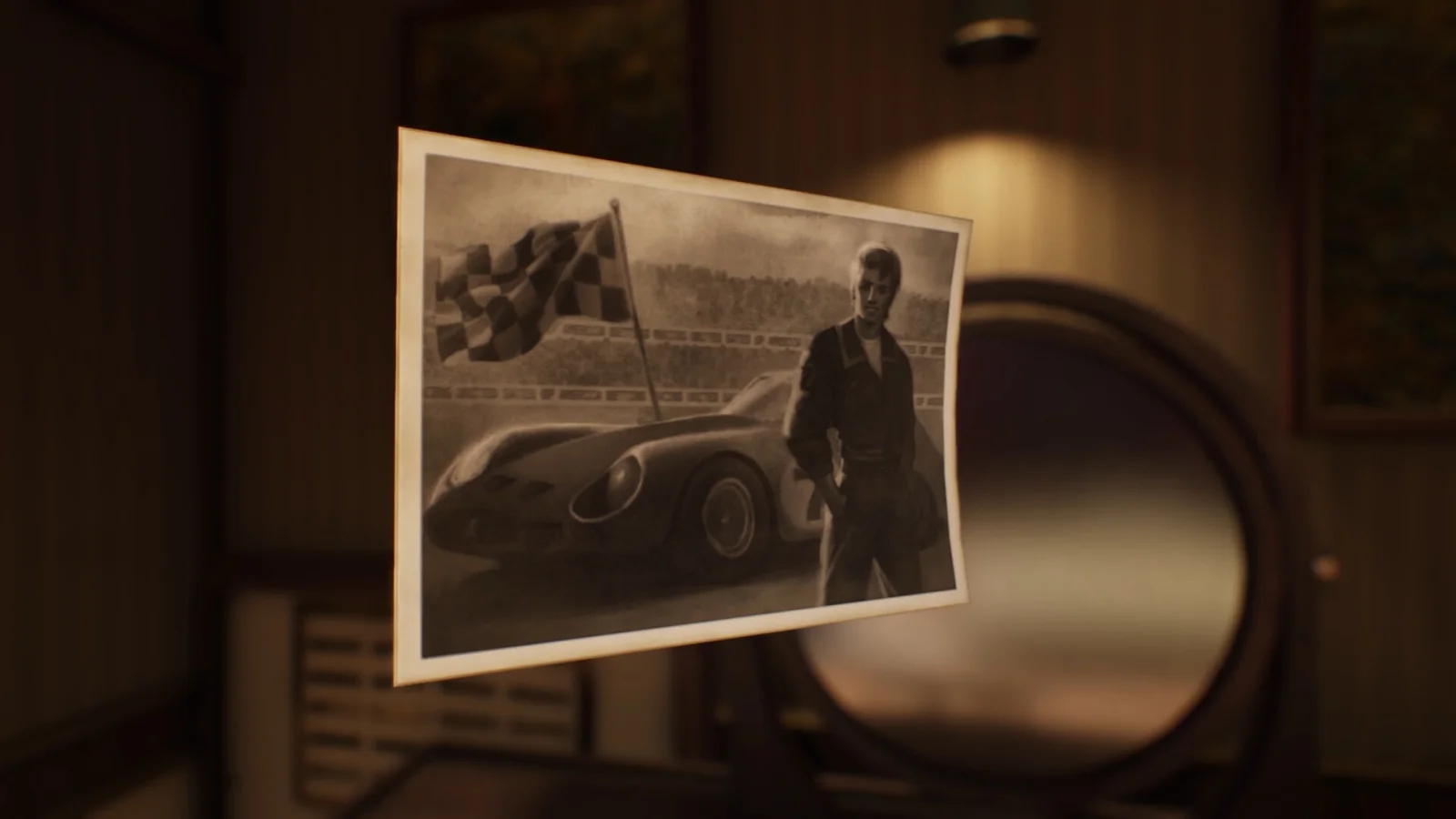
The verified premise gives Sophie an occupation that is more than a period costume. As a stewardess, she has a plausible reason to move through guest areas, handle the traces left by passengers, and see the difference between an orderly room and one that carries a story. The official description identifies searching cabins and examining objects as core activities. In design terms, that makes the ship’s private spaces potential narrative evidence: furnishings, arrangements, and possessions can do double duty as atmosphere and as material for deduction, without the game needing to announce every important detail with a dramatic cutscene.
One critic specifically praised the carefully arranged environments, expressive facial animation, and period presentation. Another highlighted environmental writing and the soundtrack, while a spoiler-free video assessment singled out the polish of the 1960s art direction and atmosphere. These are individual observations rather than a guarantee of response, but they point toward the kind of appeal the premise is built to support. A luxury liner in this period can make a small route feel rich if its rooms have enough visual and social distinction. The promise is not simply that players will search cabins; it is that each search might make the ship feel more inhabited.
The enclosed setting may also give the mystery useful readability. In a large open-world investigation, distance and optional activity can dilute the relationship between a clue and its consequence. Here, a smaller suspect pool and a controlled geography could make the chain of attention easier to follow. That does not automatically make the deduction deeper. It does, however, create conditions in which a compact case can feel legible and purposeful. The difference matters: a mystery can be simple without being careless when its spaces, objects, and conversations consistently reinforce the questions it asks.
There is a complementary risk. The same proximity that makes a ship a good detective setting can make it feel narrow if the available rooms lack enough variation or if the central problem reaches its answers too quickly. Since the official length is only one to two hours, Lost & Found has limited time to transform familiar corridors into a setting with new meanings. A short investigation benefits from clear direction, but it also needs the confidence to let observation matter. The most satisfying version of this premise would make routine access to cabins feel like a perspective on the ship, not merely a convenient excuse to collect clues.
Routine work is the game’s most interesting framing device
An independent assessment described the play loop as combining stewardess duties with unauthorized investigation, naming tasks such as cleaning, bed-making, towel delivery, and tidying. That description should be understood as that critic’s account of the game rather than an exhaustive official feature list. Even so, it identifies a potentially important design choice. Mundane service work can place the player in Sophie’s daily rhythms before the mystery disrupts them. Instead of beginning with a detective who is already empowered to interrogate every room, the game can frame observation through a worker whose job involves care, presentation, and discretion.
That framing has real thematic potential. Cleaning a cabin is an intimate act performed at a distance from its occupant; it involves touching the surface of another person’s life while being expected not to intrude upon it. A theft investigation turns that boundary unstable. What initially looks like housekeeping detail may become context, and what seems harmlessly private may demand closer attention. Without disclosing any solution or plot turn, that is a strong foundation for environmental storytelling: Sophie’s professional routine can make investigation feel embedded in the setting rather than pasted onto it.
It can also produce friction. Repeated chores are effective only if they clarify the environment, change the player’s understanding, or establish a contrast with the illicit thrill of snooping. If service tasks are too frequent or too similar, they risk becoming a pause between the story beats players came to see. A short game has less room for routine to become tiring than a long one, yet it also has less room to justify a loop that feels mechanically static. The question is not whether ordinary tasks belong in a mystery—they plainly can—but whether each return to routine earns its place through atmosphere, characterization, or a useful shift in investigative context.
That is why the game’s apparent modesty may work best for players willing to meet it halfway. Those looking for a dense puzzle-box with sprawling systems may find a service-and-search structure too familiar. Those who enjoy the small rituals of narrative adventures may find it an effective way to inhabit Sophie’s role. The official premise places dialogue and investigative choices alongside object searching, so the design is not solely about combing rooms. Still, it should be approached as a character- and setting-led mystery rather than as evidence of elaborate simulation or highly technical deduction systems.
Choices can add consequence, but not necessarily scale
Lowbirth Games states that dialogue and investigation choices carry consequences and that the story has multiple outcomes. This is a meaningful feature for a short narrative game because choices can make a tightly bounded case feel more personal. A different result does not need to create an entirely different game to matter; it can change how a player weighs a conversation, reads a lead, or remembers Sophie’s conduct in a difficult situation.
At the same time, multiple outcomes should not be mistaken for proof of broad replay value. A second pass may be appealing to players who want to test alternative decisions or see another resolution. Yet the brevity that makes a replay convenient can also reduce the sense of discovery once the central mystery is familiar. The official material establishes outcomes, not the scale of their divergence, the number of decision points, or the exact conditions behind them. Any expectation beyond that would be speculation.
One critic praised the possibility of different outcomes and reported a roughly 111-minute playthrough, which sits close to the official one-to-two-hour estimate. That is a useful individual point of reference, not a universal duration. Pace can vary with how long someone spends examining spaces, following leads, or revisiting decisions. More importantly, the reported duration reinforces the game’s stated identity. This is likely best considered an evening-sized case whose choices offer a reason to reconsider it, rather than a massive branching narrative intended to sustain many radically distinct runs.
For some players, that limit will be part of the charm. A concise game can respect the value of a finished thought: introduce a place, establish a problem, invite judgment, and reach an outcome before the structure has to inflate itself. For others, the same economy will feel like an unfinished appetite. The most fair expectation is that choices may add texture and consequence within a compact frame, not that they erase the frame.
Connected to This Bed We Made, but not dependent on it
Lost & Found is connected to This Bed We Made, and Sophie’s return gives existing players an obvious point of interest. Continuity can reward familiarity with her prior circumstances and with the series’ interest in service work, private rooms, and investigative curiosity. One independent critic praised continuity choices, while another felt that this smaller story largely follows the established formula rather than reshaping it. Both observations suggest a reasonable expectation: returning players may appreciate recognition and refinement, but should not assume the new episode is designed as a wholesale reinvention.
Crucially, Lowbirth Games says prior knowledge is not required. Newcomers can therefore assess the game on its immediate appeal: a period ship, a theft, an investigator with access to cabins, and a brief case with choices. That accessibility is valuable. A standalone entry avoids turning a modest narrative adventure into homework, and a newcomer need not know a previous mystery to understand why a stewardess might notice what others overlook.
Players who want another compact game evaluated on the clarity of its central design rather than on sheer breadth may also find a useful point of comparison in this assessment of Rivage’s mystery premise. The games should not be treated as direct substitutes; the shared relevance is simply the challenge of making a contained mystery setting feel substantial.
What the limited critical picture suggests
The available critical observations are not uniform in emphasis, though they repeatedly return to scale. One review enjoyed the small mystery, its visual presentation, and its expressive characters while noting minor visual glitches and stressing its shortness. Another found Sophie engaging and the investigation enjoyable, but judged the design familiar. A separate critic praised environmental detail, stability, music, continuity, and alternate outcomes, while considering the dramatic stakes and scale lower than those of the earlier game. Another account viewed the episode as less suspenseful than its predecessor even while valuing its character-centered storytelling. A further summary called the cabin investigation absorbing but found the whole experience too brief.
None of those views establishes a universal verdict. They do, however, make the likely dividing line easy to identify. The game’s virtues appear tied to concentration: a polished period space, a personable lead, an intimate case, and a structure built around looking closely. Its possible disappointments are also tied to concentration: lower intensity, limited development, familiar foundations, and an endpoint that may arrive before the player wants the ship to reveal more.
The reported minor visual glitches deserve similarly measured treatment. They are a critic observation, not a basis for broad claims about performance or technical quality across PC hardware. Official storefront information does confirm full controller support, Steam Cloud, achievements, Family Sharing, and single-player play. It also lists English and French interface, audio, and subtitle support. Those are established product details, but they do not answer every practical question a player might have about responsiveness, compatibility, or accessibility options. It is better not to fill those gaps with assumptions.
Who should take the voyage
Lost & Found appears best suited to players who value compact narrative adventures, carefully presented period settings, environmental storytelling, and clue-led mysteries. It may be particularly appealing to people already interested in Sophie, since the setup lets her role shape how the investigation is framed. Players who prefer a focused case that can fit into a single sitting may see the official one-to-two-hour estimate as a feature rather than a warning.
It is less naturally suited to anyone expecting a full-length sequel, extensive mechanical novelty, a huge roster of suspects, or sustained escalation across a much longer mystery. Players looking for high, unbroken suspense should also temper expectations in light of the individual critics who found the episode less intense than the earlier game. None of that invalidates a small mystery’s aims. It simply means the game seems most convincing when judged as a concise chapter with a specific atmosphere, not as a replacement for a larger detective adventure.
Verdict
Lost & Found: A This Bed We Made Story has a sharply defined proposition: bring Sophie’s investigative instincts to a 1964 transatlantic ship, use the details of working life and private cabins to support a theft case, and let choices shape a brief set of possible outcomes. The premise has the ingredients for a satisfying miniature—an evocative location, a role that naturally invites observation, and a scope that could keep the mystery cleanly paced. The same small scale is its most significant limitation. It leaves restricted space for mechanical expansion, larger dramatic momentum, and the fuller development expected by players seeking a major sequel.
For the right audience, focus is not a compromise but the point. For players who need a lengthy, startlingly new, or increasingly intense mystery, the ship may feel as though it reaches port too soon.