A more flexible frame rate
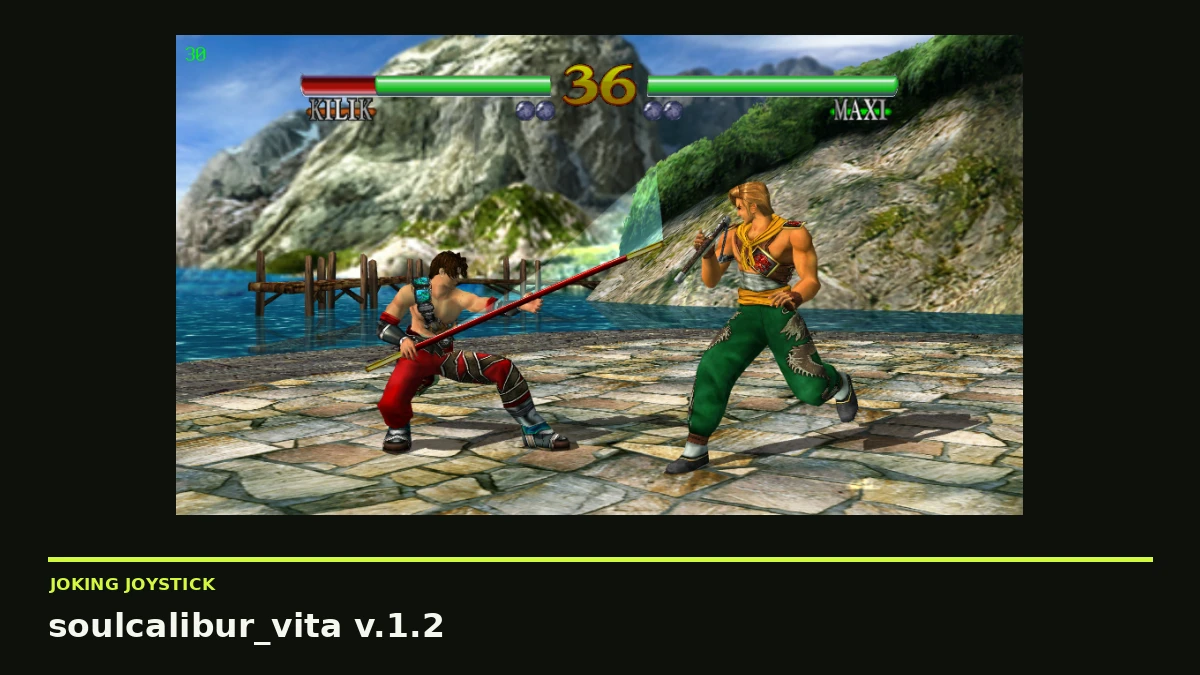
SoulCalibur Vita version 1.2 is available as a new PlayStation Vita build, with changes focused on rendering performance and frame-rate behavior. The update was published on November 8, 2026, under the exact version tag v.1.2.
The port no longer uses the game’s internal framepacer. When performance falls below the budget required for 60 frames per second, the game should now continue at the highest frame rate available instead of dropping directly to a 30 FPS lock. This does not guarantee a fixed frame rate in every situation, but it avoids the sharper fallback described in the release notes.
vitaGL changes target demanding screens
Version 1.2 updates the project to the latest vitaGL usage and enables vitaGL’s scratch-memory and draw-speedhack flags. The project attributes a performance increase of up to 250 percent to these settings, with the clearest intended benefit appearing in pre-fight screens and scenes that previously placed heavier demands on the hardware.
According to the project’s release notes, the combined changes make the game almost locked at 60 FPS. That is a project-reported performance claim rather than a guarantee for every stage or system configuration, and the README still identifies some areas where frame drops may occur.
What SoulCalibur Vita is
SoulCalibur Vita is a wrapper and port of SoulCalibur for Sony’s PlayStation Vita. Rather than emulating an entire Android device, it loads the official Android ARMv7 executable in memory, connects its imported functions to native implementations and applies the patches needed to run it on the handheld. The result is a Vita homebrew port built around the Android release’s game files.
The README says the port was tested with version 1.0.15 of the game. It also records earlier performance work: version 1.1 improved speed through circular vertex-pool usage in vitaGL, while version 1.0 was the initial release. Those earlier changes provide context for v1.2, but the new build’s documented work is specifically concentrated on vitaGL integration, frame pacing and rendering-related speed flags.
Known stage and audio considerations
The project’s documentation continues to identify several situations where performance can vary. Water Labyrinth and the final Arcade fight with Inferno may cause frame drops, while the backgrounds in Takamatsu Castle and Money Pit were simplified to reduce frame-rate loss. The v1.2 release notes do not say that these stage-specific issues have been eliminated.
On a first launch, the README recommends lowering the BGM and sound-effect volume settings to 8 or below. It warns that higher volume settings can cause sound effects to glitch during playback. This is a documented use note rather than a change introduced in v1.2.
The port also restores stages that were unavailable in the Android version because it lacked Mission Battle mode. The README says those stages, including alternate stages, are available from the beginning.
Using the new build
The release is distributed as a Vita package named soulcalibur.vpk. Running it requires the project’s documented supporting files and a legally obtained Android copy of SoulCalibur, including its APK and OBB data. The README also lists the required Vita kernel plugins, the shader compiler support file and a shader patch used with the game data.
The documentation lists optional overclocking support through PSVShell and an optional trophy solution through NoTrpDrm. These are separate from the v1.2 performance changes: the update’s reported gains come from changes to the port’s vitaGL configuration and frame-pacing behavior.
Because the port uses assets from the Android version, the Vita package is not a standalone replacement for the original game data. Users need to provide the required files from their own legally acquired copy and follow the project’s documented file preparation process.
A focused performance release
SoulCalibur Vita v1.2 is a targeted technical update rather than a content release. Its main practical difference is how the port responds when it cannot sustain 60 FPS: it now continues at the best available rate instead of enforcing a 30 FPS fallback. The updated vitaGL usage and newly enabled memory and drawing options are intended to make demanding transitions and pre-fight screens smoother.
The project reports that the changes bring the game close to a locked 60 FPS, while its existing documentation makes clear that individual stages can still behave differently. For players already using the port, v1.2 is therefore aimed at improving frame-rate consistency and reducing the impact of performance dips without adding a new game mode or changing the underlying Android game content.