Keep Joking Joystick in your feed.Choose us as a preferred source on Google.
Add as a Preferred Source on Google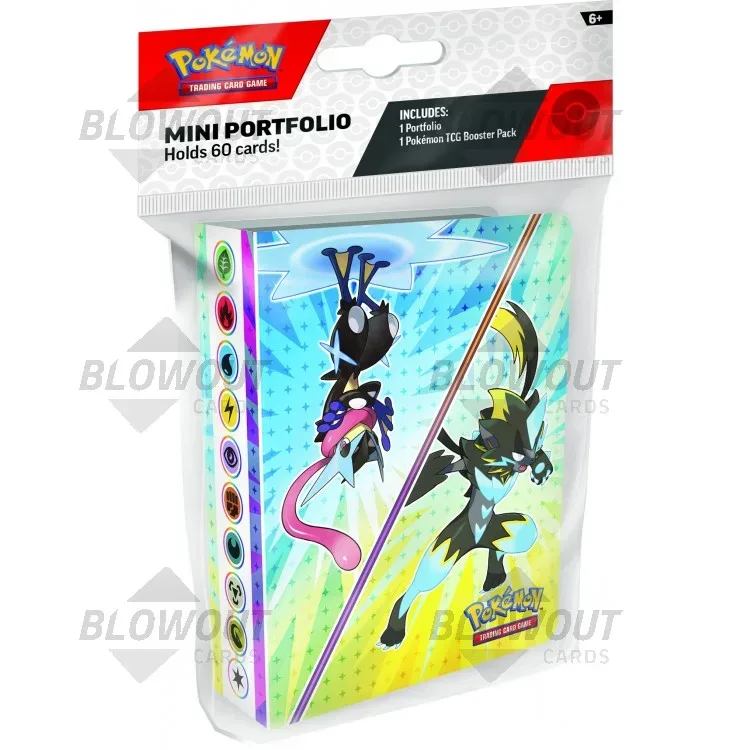
Pokemon 2026 Mini Portfolio (Fall Q4) - 6 Display Case
- Brand
- Pokemon
- Sport or category
- Sports Cards
Last checked
Shop this card release
Pokemon 2026 Mini Portfolio (Fall Q4) - 6 Display Case trading cards
We may earn a commission if you buy through these links, at no extra cost to you. As an Amazon Associate I earn from qualifying purchases.
Opens retailer search results. Check the model, edition, seller, availability and current price before buying.
About this set
Pokemon 2026 Mini Portfolio (Fall Q4) - 6 Display Case is a Pokémon TCG accessory release built around small, practical storage rather than card-hunting mechanics. Each mini portfolio is designed to hold up to 60 cards, making this a compact way to organize favorites, recent pulls, or a themed group of cards while keeping the presentation simple and tidy.
What this release is
This product sits on the storage side of the hobby rather than in the preconstructed deck or booster category. The title points to a Fall Q4 mini portfolio display case, so the main collecting interest here is the accessory itself and the convenience of having multiple portfolios grouped together. For collectors who like to keep a small selection of Pokémon cards ready to sort, store, or carry, that compact format is the defining feature.
Because it is a Pokémon-branded release, it naturally fits alongside other TCG accessories and display items rather than chase-driven card products. The confirmed capacity is useful on its own: up to 60 Pokémon cards per mini portfolio. That gives the holder a clear purpose for small subsets of cards, whether the goal is to separate favorites, build character-based mini collections, or keep a short stack organized.
How collectors may use it
A mini portfolio works best when the collector wants quick access and light organization instead of long-term bulk storage. Cards can be grouped by set, by type of artwork, by favorite Pokémon, or simply by whatever small group the collector wants to keep close at hand. The format is compact, so it suits cards that get looked at often or moved between places without much fuss.
The display case aspect adds practicality for people who want several portfolios together in one packaged group. That can make the release appealing to hobby shops, families, or collectors who prefer to assign different stacks to different portfolios. Since the product is intentionally straightforward, the collecting choice is less about rarity chasing and more about deciding how to organize a personal card rotation in a way that feels easy to maintain.
Confirmed details worth noting
The confirmed storage limit is the most concrete detail: each mini portfolio holds up to 60 Pokémon cards. Beyond that, the record does not identify special parallels, autograph content, relics, checklist names, or promo cards, so those elements should not be assumed. This makes the release distinct from products built around hits or chase inserts, and that distinction matters when choosing what kind of purchase fits a collection.
The historical context is simple but useful. The Pokémon Trading Card Game debuted in North America and Europe in 1999, and its cards have always supported both play and collecting. That background helps explain why accessories like mini portfolios remain relevant: the game uses 60-card decks, and storage products that handle a small stack neatly are an easy match for the hobby’s everyday needs. The old gameplay structure does not predict any special contents here, but it does show why the format feels familiar to Pokémon collectors.
Collecting approach
For collectors, the main decision is whether to treat this as a functional accessory, a display piece, or both. If the goal is to sort cards by set or theme, a mini portfolio offers a tidy way to keep those groups separate without committing to larger binders or boxes. If the goal is simply to store favorite cards in a portable format, the 60-card capacity gives enough room for a small but meaningful selection.
This release also suits collectors who like format-based accessories. The Fall Q4 label identifies it within a broader product schedule rather than as a checklist-driven card release, so its appeal comes from the usefulness of the portfolio itself and the packaging around it. That kind of release often works best when the collector wants something practical that still feels tied to the Pokémon TCG experience.
Because the product is not built around autographs, numbered parallels, or guaranteed special cards, it rewards a different kind of attention. The choice is less about what comes out of a pack and more about how the portfolio fits into a collection routine. For anyone organizing a few favorite cards, that can be the point of the release.