Keep Joking Joystick in your feed.Choose us as a preferred source on Google.
Add as a Preferred Source on Google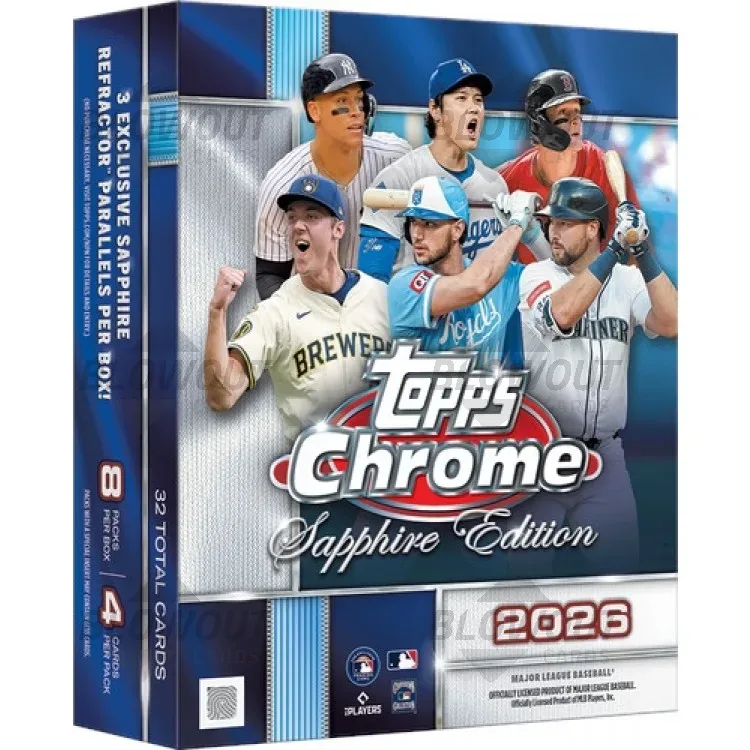
2026 Topps Chrome Baseball Sapphire Edition 10 Box Case
Last checked
Shop this card release
2026 Topps Chrome Baseball Sapphire Edition 10 Box Case trading cards
We may earn a commission if you buy through these links, at no extra cost to you. As an Amazon Associate I earn from qualifying purchases.
Opens retailer search results. Check the model, edition, seller, availability and current price before buying.
About this set
2026 Topps Chrome Baseball Sapphire Edition keeps the Chrome identity in a cleaner, more exclusive presentation. Framed around the Sapphire finish, it leans on the blue look, sharp photography, low-numbered parallels, and on-card autographs mentioned in the product description to create a focused chase and a polished feel.
Sapphire’s place in the Chrome line
This edition is built on the Topps Chrome foundation and gives it the Sapphire treatment. The result is a sleek Baseball release centered on the familiar metallic Chrome style, but with a distinct blue finish that sets it apart from standard Chrome presentations. That contrast is a large part of the appeal: the cards still feel rooted in the Chrome family, yet the visual identity is different enough to make Sapphire recognizable at a glance.
Topps Chrome itself dates back to 1996 as a brand, and that history helps explain why the Chrome name carries so much collector attention. The Sapphire version extends that lineage without changing what Chrome is known for: a polished surface, strong photography, and a clean look that keeps the focus on the player image and card design.
What the set emphasizes
The product’s character is defined by presentation and scarcity rather than filler. The description points to a no-filler style, which means the appeal comes from the cards themselves instead of extra noise around them. That matters for collectors who prefer a compact, focused release where each card is meant to contribute to the overall feel of the set.
Low-numbered parallels are central to the appeal. Sapphire has long been associated with that kind of chase, and this 2026 edition continues in that direction. Collectors who like color variation and scarcity within a Chrome format will find that combination especially important here, because the blue Sapphire finish and the parallel structure work together to give the set its identity.
Autographs and chase choices
The source also identifies on-card autographs as part of Sapphire’s appeal. That matters because autograph content in a Chrome-style release tends to carry a different feel than sticker-based approaches; the card design and signature sit together as part of the object rather than as separate layers. For collectors who value that presentation, Sapphire keeps the autograph side aligned with the set’s premium tone.
Because the release is built around chase, it helps to decide what kind of collection you want from it. Some collectors will focus on base cards for the Sapphire look, especially when they want the signature blue finish as the main feature. Others may build around parallels or autographs, treating the set as a hunt for rarer pieces that push the design further. Either route fits the product’s structure, since the set is clearly framed around visual consistency and scarcity.
How collectors may approach it
A practical way to collect Sapphire is to choose a lane before starting: a base run that showcases the design, a parallel-focused chase, or an autograph target. That keeps the set manageable and makes the premium style easier to appreciate, especially in a release where the visual identity is a major part of the draw.
Collectors who already follow Topps Chrome year after year will likely see Sapphire as a variation on a familiar theme rather than a separate universe. That familiarity is useful. It lets the release stand on recognizable Chrome traits while still offering enough distinction in finish and scarcity to justify attention on its own terms. The 2026 edition continues that balance in a straightforward, premium Baseball format.