Keep Joking Joystick in your feed.Choose us as a preferred source on Google.
Add as a Preferred Source on Google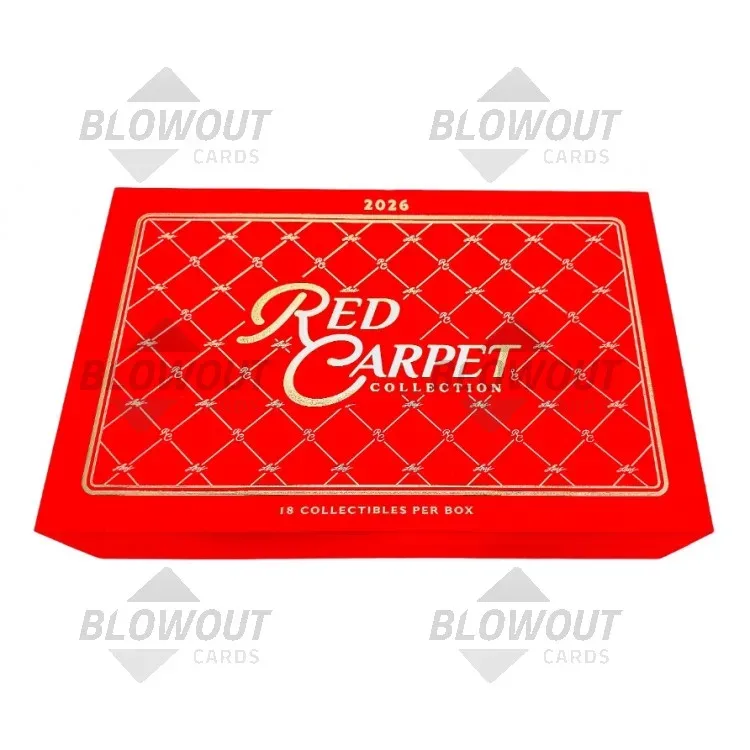
2026 Leaf Red Carpet Collection Case
- Brand
- Leaf
- Sport or category
- Other cards
Last checked
Shop this card release
2026 Leaf Red Carpet Collection Case trading cards
We may earn a commission if you buy through these links, at no extra cost to you. As an Amazon Associate I earn from qualifying purchases.
Opens retailer search results. Check the model, edition, seller, availability and current price before buying.
About this set
2026 Leaf Red Carpet Collection Case continues Leaf’s pop-culture autograph format in a case product built around signed cards and memorabilia redemptions. The confirmed makeup points to a heavily autograph-driven release with up to five multi-signed cards among the autograph content, plus signed memorabilia redemptions or cut autographs. For collectors, the main choice is whether to chase multi-signature pairings or focus on the memorabilia and cut-signature side of the checklist.
What this release is
2026 Leaf Red Carpet Collection sits in Leaf’s pop culture line and uses a case-level configuration centered on autographs. The product follows last year’s inaugural Red Carpet Collection, so it belongs to a continuing series rather than a standalone one-off. That matters for collectors because the 2026 edition should be read as the next chapter in the same format, not as a separate concept with unrelated content.
The confirmed structure is straightforward: 15 autograph cards, with up to 5 of those being multi-signed cards, plus 2–3 signed memorabilia redemptions or cut autographs. Those are the clearest anchor points for collecting this release. Everything else should be treated as unknown unless it appears in the finished checklist for this specific year and configuration.
Autographs and multi-signed cards
The autograph count gives this case a strong signature focus, and the presence of multi-signed cards is the part most likely to shape how collectors approach the set. Up to five multi-signed cards means some pieces should combine several signatures on a single card, which can appeal to collectors who prefer display-friendly cards or who want a more layered autograph story in one item.
Because the product is built around autographs rather than a broad base-card structure, it makes sense to decide early whether your goal is variety or presentation. A collector looking for the widest mix may prefer to build around single-signed cards. A collector who wants the most distinctive centerpiece items may instead favor the multi-signed cards, since those are the format’s clearest specialty.
Signed memorabilia redemptions and cut autographs
The other confirmed portion of the case is 2–3 signed memorabilia redemptions or cut autographs. That pairing gives the release a second lane beyond standard signature cards, and it changes the collecting experience in a useful way. Signed memorabilia redemptions may appeal to collectors who want something beyond standard signed cards, while cut autographs offer a different style of signature presentation altogether.
Since the product description groups these together, the safest approach is to treat them as an either-or style element within the case rather than trying to pin down a fixed mix. That leaves room for collectors to set priorities based on format preference: some will want memorabilia signatures for display, while others may put cut autographs first because they bring a different feel from conventional trading-card autographs.
How to collect it well
For a release with this much signature content, the cleanest collecting plan is to decide what you want to emphasize before chasing too many scattered examples. If your interest is in signature combinations, multi-signed cards are the natural target, especially because the product explicitly highlights them as part of the autograph plan. If you prefer a narrower focus, single-signed cards can still anchor a compact autograph collection from the release.
Collectors who enjoy variety may also want to balance the autograph side against the signed memorabilia and cut-autograph pieces. Those formats can add texture to a collection without requiring the same kind of overlap as a multi-signed card run. Because this is a case product, it rewards a collector who knows which part of the release matters most: combination signatures, memorabilia-linked pieces, or classic autograph cards. The 2026 edition’s confirmed structure is concise enough that those decisions can guide the whole approach.