Keep Joking Joystick in your feed.Choose us as a preferred source on Google.
Add as a Preferred Source on Google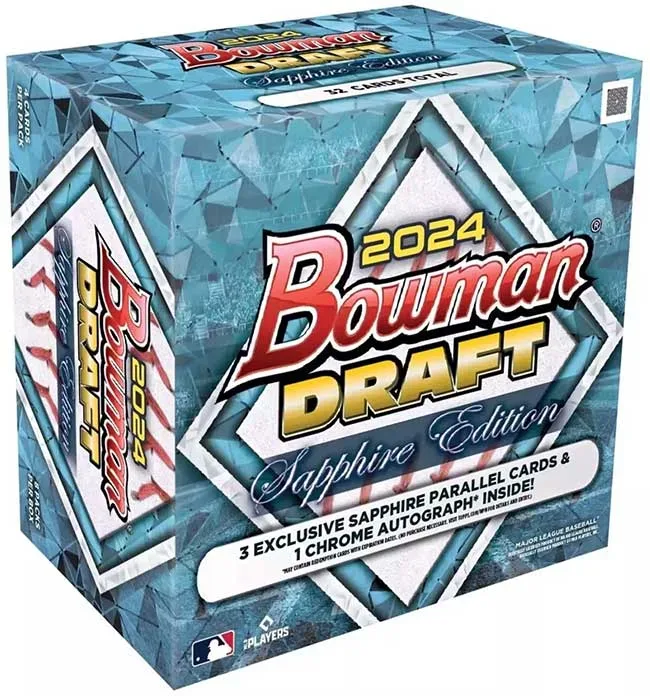
2024 Bowman Draft Sapphire Baseball
Last checked
Shop this card release
2024 Bowman Draft Sapphire Baseball trading cards
We may earn a commission if you buy through these links, at no extra cost to you. As an Amazon Associate I earn from qualifying purchases.
Opens retailer search results. Check the model, edition, seller, availability and current price before buying.
About this set
2024 Bowman Draft Sapphire Baseball is the Sapphire treatment of Bowman Draft, built around the 200-card base set from the regular 2024 Bowman Draft Baseball checklist. The checklist centers on 2024 draft picks, with Sapphire Chrome presentation, a limited insert lineup, and a separate autograph chase.
Sapphire version of Bowman Draft
This release keeps the Bowman Draft framework but shifts it into the Sapphire Chrome style. The base cards are Chrome cards with blue borders and the familiar Sapphire surface pattern, so the set’s identity comes as much from finish and color as from subject matter. Because it is a condensed version of the parent Bowman Draft release, the appeal here is concentrated rather than expansive: the checklist is focused, the design language is consistent, and the overall feel is more selective than sprawling.
The product title matters here. It is 2024 Bowman Draft Sapphire Baseball, so the collecting lens should stay on the 2024 draft class and the Sapphire spin on Bowman Draft, rather than on Bowman Baseball broadly. Bowman’s history in baseball reaches back to 1948, with Topps acquiring the brand in 1956 and reviving it in 1989, but that long history is context for the Bowman name rather than a guide to what this specific release contains.
Base set and autograph chase
The confirmed base set is 200 cards, matching the regular 2024 Bowman Draft Baseball checklist. That makes the set easy to understand structurally even before parallels or autographs enter the picture. Since every card is described as Chrome and Sapphire Chrome, the collecting choice is straightforward: chase the core draft checklist in its Sapphire presentation, or narrow your focus to the players you want most from the 2024 class.
Autographs are still an important part of the release, but they are more selective than the main Bowman Draft product. The autograph checklist is described with 36 different signers, and the focus remains on 2024 draft picks. A useful approach is to decide early whether you want the base-image version of the checklist or prefer to concentrate on signed cards, because the set gives both lanes a clear place without turning the overall structure into a complicated one.
Parallels and insert choice
The parallel structure follows the base set, which keeps the chase understandable even without a large insert program. That kind of consistency helps collectors build around player targets, color matches, or team-focused runs without having to learn a separate parallel logic for different subsets. The blue Sapphire treatment gives the parallels a natural visual identity, so even modest side-chase pieces remain tied to the same aesthetic language as the base cards.
The only other insert on the checklist is Sapphire Selections, plus a handful of parallels attached to it. That restraint is part of the set’s personality. Instead of offering a wide insert menu, the product keeps attention on the base checklist and its draft-pick theme. If you prefer a tighter build, that can make the release easier to collect because the decision points are limited and the insert space is clearly defined.
How to approach collecting the release
For set builders, the most direct path is the 200-card base checklist in Sapphire Chrome form. For player collectors, the autograph side is the more specific chase, especially if you are tracking early cards from 2024 draft picks. The release also gives parallel collectors a clean environment, since the parallel framework is described as similar to the base set rather than a separate, oversized program.
Sapphire Selections adds a small secondary lane for collectors who want an insert without moving away from the product’s core style. Because the insert lineup is so limited, you do not need to treat this release like a broad multi-insert Bowman issue. It works better as a focused draft-pick product with a distinct finish, a separate autograph chase, and enough parallel variety to support different collecting preferences without changing the set’s central identity.