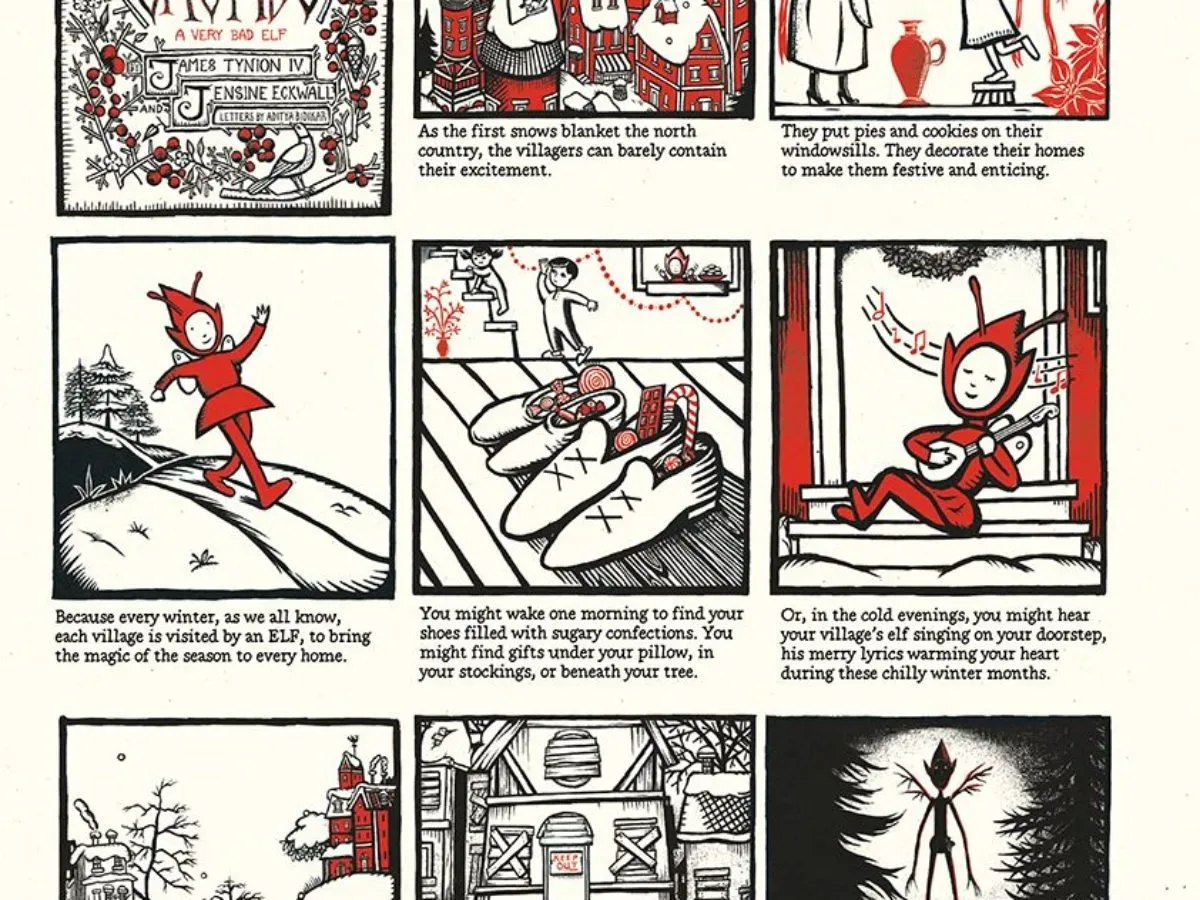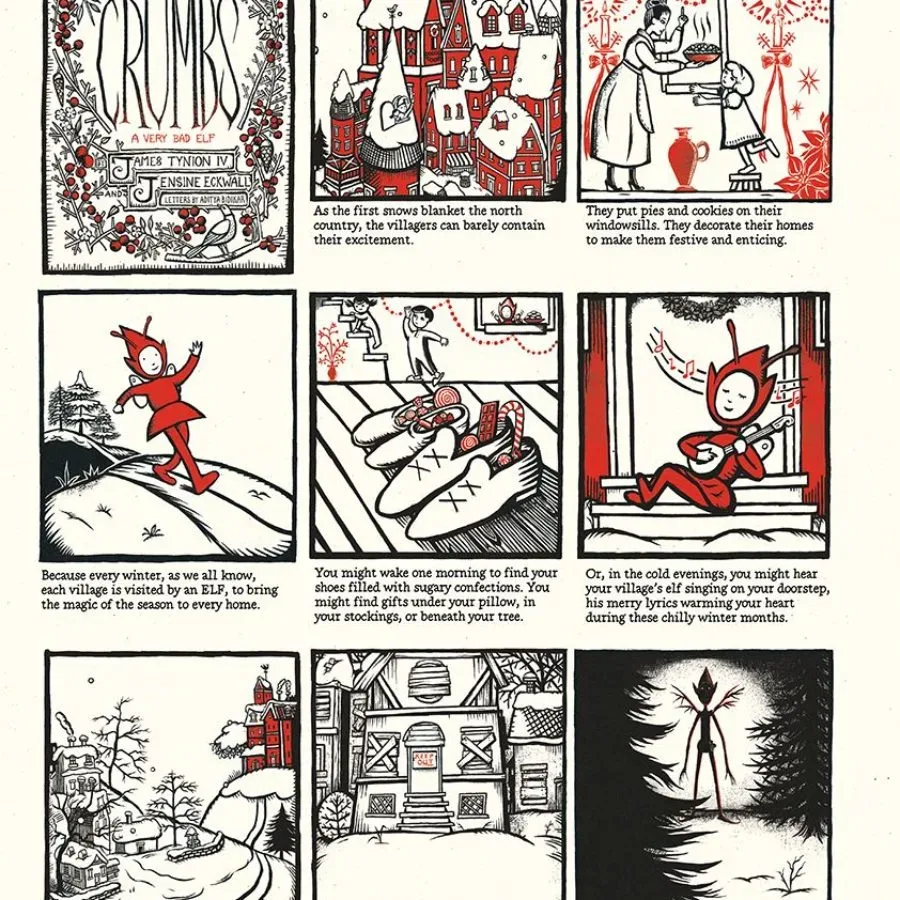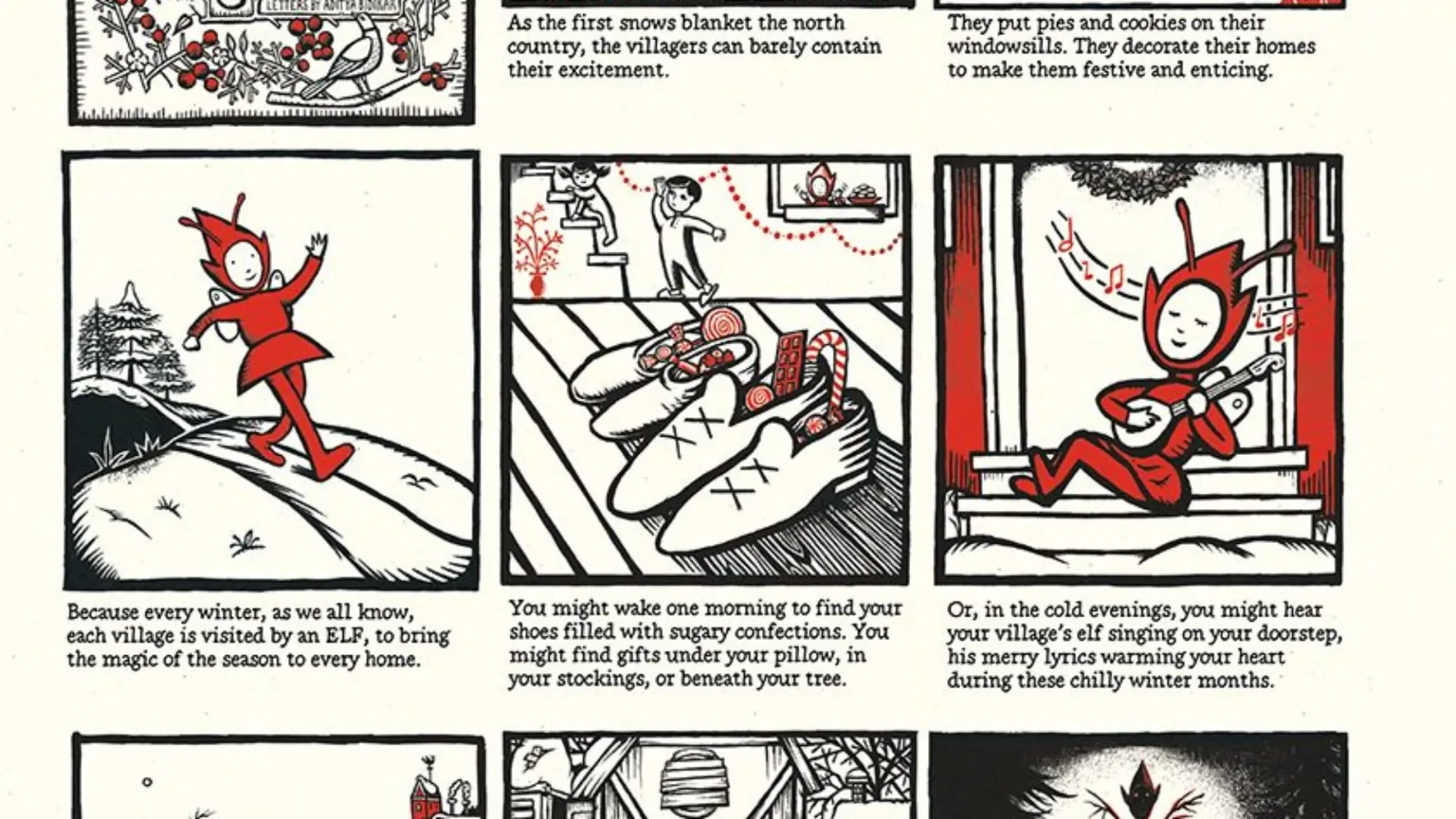
Tiny Onion is adding a new route to readers with the launch of Crying Eye Press, a direct-to-consumer comics imprint led by design director and print production manager Courtney Menard. The label begins with Crumbs: A Very Bad Elf, a short Christmas horror comic written by James Tynion IV and illustrated by Jensine Eckwall.
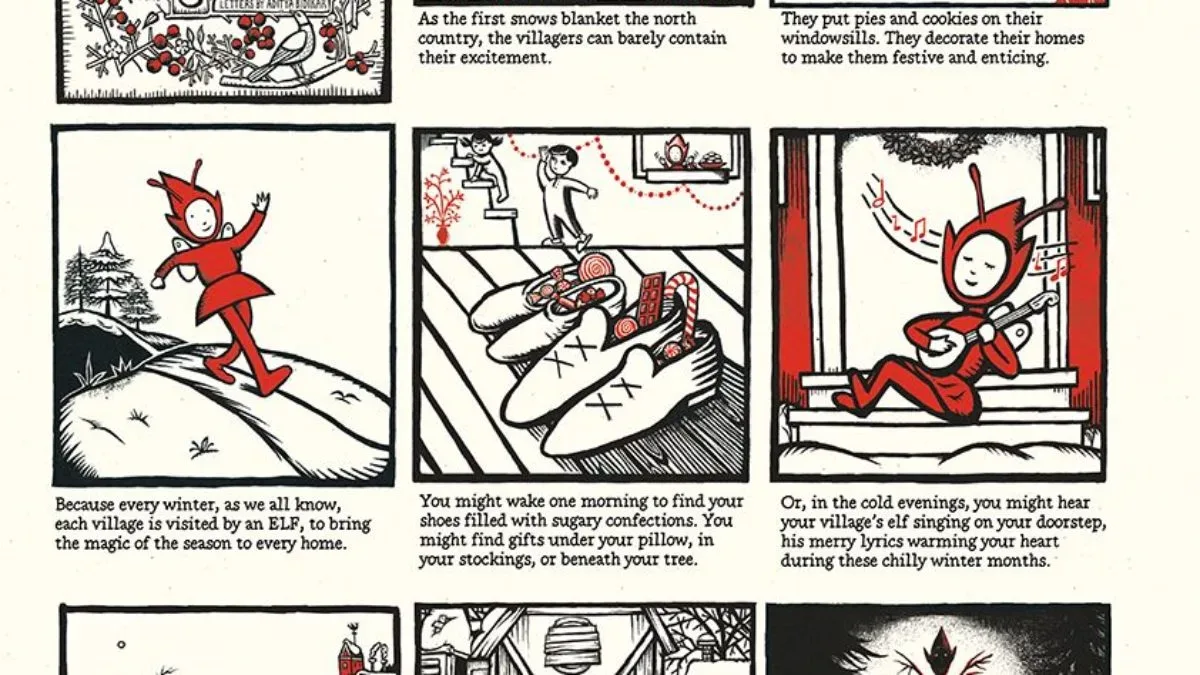
Rather than presenting the new label as a replacement for Tiny Onion’s existing publishing relationships, Crying Eye Press is positioned as a home for deliberately designed, independent projects sold through Tiny Onion’s own shop. Its debut title takes material previously published digitally in Through The Boughs, A Yuletide Offering and reworks it for a conspicuously physical print edition: every original comic panel has been expanded into a full page.
The result is a small but meaningful shift in how the studio intends to handle certain books. Crying Eye Press will operate outside the conventional comic-shop distribution route, favoring direct sales and editions whose format is part of the appeal.
Crumbs turns a compact horror story into an object
Crumbs: A Very Bad Elf is a Christmas horror story with art by Eckwall and words by Tynion. It originally appeared as a shorter digital contribution to the Dstlry anthology Through The Boughs, A Yuletide Offering. For the Crying Eye Press version, the individual panels are no longer sharing pages; each is given its own page.
That is more than a production footnote. In comics, the space around an image and the order in which a reader encounters it shape pacing. A panel placed among several others invites the eye to move quickly through a sequence. Moving that same image to a page of its own potentially asks the reader to linger on it. For horror, where delay, isolation and an uncomfortable detail can be as important as overt action, a format change can alter the rhythm of the story without changing its core material.
The print treatment also supports the intended contradiction at the center of the project. The book uses gold foil stamping and gold-edged pages to resemble a classic children’s Christmas gift, while its actual purpose is to unsettle. Menard said the book had disturbed the people shown it, “in a really good way.” That combination of festive presentation and horror content is the point, not just a decorative wrap around the comic.
Gold foil stamping refers to a finishing process that applies a metallic foil to a cover or other surface, while gold-edged pages are page edges finished in gold color. Neither treatment says anything by itself about a story’s quality or scarcity, but here both are being used to establish a storybook-like visual identity before a reader turns the first page.
Why direct-to-consumer matters for Crying Eye Press
Menard described the goal as creating “bespoke, indie-style comics with direct-to-consumer publishing.” In straightforward terms, direct-to-consumer means the publisher sells a book to its audience through its own store instead of relying on the standard chain of distributor, retailer and customer.
That approach puts more responsibility on the publisher. Tiny Onion must handle the practical burden that comes with a physical release, including print costs and shipping. But it also gives the imprint more control over which projects it makes, how they are packaged, and how closely the sales experience is tied to a particular edition.
Menard’s explanation makes clear that Crying Eye Press is intended to avoid competing directly with Tiny Onion’s other publishing work and to exist beyond the direct market. The direct market is the established comic-book retail system through which specialty stores receive comics. It remains an important route for many comic releases, but it is not the model Crying Eye Press is choosing for these particular projects.
For readers, the practical implication is simple: a Crying Eye title may be built around a publisher-controlled edition rather than a typical issue or trade paperback designed for broad comic-shop circulation. That does not automatically make every release a limited collectible, and no such claim has been made for Crumbs. It does mean format, materials and presentation are likely to be central to the imprint’s identity.
A new lane alongside Tiny Onion’s existing work
Tiny Onion has worked on comics released through Dark Horse Comics, Dstlry, Boom Studios, Random House’s Inklore and Image Comics. It expanded from a brand into a full production company in 2024, with titles including Something is Killing the Children and The Department of Truth. It has also signed a first-look deal with Blumhouse Atomic.
Crying Eye Press therefore arrives within a company that is already accustomed to collaborating with other publishers. The imprint’s stated purpose is not to suggest that outside partnerships are ending. Instead, it creates an additional lane for books that may benefit from a smaller-scale, format-forward release and a direct relationship with the buyer.
That distinction matters in comics because a project’s publishing path often determines its shape. A serial comic intended for shops, a graphic novel intended for bookstores, a digital anthology story and a direct-sold artful edition can all have different production expectations. With Crumbs, Tiny Onion is taking a piece first designed for a digital anthology and deliberately rebuilding its page-by-page experience for print.
The approach also aligns with the title’s eerie seasonal premise. A polished, nostalgic-looking Christmas object is an especially fitting vessel for a horror comic about a very bad elf. The ornate finishing is not merely a premium extra pasted onto an existing story; it is part of the tension the edition is trying to create.
Cryptids, ghosts and occult experiments are on the table
No additional Crying Eye Press titles have been announced. Still, Menard has outlined the territory the imprint may explore: experimental zines, cryptids, ghosts and the occult. Those terms should be treated as a creative direction rather than a confirmed release slate.
A zine is generally a small, independently produced publication, often associated with unusual formats, niche subjects or a more handmade sensibility than conventional periodical publishing. Mentioning experimental zines alongside comics suggests Crying Eye Press may not be limited to one standard book format. Whether that becomes a recurring part of the line, and what kinds of editions it produces, remains unknown.
The throughline, however, is clearer. Tiny Onion is aiming for work that feels “just a little unsettling,” and the possibilities named so far all fit that purpose. Cryptids bring folklore and elusive creatures; ghost stories focus on hauntings and the past refusing to stay buried; occult fiction draws from secret rituals, supernatural beliefs and forbidden knowledge. Crumbs uses Christmas horror to set that tone at launch.
For the broader comics audience, Crying Eye Press is a reminder that publication format can be a storytelling decision. The new imprint’s first project does not simply reprint a previously digital short; it reframes it as a paced, tactile gift-book with a sinister joke at its center. Fans following creator-led comics and specialty print projects will want to watch what comes next from the label. Readers interested in another corner of comic publishing can also catch up on a recent Marvel Webtoon subscription update.