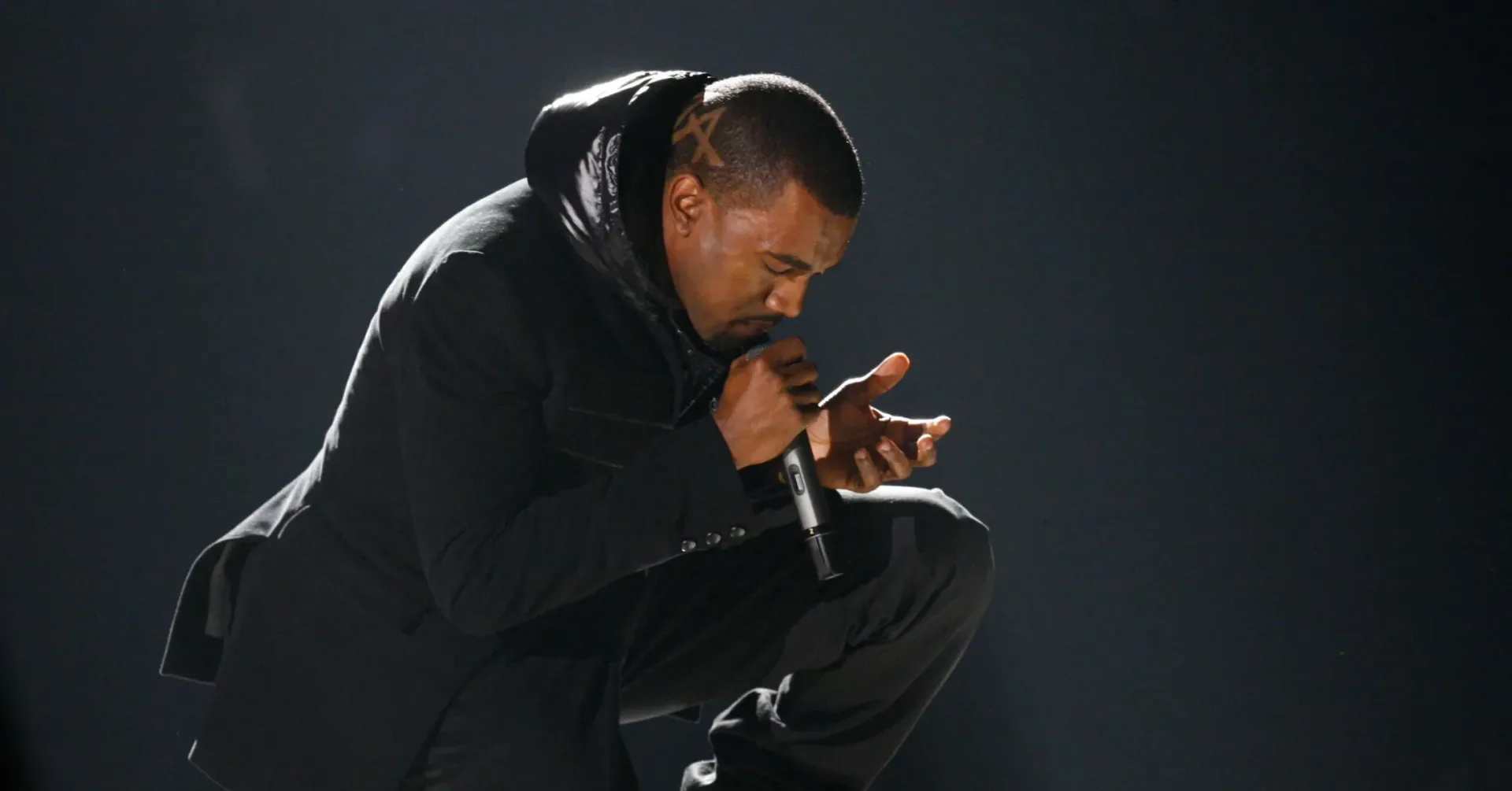
Kanye West and Kendrick Lamar’s “No More Parties in LA” is remembered for the obvious spectacle: two major rap voices given room to keep writing rather than rushing toward a tidy pop structure. Yet the record’s identity starts before either performance has fully taken over. Its crucial musical reference point is Walter “Junie” Morrison’s “Suzie Thundertussy,” a 1976 track from Morrison’s Suzie Super Groupie album.
That connection explains why the opening can feel instantly familiar even to listeners hearing the older record for the first time. The sampled material brings guitar-led 1970s funk into a rap setting, alongside vocal moments built around “Los Angeles.” The effect is not merely decorative. It establishes the song’s place, motion and slightly woozy tension, giving the extended verses a bed that feels simultaneously loose and insistent.
Madlib is credited in the supplied account as the producer behind “No More Parties in LA.” His role matters because sampling is not simply placing an old recording underneath a new vocal. A producer’s choices about which passage to foreground, how long it remains exposed, and where it returns determine what the listener experiences as the new track’s backbone. Here, the Morrison sample is especially prominent at the beginning and in the middle, while much of the song moves beyond sounding directly like “Suzie Thundertussy.”
The record behind the sample
“Suzie Thundertussy” came from Walter “Junie” Morrison, whose career included membership in the Ohio Players and a later role with Parliament Funkadelic as music director. That background supplies useful context for the feel that carries into “No More Parties in LA”: Morrison’s work belongs to a funk lineage in which groove, vocal presence and instrumental color are allowed to command attention.
Calling the connection a sample means that recorded music from Morrison’s song is incorporated into the later rap record. It does not mean the two tracks are identical, or that the later song simply performs a cover version. A cover would be a new performance of the earlier composition. Sampling uses material from an existing recording, then frames it in a new arrangement and context. “No More Parties in LA” uses select elements rather than reproducing the complete experience of “Suzie Thundertussy.”
That selectivity is part of the appeal. Listeners can recognize the guitar flourishes and vocal atmosphere immediately, but the sample is not asked to do every job for the whole track. It acts like a recurring signal: a reminder of the song’s funk foundation when it surfaces, even as the rappers’ performances carry the narrative weight elsewhere.
Why the opening matters so much
First impressions are unusually important on a long, verse-driven song. “No More Parties in LA” does not rely on a conventional hook to repeatedly reset the listener’s attention. Instead, it uses momentum. The funk-derived opening is therefore more than an introduction; it supplies an inviting texture before the writing becomes dense and the performances turn more demanding.
The guitar and vocal elements create an immediate sense of movement without needing a large, obvious chorus. That is a useful distinction. A hook is typically the repeated vocal or musical idea designed to be easiest to remember. The supplied account describes this track as having no hook. But a song can still have a memorable musical anchor. Here, the sampled phrase and instrumental character do much of that anchoring work.
It also makes the Los Angeles setting feel embedded in the sound rather than only stated in the title. The song’s lyrics are presented as a stream-of-consciousness look at Hollywood excess, relationships, fame and the people around West. Against that subject matter, the sample’s recurring Los Angeles vocal texture does not function like a neutral geographic label. It helps turn the setting into an atmosphere: glamorous, restless and a little unsteady.
Two verses, no easy exit
Lamar’s contribution is noted for its memorable references, including Erykah Badu and “bougie booties,” while West’s remarkably long verse takes up much of the track’s latter stretch. The absence of a hook makes both approaches feel more exposed. There is less structural relief between lines and fewer obvious signposts asking the audience to pause and sing along.
That structure can make the song feel conversational, even when the writing is highly stylized. Lamar’s verse and West’s extended closing section are not presented as a neat back-and-forth exchange. Rather, the track lets each rapper occupy significant space. The sample helps maintain continuity across that scale, connecting the performances to a stable musical mood even as their lyrical focus shifts.
West’s writing on the record moves through personal pressures, relationship erosion, the complications of intense public visibility and frustration with his circle. It also includes the kind of outsized boasting associated with his persona. Those contrasting impulses are central to why the track is more compelling than a simple party record: the title promises Los Angeles nightlife, but the verses use that setting to address a wider collection of anxieties and excesses.
The sampled funk sharpens that contrast. Funk can feel celebratory, sensual and communal; the writing here is often far more tangled. Placing difficult observations and self-mythologizing bars over an inviting groove creates friction between the surface pleasure of the music and the unease in the verses. That is an interpretation of the arrangement and themes described here, rather than a claim about the artists’ intent, but it helps explain the record’s lasting pull.
How to hear the connection
A useful way to approach the two recordings is to listen for character before trying to identify every exact moment. Begin with “Suzie Thundertussy” and pay attention to its guitar-led feel and the vocal phrasing that immediately recalls “No More Parties in LA.” Then return to the rap record and notice where that familiar material arrives most clearly: the beginning and a middle section are the key areas identified in the available information.
- Listen for the guitar: The flourishes supply a strong part of the shared sonic fingerprint.
- Listen for the vocal texture: The recurring “Los Angeles” element is a direct atmospheric cue, not just a lyrical coincidence.
- Listen for placement: The sample is not continuously identical across the rap track, which makes its reappearances more meaningful.
- Listen for contrast: Consider how the smooth funk material changes the impact of blunt, fast-moving rap verses.
This approach avoids a common misconception about samples: recognition is not always about finding a full, unchanged loop. A producer can make a brief phrase, instrumental color or transitional return feel enormous because of where it is placed. In “No More Parties in LA,” the sampled material earns that status through its distinct character and its function as a recurring thread.
Why Morrison’s track is finding a new audience
“Suzie Thundertussy” has recently circulated widely on social media, particularly TikTok, and has appeared in sports edits. That renewed visibility illustrates one of sampling’s most enduring effects: it can create a path from a modern favorite back to an earlier recording. A listener who knows the rap song may encounter Morrison’s track and recognize its energy instantly; another who finds Morrison through an edit may then understand a familiar rap record differently.
Neither route requires the older song to be treated as a museum piece. Its current online circulation suggests that the groove still works on its own terms, including in short-form video contexts that demand an immediate musical impression. The same qualities that make it recognizable in a sample—guitar movement, funk vocals and a vivid rhythmic personality—also help it register in a brief edit.
That broader rediscovery matters beyond trivia. Identifying a sample can deepen a listen by revealing creative decisions that might otherwise be invisible. It shows how a rap production can borrow a piece of another era without losing its own voice. In this case, Morrison’s 1976 recording and the Madlib-produced framework around West and Lamar’s verses create a bridge between funk’s instrumental character and a rap song built to let its writers run long.
For more music-industry context, see RAYE’s recent Hitmaker of the Year milestone.
“No More Parties in LA” ultimately makes a strong case for the power of a precisely chosen sample. It does not need to recreate “Suzie Thundertussy” from start to finish. By bringing back the right pieces at the right moments, it turns Morrison’s funk into the track’s compass—an instantly recognizable sound that holds together two expansive performances and a complicated portrait of Los Angeles excess.