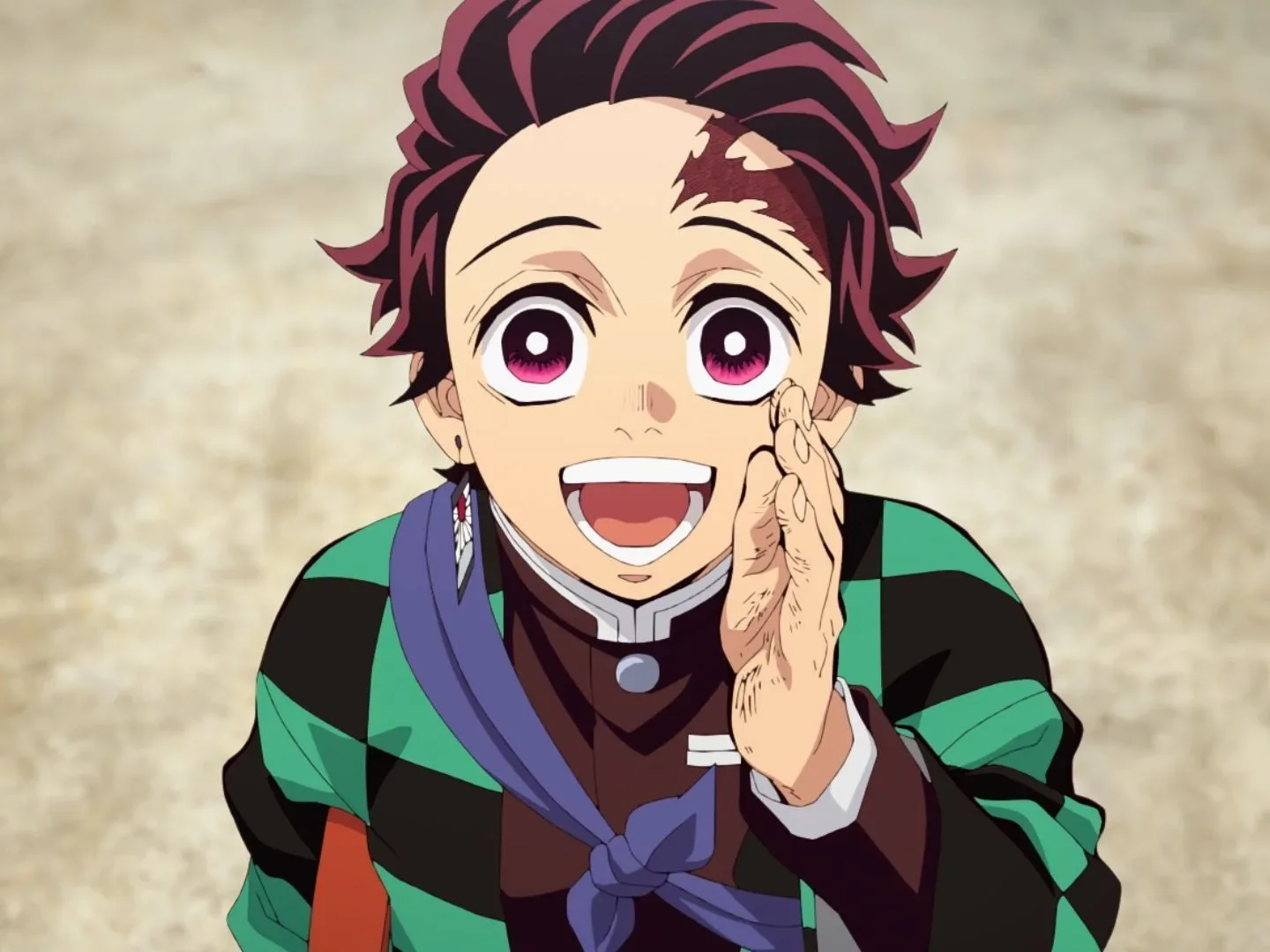
Demon Slayer’s current story may be approaching its cinematic endpoint, but its long-term franchise ambitions are much bigger. Aniplex chairman Atsuhiro Iwakami has said the goal is for the series to remain viable for decades—potentially as long as 50 to 100 years. That is a striking horizon for a property whose core manga narrative has already concluded, and whose present anime adaptation is working through the Infinity Castle film trilogy.
“With Demon Slayer, it is our intent to make this last 10 or 20, if not 50 to 100 years,” Iwakami said. “We want to make sure we’re part of creating the type of franchise that can withstand decades.”
The remark is not a confirmation of a particular new anime, film, game, or spin-off. It is instead a statement of direction: Demon Slayer is being viewed as an entertainment franchise with a future beyond the completion of Tanjiro Kamado’s central journey.
The ending of one story is not necessarily the end of the franchise
That distinction matters. A franchise is the wider body of stories, characters, adaptations, and related projects connected to an intellectual property. A completed main plot does not prevent new projects from being developed within the same fictional world, but it does change the creative challenge. Any continuation has to find a reason to exist beyond simply extending an ending.
Demon Slayer has a built-in transition point. Tanjiro’s manga story has already reached its conclusion, while the anime’s Infinity Castle trilogy is positioned to bring that adaptation to a close. The third Infinity Castle movie is expected to complete that immediate arc, though no firm release timing for the trilogy’s final installment has been confirmed. The suggestion that it may arrive before 2030 remains an expectation rather than an announced schedule.
For audiences, that means it is useful to separate two ideas that can easily be blurred together:
- The Infinity Castle films are tied to finishing the existing central narrative.
- Demon Slayer’s long-term future could involve entirely different stories, periods, or characters if further projects are pursued.
In other words, a finale can still be a finale even if the setting itself continues to be used later. That approach has precedents in long-running entertainment properties, where a defining hero’s arc closes but the world remains broad enough for other creators and audiences to revisit it.
Why the Demon Slayer setting lends itself to expansion
Iwakami’s comments point to a future that has not been detailed, but the basic shape of possible expansion is easy to understand from the material already described. Demon Slayer’s world contains the Demon Slayer Corps, the Hashira, demons, and an ongoing conflict that extends beyond a single protagonist’s lifetime.
The Hashira are the Corps’ elite swordsmen. Their presence gives the setting a wider ensemble than Tanjiro alone, while the broader battle against demons leaves room for stories set in other eras or focused on other groups. That does not establish that any specific Hashira spin-off is happening. It does explain why the property has material that could support side stories without undoing or replacing the main conclusion.
A durable franchise normally needs more than recognisable names. It needs narrative flexibility. A world with only one narrowly defined conflict can struggle after its original resolution. A world with multiple characters, histories, locations, and time periods can provide options—though options are not guarantees, and a strong setting is not automatically a strong new story.
The key creative question for any future Demon Slayer project would be whether it offers a distinct perspective. A prequel, for example, would not have to repeat Tanjiro’s journey beat for beat. A story centered on another era could explore a different cast and stakes while retaining the series’ demon-hunting framework. Likewise, a side narrative could focus on a character or corner of the world that received less attention in the principal storyline.
That is the opportunity. The risk is repetition. Building a property to last 50 or 100 years is not merely about making more installments; it means finding projects that justify their own existence while preserving what audiences value about the original.
What has actually been confirmed about Infinity Castle 2
The nearer-term news is more limited. Rahul Purini, CEO of Crunchyroll, said in May that Demon Slayer: Infinity Castle 2 was “actively in production.” Since that statement, no release date has been announced.
“Actively in production” is an important but broad phrase. It indicates work is underway; it does not identify how far along the film is, when marketing will begin, or when viewers will be able to see it. Production on an animated feature can encompass many stages, and the statement should not be treated as a timetable.
There has been speculation that December’s Jump Festa could be a venue for news, but that is only a possibility. Until an official date or release window is provided, fans should treat any expectation around an announcement as unconfirmed.
That caution is especially useful with a franchise on a high-profile finale path. A long-term strategy can make fans understandably eager for the next chapter, but the presently established facts are straightforward:
- The Infinity Castle trilogy is adapting the conclusion of the core story.
- The second film is in active production.
- No release date for that film has been announced in the supplied information.
- Aniplex wants Demon Slayer to have a life measured in decades, potentially much longer.
A century-long ambition is a commitment, not a roadmap
Comparisons to Disney, Star Wars, and Marvel help illustrate the kind of longevity Iwakami is discussing, but they should not be mistaken for a claim that Demon Slayer will follow the same business or storytelling model. The specific format, projects, and release cadence of Demon Slayer’s future have not been revealed.
What Iwakami has made clear is the scale of the aspiration. Ten years would already carry the franchise well beyond the completion of its current film trilogy. Twenty years would require the property to stay meaningful to a later wave of viewers. Fifty to 100 years is a generational goal: a hope that future audiences will still know, revisit, and perhaps receive new interpretations of the world.
Such a goal relies on stewardship as much as output. A franchise that endures needs the freedom to evolve, but it also needs to avoid making its original ending feel disposable. For Demon Slayer, the Infinity Castle conclusion has an important role in setting that foundation. If the trilogy serves as a satisfying close to Tanjiro’s story, later projects—if they arrive—would have a clearer chance to stand as complementary rather than corrective.
There is also a difference between longevity and constant releases. A property can remain culturally visible through existing films and series, later reissues, new audiences discovering it, or occasional returns that have a clear creative purpose. The chairman’s statement speaks to endurance, not to an announced annual pipeline.
For viewers invested in the films, the immediate focus remains the next Infinity Castle installment and the eventual final chapter. For those curious about what comes afterward, the answer is presently open-ended. The series has room for more stories, and Aniplex plainly sees long-term potential, but no specific post-trilogy project has been confirmed.
What fans should watch for next
The most meaningful next development would be an official update on Demon Slayer: Infinity Castle 2: a release date, a release window, or a new trailer that establishes where the production stands. Any announcement at Jump Festa would be notable, but it should not be assumed in advance.
Beyond the sequel, future franchise news would be worth reading carefully for one major reason: it could clarify whether Demon Slayer’s next era means more films, a separate anime project, stories set elsewhere in the timeline, or something else altogether. Iwakami’s comments create a broad expectation of continued interest, not a detailed promise of what form that continuation will take.
For now, Demon Slayer is in an unusual but promising position. Its defining story is moving toward a conclusion, while the people guiding the franchise are already thinking far beyond it. That leaves fans with a clear short-term destination—the Infinity Castle trilogy—and a much larger, still-unwritten possibility beyond the final credits. In the wider conversation around enduring screen properties, that tension between a satisfying ending and an expandable world is likely to matter as much as any eventual announcement. For another look at how a standalone screen work can lean on a central performance while balancing its broader ambitions, read our review of Prima Facie.