Marathon is preparing for a substantial change of direction. Bungie has acknowledged that the sci-fi shooter did not reach as many people as hoped with its initial extraction-focused approach, and its newly outlined plans are designed to make the game more accommodating to several very different ways of playing.
The core message is not that Marathon is abandoning extraction gameplay. Rather, Bungie intends to place that original experience within a broader selection of activities: lower-commitment competitive matches, permanent player-versus-environment play, a non-combat meeting space, refreshed destinations and, later, a new zone and a connected structure spanning PvE, PvP and PvEvP.
It is a meaningful shift for a game whose loop has been defined by the risks of an extraction shooter. In that format, players enter a hostile area, gather rewards, fight or evade threats, and attempt to leave safely. Failure can carry a significant cost because a full run is at stake. That tension is central to the genre, but Bungie has now indicated that it can also be an obstacle for players who simply want to practice, experiment, compete directly, or play briefly without such a high-stakes commitment.
“Some players want a quick, lower-pressure run after work,” Bungie said while outlining the broader goal. “Some want to spend an entire night with their crew. Others want to test a build, compete directly against other players, chase a difficult challenge, or follow a strange clue deeper into the ruins of Tau Ceti IV.”
That list is the clearest framing for the roadmap. Marathon’s planned additions are less about one new attraction than about supplying routes for different player motivations. The shooter’s next few updates will reveal whether those routes fit together as a coherent whole.
Why Bungie is widening Marathon’s options
Senior Marathon design lead Kevin Yanes described the original ambition candidly: the team hoped to bring extraction gameplay to a broader audience, but concluded it had instead made a very conventional extraction shooter. He also pointed to a recurring “loop of failure” that did not connect with enough players.
This matters because the stated solution is not merely balance tuning or a visual refresh. Bungie is adding alternatives that address the pressure of the central loop from several angles. A firing range can remove the cost of trying a weapon or shell. Deathmatch can put the emphasis on immediate player-versus-player combat. A permanent PvE offering can serve players who want hostile encounters without direct competition. Better onboarding can make the opening hours less confusing.
In practical terms, PvE means player-versus-environment content: players face computer-controlled threats rather than other players. PvP means player-versus-player competition. PvEvP combines both, asking players to handle environmental dangers and the possibility of clashes with other human players. Marathon’s existing extraction design belongs in that last category, where the uncertainty of other runners is part of the risk.
Related coverage includes Bungie Maps Out Marathon's Expansion With PvE, Deathmatch, New Zone and Social Space.
These distinctions are important because Bungie’s March 2027 plan calls for an “interconnected system” across all three. The word interconnected suggests the studio wants the modes to be part of one overall Marathon ecosystem rather than isolated menus with no relationship to one another. Precisely how rewards, progression and mode-to-mode movement will work has not been detailed, so that remains a key unanswered question.
What is planned for the December Symbiosis update
The next major step is the Symbiosis update in December, following a smaller, targeted Nightfall refresh. Symbiosis is expected to introduce several of Marathon’s most consequential additions at once.
A permanent PvE mode, with details still to come
December is set to bring Marathon’s first true permanent PvE mode. Bungie has not explained exactly what that mode will involve because elements of it are still being finalized. That leaves major questions open: its objectives, its party structure, its reward model and the kinds of enemies players will encounter have not yet been specified.
Even without those details, the permanent label is significant. It indicates a standing way to play rather than a temporary experiment or limited event. For players put off by the prospect of losing a run to another squad, this could become a calmer place to learn systems, pursue challenges or enjoy the setting of Tau Ceti IV. Its ultimate value will depend on how meaningfully it is connected to the rest of the game.
Experimental deathmatch lowers the stakes
December will also add an experimental deathmatch mode. Deathmatch is a classic competitive format in which the priority is direct combat against other players, rather than surviving an extraction run. Bungie characterizes its version as a lower-commitment space to develop skills and compete without risking a full run.
Calling it experimental is an important qualifier. Bungie plans to watch how players engage with it and use those observations to inform Marathon’s competitive future. That means the initial mode should be read as a test as well as new content; its longer-term form, and even the role of traditional competitive modes in Marathon, may change based on player behavior.
For the game’s overall structure, deathmatch has an obvious potential purpose. It can give players a direct arena for weapon familiarity, movement practice and shell experimentation. It may also appeal to people who enjoy Marathon’s combat but do not want every session shaped by extraction’s longer-form risks.
Bishop joins the roster of shells
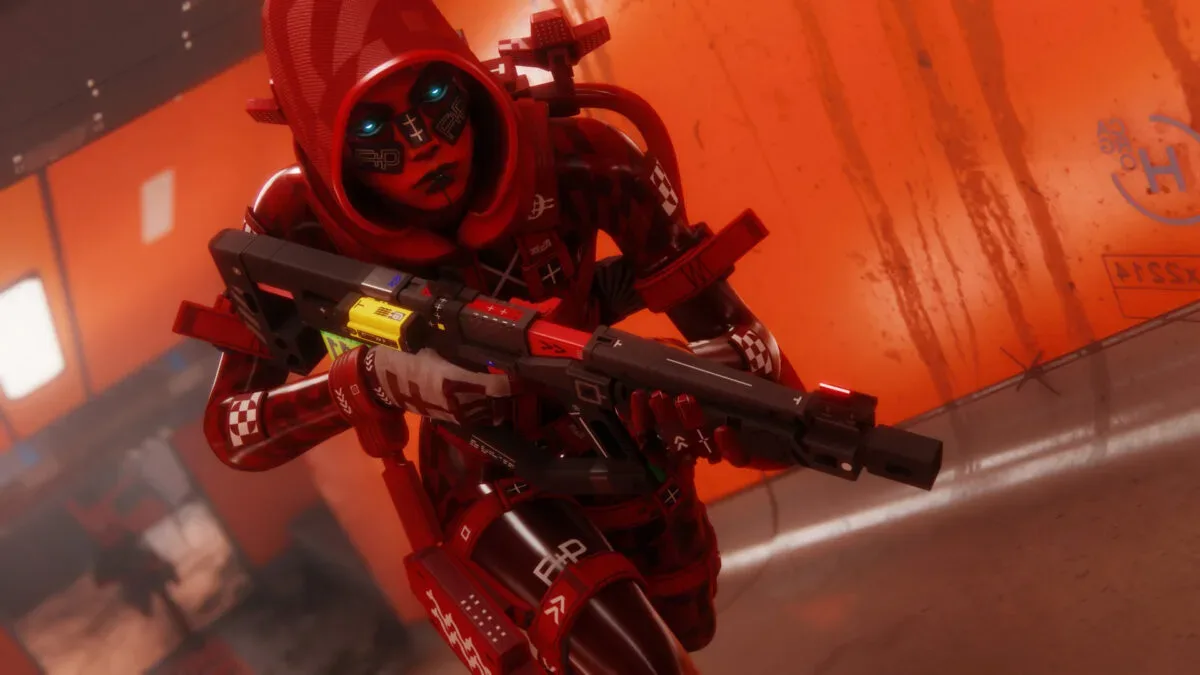
Symbiosis will introduce Bishop, described as Marathon’s high-performance robot samurai. Bishop is built around speed, ambushes and sudden melee bursts. That description distinguishes the shell from a general-purpose playstyle: its intended identity is aggressive positioning and surprise, with close-range damage as the payoff.
A shell is Marathon’s character framework, and Bishop’s arrival provides another way for players to approach encounters. Whether that speed-and-melee focus proves powerful in extraction runs, PvE scenarios or deathmatch will depend on details not yet shared, including its full toolkit and how its strengths are balanced against counterplay.
A social space and firing range
The December update is also expected to add a social space with a firing range. Players will be able to meet other runners, test weapons and try shells without entering a lethal environment.
This is one of the most practical pieces of the roadmap. In a game where a regular run can carry consequences, a safe testing area gives players a clearer way to learn before committing. It can also help turn build testing from a stressful gamble into a deliberate process. The social component, meanwhile, creates a place for runners to gather outside the danger of the main activity.
Perimeter refresh and the Tick Queen
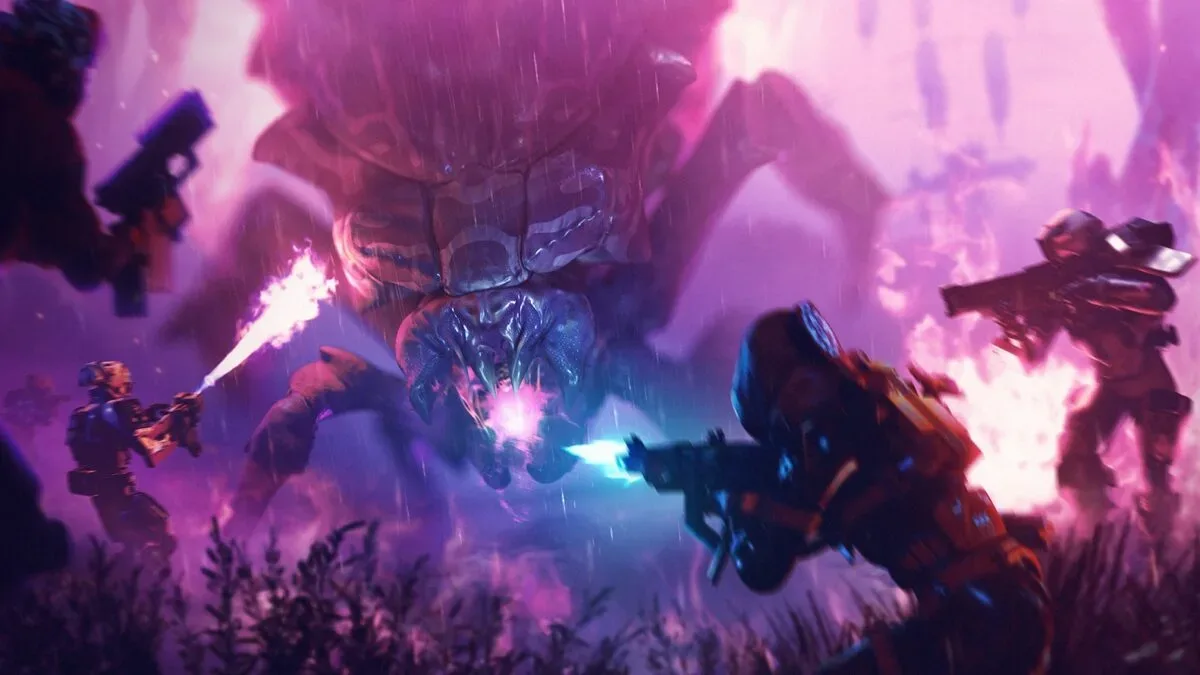
Perimeter, Marathon’s starting zone, is due for a major visual overhaul. Bungie also plans to add more paths to high-end loot on the map and introduce the largest boss encounter yet: a large alien known as the Tick Queen.
There is a useful design logic in pairing a refreshed starting area with additional high-end rewards and a significant boss. A starting zone is often where players form their first impression of a game, while veteran players need reasons to revisit familiar territory. Visual changes can make the space feel renewed; worthwhile rewards and a larger-scale encounter can give experienced runners a stronger reason to return. The exact mechanics of the Tick Queen fight and its rewards have not been announced.
March 2027: a larger Marathon structure
Bungie’s plans extend beyond December. A March 2027 update is positioned as a larger evolution in which the game’s different components, including its original extraction mode, come together more fully.
The announced elements include:
- An interconnected PvE, PvP and PvEvP system intended to reward players regardless of how they choose to play.
- A new onboarding experience aimed at making Marathon easier to understand at the start.
- Changes to progression and the Cradle system.
- More focused questlines and new narrative material.
- A completely new zone to explore.
- New alien combatants.
The onboarding work is especially notable in light of Bungie’s acknowledgement that the initial experience has been difficult for some players to parse. Onboarding refers to the process of teaching newcomers a game’s fundamentals, systems and expectations. A clearer beginning could matter as much as new modes if Marathon is trying to invite players into complex extraction, progression and build systems without overwhelming them.
Progression changes and adjustments to the Cradle system have been announced, but their specifics have not. Progression generally describes the systems through which players advance, gain access to options or pursue longer-term goals. Until Bungie explains the planned Cradle changes, it would be premature to assume how rewards or player advancement will be altered.
The promise of more focused questlines and narratives is another sign that the roadmap is not solely about repeatable combat. Marathon’s future plans include room for players who want to follow leads and mysteries deeper into Tau Ceti IV, alongside those who primarily want short competitive sessions or extended group play.
New enemies and an old Marathon thread
Bungie has not identified the new alien combatants planned for March 2027. It has, however, made clear that shooting the franchise’s Pfhor remains part of what makes a Marathon game feel like Marathon. The Pfhor appeared in the original trilogy, and Bungie has suggested that any return may not be a simple replay of their earlier form.
That leaves the identity and behavior of the forthcoming alien foes uncertain, but it also establishes a recognizable connection between this version of Marathon and its earlier games. The Perimeter update’s Tick Queen is the nearer-term enemy encounter, while the March plans point to a broader expansion of the hostile roster.
What players should reasonably expect—and what remains unknown
The roadmap supplies a clear direction, even if many operational details are still absent. Players can reasonably expect a December update centered on a permanent PvE option, experimental deathmatch, Bishop, the social firing range, and Perimeter’s overhaul with the Tick Queen. They can also expect the March 2027 update to pursue a wider, mode-spanning structure, a new zone, a smoother introduction, progression work, quests and new enemies.
What should not yet be assumed is the final shape of the permanent PvE activity, the precise rules of deathmatch, the interaction among rewards across modes, or the details of the new zone and alien combatants. Bungie has provided the framework but is still finalizing at least some of the content.
For a helpful example of how individual contributors and roles can become defining elements of game worlds, see our coverage of Erica Lindbeck’s pivotal Persona 5 decision.
Marathon’s immediate future is therefore not a retreat from extraction gameplay, but an attempt to make that foundation less solitary and less all-consuming. If Bungie can make PvE, PvP and PvEvP feel worthwhile without making any one path feel mandatory, the result could be a shooter that respects both the tension of a full extraction run and the player who only has time for a few rounds after work.