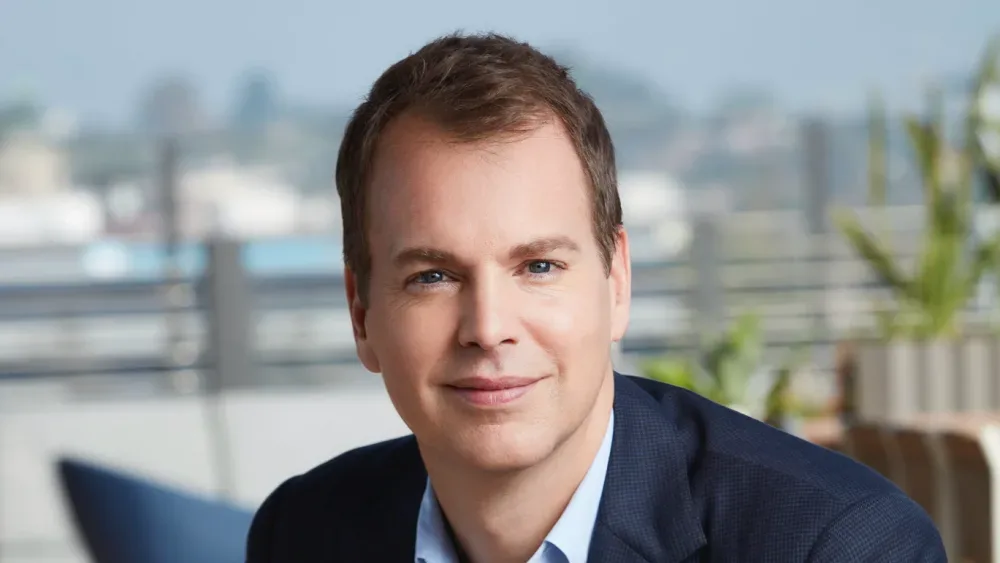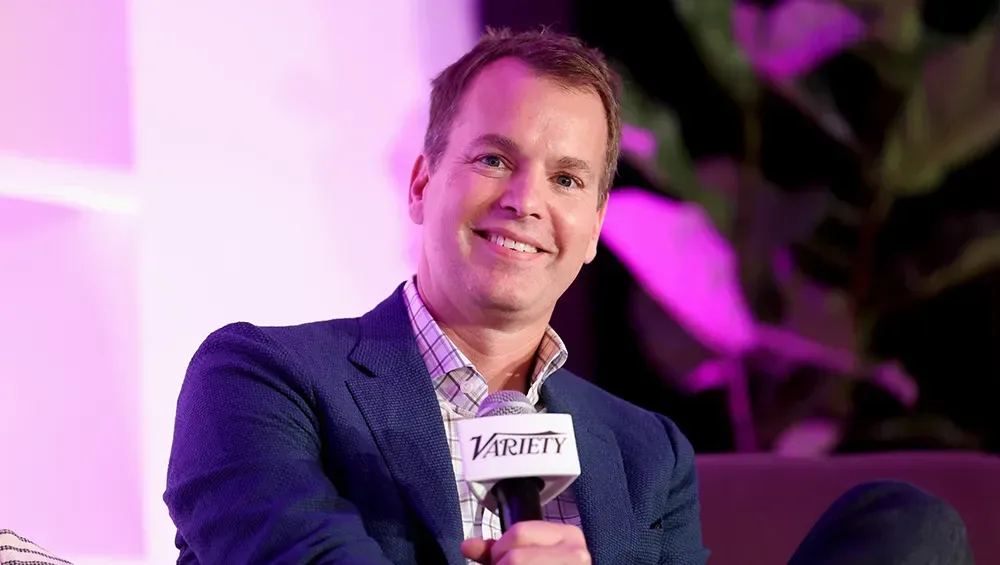

Casey Bloys, co-chair and chief content officer of Skydance Direct-To-Consumer, is set to receive the Milestone Award at the 38th annual Producers Guild Awards. The ceremony is scheduled for Feb. 27, 2027, at the Fairmont Century Plaza in Los Angeles.
The award recognizes creatives whose work has made a significant contribution to entertainment. In Bloys’ case, the recognition arrives after a career spent guiding a major slate of prestige television and, now, overseeing a broader direct-to-consumer streaming operation that includes HBO Max and Paramount+.
Bloys’ current remit is notably wider than choosing which shows get made. At Skydance Direct-To-Consumer, he oversees original programming for HBO Max and Paramount+, as well as strategy, operations, communications and performance across the company’s streaming platforms. That combination puts creative development alongside the less glamorous but essential work of making a streaming business function: determining how programming serves a platform, communicating its identity to audiences, and measuring how it performs across different viewing routes.
What the Milestone Award recognizes
A milestone honor is different from an award for one series, season or individual performance. It is designed to acknowledge sustained industry impact. Previous recipients include Walt Disney, Alfred Hitchcock, Steven Spielberg, Sherry Lansing, James Cameron, Bob Iger, Donna Langley, Ted Sarandos, Jason Blum, and George Lucas and Kathleen Kennedy.
That history places the award in a leadership-focused context. Many of those names are associated not simply with a single creative credit, but with the ability to build organizations, back creative talent, navigate technological shifts, or set the direction of large-scale entertainment businesses. The Producers Guild’s recognition of Bloys follows that same framework: an honor for a body of work and an approach to supporting production rather than a verdict on one title.
Bloys became president of HBO in 2016. During his leadership there, the development and production slate included Succession, Euphoria, Barry, Girls, The Pitt, The White Lotus, The Last of Us, House of the Dragon, DTF St. Louis, and the upcoming Harry Potter and the Philosopher’s Stone.
That list illustrates why a producers’ organization would focus on his contribution. It spans character-driven comedy, drama, fantasy, adaptation and franchise television. For gaming audiences in particular, The Last of Us is a clear reminder that an executive’s programming choices can matter well beyond conventional TV circles. A screen adaptation of a game is not merely a branding exercise: it is a production that must translate a pre-existing world, audience expectations and narrative identity into a different medium.
That wider crossover is one reason platform strategy has become increasingly relevant across entertainment. Games and television now regularly share audience attention, subscription budgets and franchise conversations, even when they remain distinct businesses. Platform decisions can shape discoverability and the practical ways viewers encounter a series, while game releases face similar questions around hardware, storefronts and supported devices. A smaller but useful example of how those access considerations surface in games is Loco Motive’s update for Steam Deck touch controls, Mac and Linux support.
Related coverage includes Casey Bloys Set for Producers Guild Milestone Award at 2027 Ceremony.
Creative stewardship in a streaming-era role
“Direct-to-consumer” is industry language for services that reach viewers without the traditional cable or broadcast distribution model sitting between the company and the customer. In this case, it refers to streaming platforms HBO Max and Paramount+. The phrase can sound technical, but its implications are straightforward: programming, platform operations and audience data are closely connected.
For a chief content officer, original programming remains central, but the job is not limited to development. The role also has to consider how a service is defined by its library and originals, how a new release reaches viewers, and how creative ambition fits within the practical requirements of a platform business. The supplied figures underscore the scale of the programming under Bloys’ leadership: HBO and HBO Max original television programs received 21 Emmys in the past year, while seven original series averaged 15 million U.S. viewers per episode across platforms.
Those are separate measures and should not be treated as the same thing. Emmy wins reflect recognition from the Television Academy, while an average audience figure is a measure of viewing reach. Together, though, they explain the two sides of the achievement being recognized: acclaimed programming and programming that attracts a large cross-platform audience.
The phrase “across platforms” is also meaningful. It indicates that a show’s viewership is being considered beyond a single linear channel or one traditional airing window. In contemporary streaming, an audience can build through multiple avenues. That makes programming leadership more complex than it was in a purely scheduled-TV model, since the success of a series is linked to availability, marketing, platform presentation and sustained interest as well as its initial debut.
Bloys has characterized his approach as creating conditions in which talented people can take risks, pursue ambitious stories and do their best work. That is a producer-friendly philosophy, but it also provides a useful shorthand for what a content executive can influence. Television’s writers, performers, directors and producers make the work itself; executives can help determine whether a project has the room, resources and institutional support to move from idea to finished series.
Why the recognition lands during industry change
Producers Guild of America presidents Donna Gigliotti and Mike Farah framed the award around Bloys’ steadiness through a period marked by disruption and consolidation. Those terms deserve a clear distinction.
- Disruption refers to changes that alter established ways entertainment is developed, distributed or consumed. The continuing centrality of streaming platforms is an obvious part of this environment.
- Consolidation describes companies and operations being brought together under fewer corporate structures. It can change who oversees brands, libraries, platforms and programming teams.
- Creative process is the sequence through which a project is developed and made, from finding an idea and assembling collaborators to production and release. A champion of that process is, in practical terms, someone whose leadership is seen as protecting the ability of creators to make distinctive work.
The distinction matters because an award for leadership is not just about having recognizable shows on a résumé. The challenge cited by the guild leaders is to maintain a creative identity while the business around that identity changes. HBO’s slate has long been associated with ambitious series, and Bloys’ award positions his leadership as an extension of that emphasis during a period of corporate and distribution change.
For viewers, this does not announce a new series, a release date or a product change. The immediate effect is ceremonial. But it does offer a compact view of the executive structure behind shows audiences already know, including The Last of Us and House of the Dragon, and behind an upcoming Harry Potter and the Philosopher’s Stone project. Such recognition can also signal the value an industry organization places on the long-term work of developing and sustaining programming teams.
What happens next
The 2027 Producers Guild Awards will take place on Feb. 27 at the Fairmont Century Plaza. Mike Farah and Joe Farrell are serving as event chairs. Anchor Street Collective is producing the event, with Branden Chapman as executive producer and Carleen Cappelletti as co-executive producer.
Bloys’ Milestone Award will be one part of the annual ceremony, but it is likely to draw attention because of the breadth of his current duties. He is being honored after leading HBO programming and while occupying a role that connects two streaming brands, original production and platform-wide business responsibilities.
For an entertainment landscape increasingly defined by franchise extensions, cross-platform viewing and corporate realignment, the award’s focus is fittingly broad. It recognizes the work of an executive whose portfolio includes some of television’s best-known recent series, while emphasizing the behind-the-scenes environment required to keep ambitious projects moving from development to viewers’ screens.