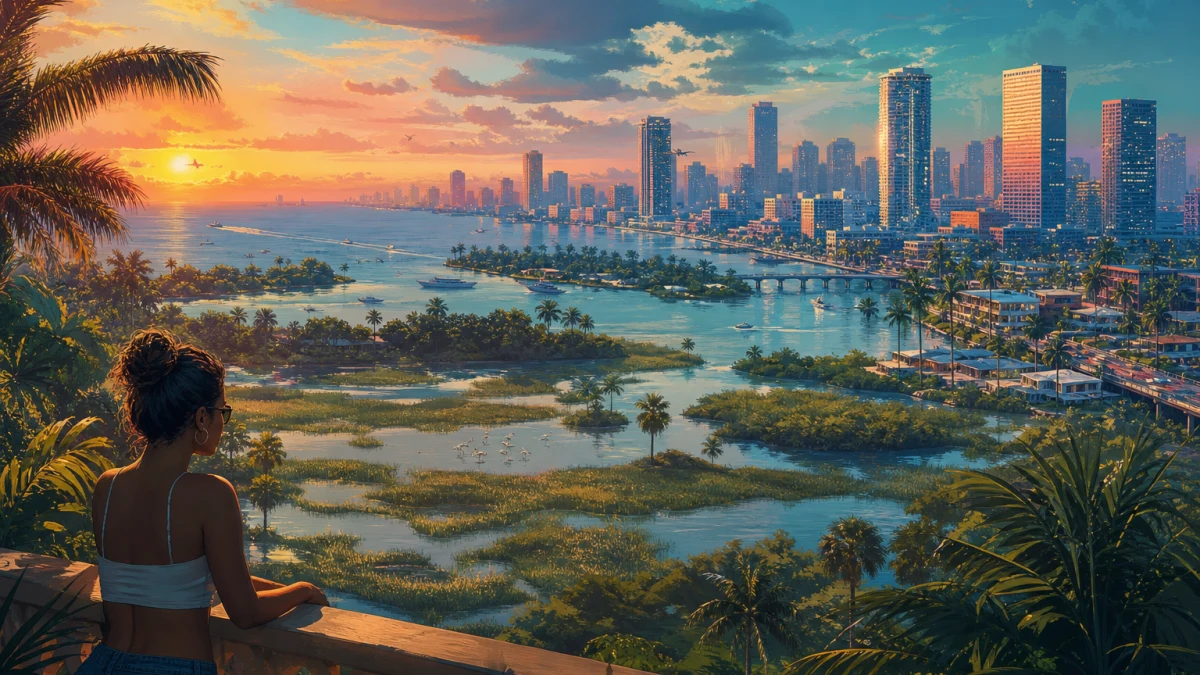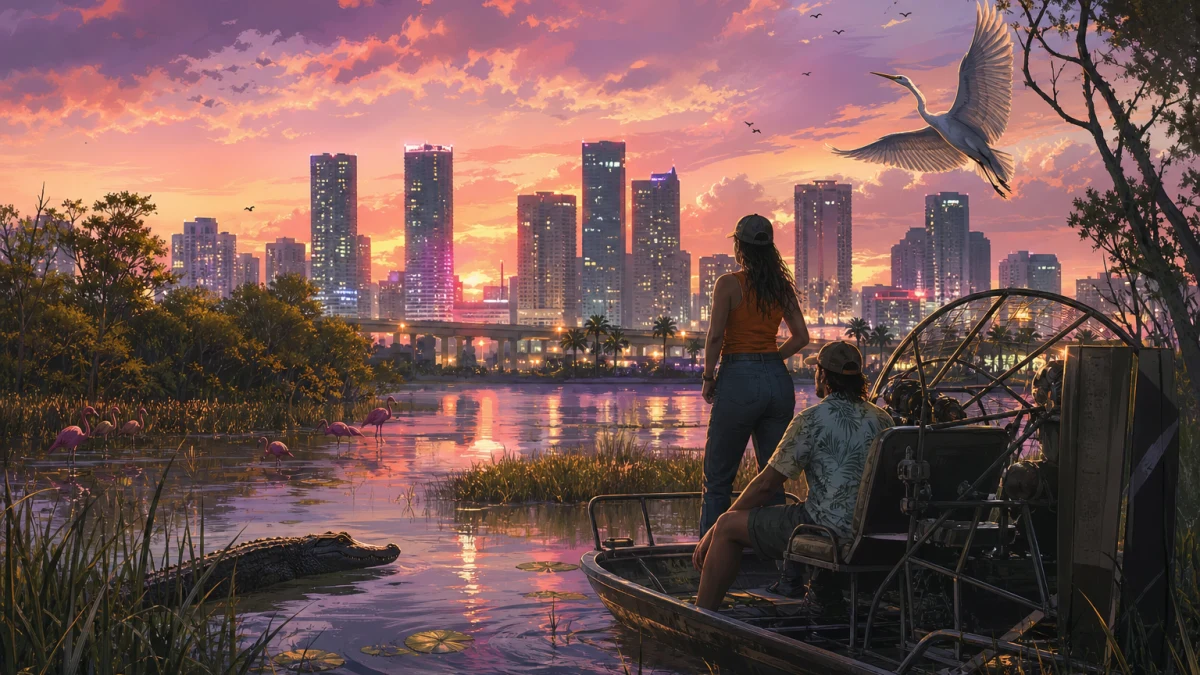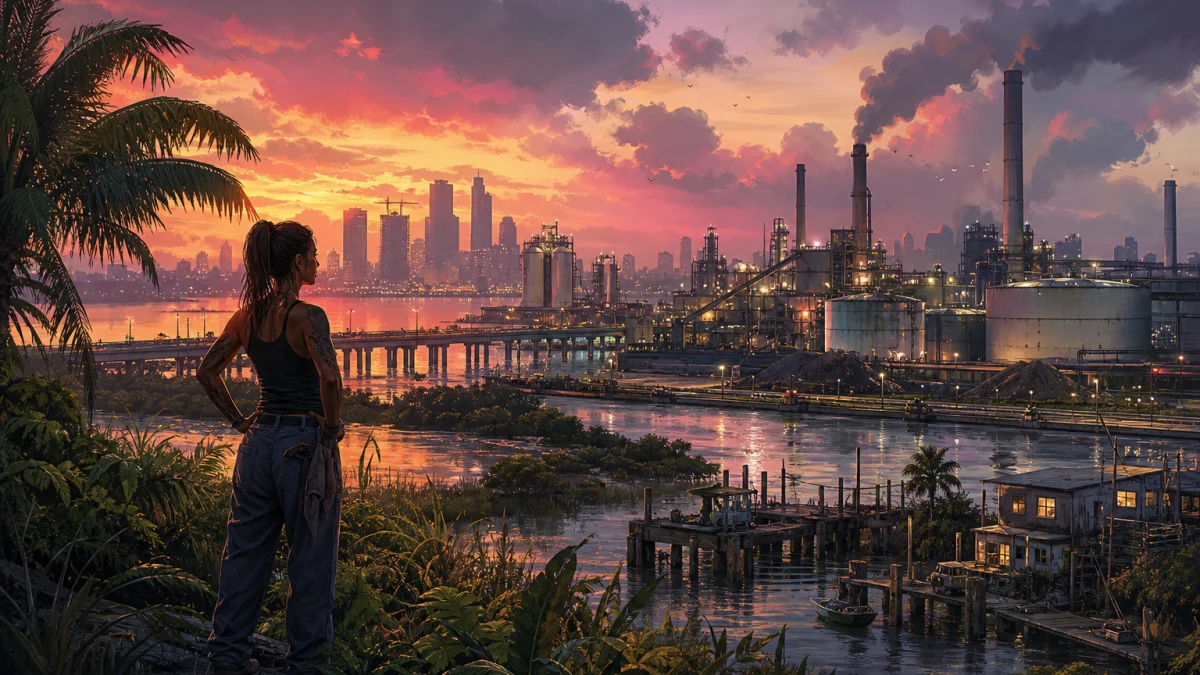
Grand Theft Auto VI is being marketed through Vice City’s neon skyline, beaches, nightlife and criminal underworld. Rockstar’s Leonida, however, extends well beyond the city. Among its officially named destinations, Mount Kalaga National Park offers the clearest change of pace: a northern landmark associated with backwoods communities, hunting, fishing and off-road trails.
The facts are straightforward, while the larger gameplay implications remain uncertain. Rockstar has identified Mount Kalaga, described its setting and released six official screenshots from the region. It has not announced a complete wilderness system, a specific Mount Kalaga mission chain or the park’s exact boundaries. Any discussion of how the area might contrast with Vice City should therefore be treated as analysis rather than confirmation.
That distinction matters because natural environments can suggest mechanics without promising them. The official material establishes Mount Kalaga as part of Leonida’s identity. It does not yet explain exactly how Jason and Lucia will use, explore or move through the park.
Evidence note: This article includes clearly labeled inferences about how Mount Kalaga could contrast with Vice City. Claims about complete hunting or fishing systems, Mount Chiliad comparisons, exact fan-map geography, neighboring states and named backwoods factions remain unconfirmed by Rockstar.
A national landmark on Leonida’s northern border
Rockstar’s official Grand Theft Auto VI website identifies Mount Kalaga National Park as one of the destinations across Leonida. Its regional description calls the location a national landmark “up against the state’s northern border” and presents it as a place with room to breathe on Leonida’s northern fringes.
That wording gives Mount Kalaga a clear geographic and thematic role. It is not introduced as another city, resort district or industrial center. The region’s identity comes from its landscape and distance from the state’s most obvious population centers. The official screenshot gallery reinforces that presentation by grouping six images under the name Mount Kalaga National Park.
The northern-border description is meaningful, but it should not be stretched beyond what Rockstar has said. The company has not published a complete official map showing the park’s footprint, its precise roads or its exact distance from Vice City. Nor has Rockstar confirmed that another playable state or territory lies beyond the border. The available evidence establishes Mount Kalaga as a northern-edge location within Leonida, not as a gateway to an announced second state.
That limited information is still enough to distinguish the park from the game’s urban and coastal destinations. Mount Kalaga is being presented as a place defined by terrain, wilderness and relative isolation rather than by a skyline, entertainment district or named commercial empire.
- Confirmed: Mount Kalaga National Park is an officially identified GTA VI destination.
- Confirmed: Rockstar places it against Leonida’s northern border.
- Not confirmed: the park’s exact size, boundaries, road network or distance from Vice City.
- Not confirmed: a playable state or territory beyond Leonida’s northern border.
What the six official screenshots establish
Rockstar’s current media gallery lists six images titled Mount Kalaga National Park 01 through 06. Taken together, they provide a visual profile of the region even though they do not function as a complete map or gameplay guide.
The images show wooded and elevated terrain, including a road winding through rugged surroundings. Other official images depict dirt-bike riders and off-road vehicles moving through muddy ground, people carrying rifles in a forested setting, wildlife near a stream and a person in a life vest in a water-based outdoor scene. These are officially released representations of Mount Kalaga’s environment and inhabitants.
The images make the park look active rather than empty. Roads cut through the landscape, vehicles move across difficult terrain, animals occupy the woods and waterways, and armed people appear to be part of the surrounding backcountry. That combination gives Mount Kalaga a stronger identity than a generic patch of wilderness placed between larger destinations.
At the same time, screenshots should be read as evidence of presentation, not as a complete list of player abilities. An image can show a dirt bike without confirming a dedicated off-road racing mode. It can show someone carrying a rifle without confirming a hunting system, a hostile faction or a particular mission. It can show a kayak or another watercraft without explaining whether the player can use it freely, where it can be found or what activities are attached to it.
The safest conclusion is that Rockstar wants Mount Kalaga to feel like a lived-in outdoor region. Its roads, water, wildlife and people are part of the official visual language for the location. The precise relationship between those elements and the playable story remains unannounced.
- Officially shown: wooded, elevated and rugged terrain.
- Officially shown: roads, muddy off-road scenes, wildlife and water-based imagery.
- Officially shown: people carrying rifles in a wooded environment.
- Not confirmed: that every pictured activity is freely repeatable gameplay.
Hunting, fishing and off-road trails are setting clues, not complete systems
Rockstar’s description specifically associates Mount Kalaga with prime hunting, fishing and off-road trails. Those words are important because they explain what the area is supposed to evoke. They establish outdoor recreation as part of the park’s official identity.
They do not, by themselves, confirm a complete hunting or fishing mechanic. Rockstar has not announced a list of huntable animals, fishing equipment, progression, rewards, missions or an outdoor economy connected to Mount Kalaga. The company has also not described off-road trails as a dedicated event type, racing series or upgrade path.
This distinction is especially important for GTA VI coverage because promotional language often works on two levels. A place may be described through activities that create atmosphere, while the final game may or may not turn each activity into a substantial player-controlled system. A fishing spot in the world is not automatically a fishing minigame. A muddy trail is not automatically a repeatable race.
The wording does leave room for future announcements. Rockstar may eventually reveal that Jason and Lucia can hunt, fish, kayak or compete in off-road events. The official screenshots may also be drawn from scenes that connect to missions or optional activities. Those are reasonable possibilities, but they remain possibilities until Rockstar explains them directly.
For now, the accurate description is narrower: Mount Kalaga is officially framed as a place where hunting, fishing and off-road trails belong. Coverage should not upgrade those setting references into confirmed progression systems, rewards or activity loops.
- Confirmed: Rockstar names hunting, fishing and off-road trails in the region’s description.
- Shown: official images include rifles, wildlife, muddy terrain and water scenes.
- Unconfirmed: full hunting or fishing mechanics, rewards, progression and mission structures.
The backwoods are populated, not merely scenic
Mount Kalaga’s official description adds a social dimension to the landscape. Rockstar says the surrounding backwoods are home to hillbilly mystics and paranoid radicals who live far from government scrutiny. That language makes the wilderness feel inhabited by people with their own beliefs and relationship to authority.
This is a different kind of identity from the one Rockstar gives Vice City. The city’s official profile introduces figures connected to real estate, strip clubs, recording studios, music, drug running and criminal business. Mount Kalaga, by contrast, is described through distance from government, unusual beliefs and distrust of outside attention.
The wording also provides a warning against overinterpretation. Rockstar has not named these residents as a cult, gang, militia or organized faction. The company has not identified individual members, explained their relationship with Jason or Lucia, or confirmed that they will anchor a particular mission chain.
Calling them “hillbilly mystics” and “paranoid radicals” is therefore accurate when describing Rockstar’s own presentation. Calling them a confirmed cult or faction would go further than the available evidence supports. GTA VI may use these communities for satire, conflict or story development, but those roles have not been announced.
Their presence does, however, reinforce the idea that Mount Kalaga is not meant to be empty scenery. The park’s wilderness is paired with a distinct rural population, giving the region a human character that can contrast with Vice City’s crowded public life.
- Confirmed: Rockstar describes hillbilly mystics and paranoid radicals in the surrounding backwoods.
- Not confirmed: their names, organization, mission role or relationship to Jason and Lucia.
- Do not automatically label them a cult, gang or organized faction.
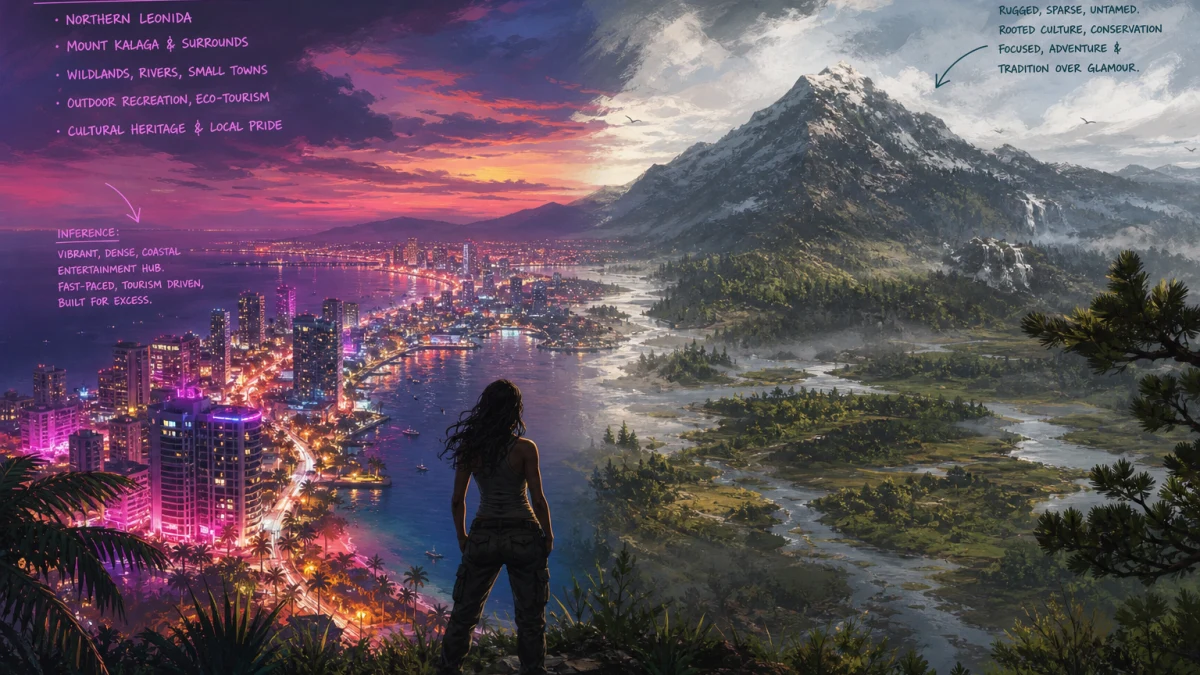
How Mount Kalaga contrasts with Vice City
Rockstar’s official presentation makes Vice City the neon-centered urban heart of Leonida. The city is associated with nightlife, entertainment, music, real estate and criminal business activity. Its featured characters are connected to clubs, recording studios, property, ambition and the commercial machinery of the city.
Mount Kalaga is framed through almost opposite terms. Its defining language is national landmark, northern border, backwoods, outdoor activity and distance from government scrutiny. The contrast is therefore clear at the level of setting presentation: Vice City is public, commercial and densely social, while Mount Kalaga is remote, terrain-driven and more isolated.
That does not mean Rockstar has confirmed separate rules or entirely different gameplay modes for the two regions. There is no announcement that Mount Kalaga will have its own economy, special law-enforcement system or dedicated wilderness campaign. The contrast concerns the identities Rockstar has established for the places, not a promise that they operate as separate games.
The distinction could still influence the rhythm of the open world. In Vice City, the official material emphasizes buildings, businesses, entertainment and crowds. In Mount Kalaga, the material emphasizes roads, mud, forest, water, wildlife and people who avoid official attention. Moving between those environments could create a substantial change in tone even if the underlying controls and systems remain shared across Leonida.
This is the central reason Mount Kalaga matters. It gives GTA VI a confirmed setting identity beyond the familiar Vice City label. The game is not only returning to a neon metropolis; it is presenting that metropolis as one part of a broader state with multiple social and environmental personalities.
- Confirmed: Vice City is presented through urban, coastal, entertainment and criminal-business themes.
- Inference: Mount Kalaga is a wilderness counterpoint to Vice City’s urban presentation.
- Not confirmed: separate gameplay rules, economies or campaigns for the two regions.
What the region could add to Leonida
The strongest inference is that Mount Kalaga could give Leonida greater environmental and thematic variety. The state can contain a recognizable urban center and a remote natural region without requiring the player to leave the setting. That makes Leonida feel broader in character, not merely larger in map area.
The park may also change the meaning of travel. In Vice City, movement is likely to be framed by streets, traffic, businesses and public spaces. Mount Kalaga’s official imagery instead foregrounds rough roads, wooded slopes, streams, wildlife and off-road vehicles. If Rockstar connects those elements through missions or optional content, travelling through the region could become part of the experience rather than simply a way to reach the next objective. That remains an inference, not a confirmed feature.
The backwoods communities could provide another form of social satire. Vice City’s official characters represent commercial ambition, celebrity culture, music and criminal entrepreneurship. Mount Kalaga’s residents are described through suspicion of government and separation from mainstream oversight. The contrast could allow Rockstar to examine different kinds of power and alienation across the same state.
The region may also broaden GTA VI’s visual rhythm. A city can create variety through architecture, traffic and crowds. A wilderness area creates variety through elevation, visibility, weather, road surfaces, animal life and distance between settlements. The official screenshots suggest that Mount Kalaga is intended to have its own visual grammar rather than serve as generic empty land.
None of this confirms a particular mission list, exploration reward structure or survival system. It is an interpretation of what Rockstar has chosen to show and emphasize. The confirmed contribution is more basic but still significant: Mount Kalaga gives Leonida a remote northern edge with a distinct landscape and social identity.
- Inference: Mount Kalaga could make Leonida more varied in tone and environment.
- Inference: travel between Vice City and the park may create a strong atmospheric contrast.
- Not confirmed: dedicated missions, exploration rewards or wilderness progression.
What Rockstar has not confirmed
Rockstar has not published Mount Kalaga’s exact footprint. Fan-made maps may place the park in a particular corner of Leonida or draw specific roads, towns and boundaries around it, but those layouts are not official geography. The confirmed information is limited to the park’s northern-border placement, its national-landmark identity, its official description and the images Rockstar has released.
The company has also not confirmed how much of the park is accessible. The screenshots do not establish whether every visible location can be reached, whether all pictured scenes occur during gameplay or whether the images represent mission moments, ambient events or promotional compositions.
There is no official Mount Kalaga mission list, wildlife catalogue or explanation of how hunting, fishing and off-road travel function. Rockstar’s description names those activities as part of the park’s character, but it does not provide mechanics, equipment, progression or rewards.
Mount Kalaga should not automatically be called GTA V’s Mount Chiliad under another name. The comparison may be useful when discussing the role of a mountainous or wilderness area in a Rockstar open world, but Rockstar has not described Mount Kalaga as a replacement, sequel or direct equivalent. The two locations should not be treated as interchangeable.
The same caution applies to theories about neighboring states. The wording about Leonida’s northern border does not confirm another playable territory, a hidden transition or a larger map beyond the state. Those ideas remain speculation until Rockstar publishes more geography or addresses them directly.
- No official exact map, size or boundary information has been published.
- No official Mount Kalaga mission list or activity progression has been announced.
- The Mount Chiliad comparison is analytical, not a Rockstar designation.
- Fan maps and proposed neighboring states are not confirmed facts.
Release context and the remaining wait
Rockstar currently lists Grand Theft Auto VI for November 19, 2026, on PlayStation 5 and Xbox Series X|S. That date is also reflected in Rockstar’s current support information and official game page. Because the game is still unreleased as of September 24, 2026, release details should continue to be checked against Rockstar’s latest listings.
The same caution applies to Mount Kalaga. Rockstar has provided more than a name: it has supplied an official regional description, six named screenshots and a place within Leonida’s wider destination lineup. What it has not supplied is an explanation of the park’s story structure or the exact scope of its outdoor activities.
That leaves Mount Kalaga in a useful middle ground. Its setting identity is confirmed, while much of its gameplay role remains open. It is fair to describe the park as a northern wilderness destination with hunting, fishing and off-road trails in its official profile. It is not yet fair to promise a complete hunting system, a fishing economy, an organized radical faction or a Mount Chiliad-style mystery.
For readers trying to understand what GTA VI adds beyond Vice City, the answer is already visible in Rockstar’s presentation. Mount Kalaga expands Leonida’s identity from a city setting into a state with a remote, rugged and socially unusual northern edge. The details of how that edge works will have to wait for further official information or the finished game.
- Current official release listing: November 19, 2026, for PlayStation 5 and Xbox Series X|S.
- Confirmed: Mount Kalaga has a distinct regional identity within Leonida.
- Still unknown: the park’s full gameplay role, accessibility and exact geography.
Mount Kalaga matters because it shows that GTA VI’s Leonida is being built around more than Vice City’s neon image. Rockstar has confirmed a northern national park with rugged terrain, outdoor activities, off-road scenes, wildlife and isolated communities. That is enough to establish a meaningful wilderness counterpoint to the city.
The rest should remain carefully labeled. Mount Kalaga may support hunting, fishing, exploration and storylines, but Rockstar has not confirmed the systems or structures behind those possibilities. For now, the park’s clearest contribution is environmental and thematic: it gives Leonida a remote edge where the landscape, rather than the skyline, becomes the attraction.
Sources
- Grand Theft Auto VI — Only in Leonida
- Grand Theft Auto VI — Official Screenshots
- Grand Theft Auto VI — Official Game Page
- Grand Theft Auto VI Platforms, Editions, and Versions — Rockstar Games Customer Support
- Charting the GTA 6 Map: Vice City, Ambrosia and Everything in Between — PC Gamer
- Port Gellhorn, Grassrivers, Ambrosia and Mount Kalaga: The Full Official Text — GTA6 Guides