Grand Theft Auto VI is being treated less like an ordinary blockbuster release and more like a calendar-clearing entertainment event. That is particularly true for the people whose work begins the moment everyone else gets to play: streamers, video makers, editors, guide writers and community managers. The unusual part is that many of them appear to be starting from the same place as their audiences.
Prominent creators in the GTA space reportedly did not receive the complete game in advance, including TGG, despite a summer visit to Rockstar North. That is a striking departure from the routine around many large releases, where early copies give creators time to capture footage, formulate opinions and schedule a stack of launch-day videos. Rockstar has instead kept the playable experience closely guarded, while offering only limited clips and teasers near release.
The practical result is simple: there may be far fewer polished, pre-loaded explainers waiting at midnight, and a much larger scramble to discover the game in public. For viewers, that could make the opening days feel more communal and less like being ushered through an information pipeline built weeks earlier. For creators, it means the advantage will not necessarily go to whoever uploaded first. It may go to the people who can respond quickly and give audiences a reason to stay after the initial rush.
That is the central tension surrounding GTA 6’s creator moment. There is enormous short-term attention available, but attention is not the same as a sustainable audience. A giant single-player game can create an immediate surge of streams and videos; it cannot, by itself, guarantee months of repeatable programming. The launch will test who can turn discovery into a format, and who is simply chasing the first wave.
Secrecy changes the launch-day playbook
“Embargo” is the industry term for a restriction on when critics or creators can publish material about a game. Even when an embargo is strict, recipients often still have time to play privately and plan their coverage. Here, the reported lack of full-game access changes the equation much more fundamentally. Creators cannot bank a week of story videos, hunting guides or comparisons if they have not had the game in hand.
That creates a more level field, at least at first. A channel with millions of subscribers still has reach, staff and a powerful distribution advantage. But it does not have a private head start on everyone else’s first reactions. Smaller creators can be in the same broad race to find an amusing side activity, an unexpected detail, a useful answer, or a challenge that catches on.
It also puts a premium on restraint. Several creators have said they intend to take their time rather than speed through the campaign, with some expecting it could take more than 100 hours to reach the credits. That approach is not merely sentimental. If a creator burns through a major story immediately, they risk narrowing the options for viewers who want to avoid spoilers and for themselves once the initial marathon has ended.
There is an obvious commercial pressure in the other direction. Launch windows reward immediacy. Searches spike, recommendations churn, and audiences gravitate toward live reactions. But GTA 6’s sheer scale, plus the prominence of its world, may reward coverage that treats the setting as an ongoing subject rather than a backdrop for completing missions as quickly as possible.
Related coverage includes GTA 6 Launch Could Redefine Gaming Creators, From Marathon Streams to a New Roleplay Era.
That is the distinction TGG has drawn: creators who engage with the game as a world may have more room to endure than those who treat it only as a finite story. It is an argument, not a guarantee, but it is grounded in how older GTA single-player content has remained viable long after release. Challenges, mysteries, self-imposed rules, character experiments and careful exploration can all create repeatable premises without pretending that the campaign never ends.
A single-player launch does not settle the longevity question
Some streamers have questioned whether GTA 6 could be a brief streaming event at launch. The concern is reasonable. A viewer who wants to experience a story unspoiled may choose to play rather than watch, and a streamer who completes the campaign may have limited reasons to return if they have no compelling angle beyond the main narrative.
Yet the counterargument is not that every stream will last forever. It is that a large open-world game supports different types of viewing. A full story playthrough serves one audience. A themed challenge, speedrun, Easter-egg hunt or comedy-driven roleplay serves another. Creator Forrest Waldron, known as KreekCraft, pointed to the potential for those varied formats, including a deliberately unconventional playthrough built around testing a character condition rather than racing through plot progression.
That distinction matters because format is what separates a game from a creator’s show. “Can I finish GTA 6?” is a straightforward playthrough. “What changes if I commit to this strange rule for an entire run?” is a premise. The latter can be understandable to viewers even if they have not followed every mission, and it can invite participation through chat suggestions and community discussion.
There is still a limit to what can responsibly be assumed. Rockstar has not officially announced a GTA 6 online mode in the material provided here. Speculation about one arriving later, potentially in 2027, is just that: speculation. Likewise, hopes for console roleplay support or a cross-platform modding system are expectations from fans, not confirmed features. Those possibilities may shape creators’ long-range plans, but they should not be mistaken for launch-day facts.
Why the first month could matter for smaller channels
Twitch is preparing for a substantial audience surge. GTA 5 has accumulated around 9 billion hours watched on the platform, including 1.7 billion hours in 2025. For GTA 6, Twitch plans themed badges for users present in streams during November and says it will distribute 10,000 copies of the Ultimate Edition at random through the month. The platform has also emphasized that streamers can earn money from their first broadcast.
The badges are a small feature, but their purpose is revealing. They turn attendance into a keepsake: a visible marker that a user was part of a particular cultural moment. The giveaway similarly encourages viewers to remain within the streaming ecosystem. Neither initiative requires an official Rockstar partnership, and neither changes the game itself. They are platform tools designed to make a massive release feel participatory rather than passive.
For emerging creators, the opportunity is genuine but unforgiving. An enormous category can expose a fresh voice to viewers, yet it also fills search results and front pages with veteran channels, big-budget productions and opportunistic low-effort uploads. The useful question for a new streamer is not “How do I cover GTA 6?” but “What will someone recognize as mine after watching one clip?”
- Live discovery: genuine reactions and audience-led exploration can work when the host is engaging enough to make uncertainty entertaining.
- Focused expertise: a creator can specialize in one repeatable lane, such as carefully sourced mechanics explanations or challenge design, rather than attempting to cover everything.
- Editing and perspective: a concise, clearly authored video may be more memorable than a long upload assembled solely to catch a keyword spike.
- Community trust: clear spoiler labels, corrections and disclosure of uncertainty matter especially when reliable information is scarce.
The last point may become especially important in the opening days. Fast-moving game launches produce confusion: incomplete walkthroughs, misidentified secrets, assumptions passed along as facts, and social posts stripped of context. The most durable advantage may be credibility. A creator who says “this is unconfirmed” can be more useful than one who offers a confident answer that later collapses.
Creators are using GTA 6 as a chance to reset
The release is attracting people beyond the established GTA ecosystem. KreekCraft, who has more than 17 million subscribers and is best known for Roblox coverage, sees GTA 6 as an opportunity to expand his work beyond that specialty. Tyler Smith, known as tdawgsmitty and associated primarily with Call of Duty content, has described renewed enthusiasm while brainstorming GTA 6 video ideas.
These shifts are notable because they are not framed only as an attempt to seize a popular search term. Both creators describe fatigue with the repetitive expectations of their existing niches. For an established channel, a major release can provide permission to try a different creative rhythm. That does not make the pivot easy; audiences often subscribe for a specific game, and a new direction can alienate regular viewers. But a cultural-scale launch can lower the barrier to experimentation because viewers themselves are already curious.
Trevor Martin, known as TmarTn, provides a longer-term example of that kind of change. His main Call of Duty channel has been dormant for seven years, following a 2019 Modern Warfare review, while his other channel developed around let’s plays and GTA-focused work. Martin estimates that 800 to 900 GTA 5 videos have generated more than 200 million views collectively. His experience underlines that a creator’s transition need not be a dramatic declaration. Sometimes the audience follows where sustained interest goes.
There is a related lesson for viewers: a new GTA video from a familiar creator will not necessarily resemble their old output. The strongest pivot is likely to come from someone applying an established strength—humor, analysis, storytelling, technical clarity or community-building—to a new game, rather than simply replacing one thumbnail subject with another.
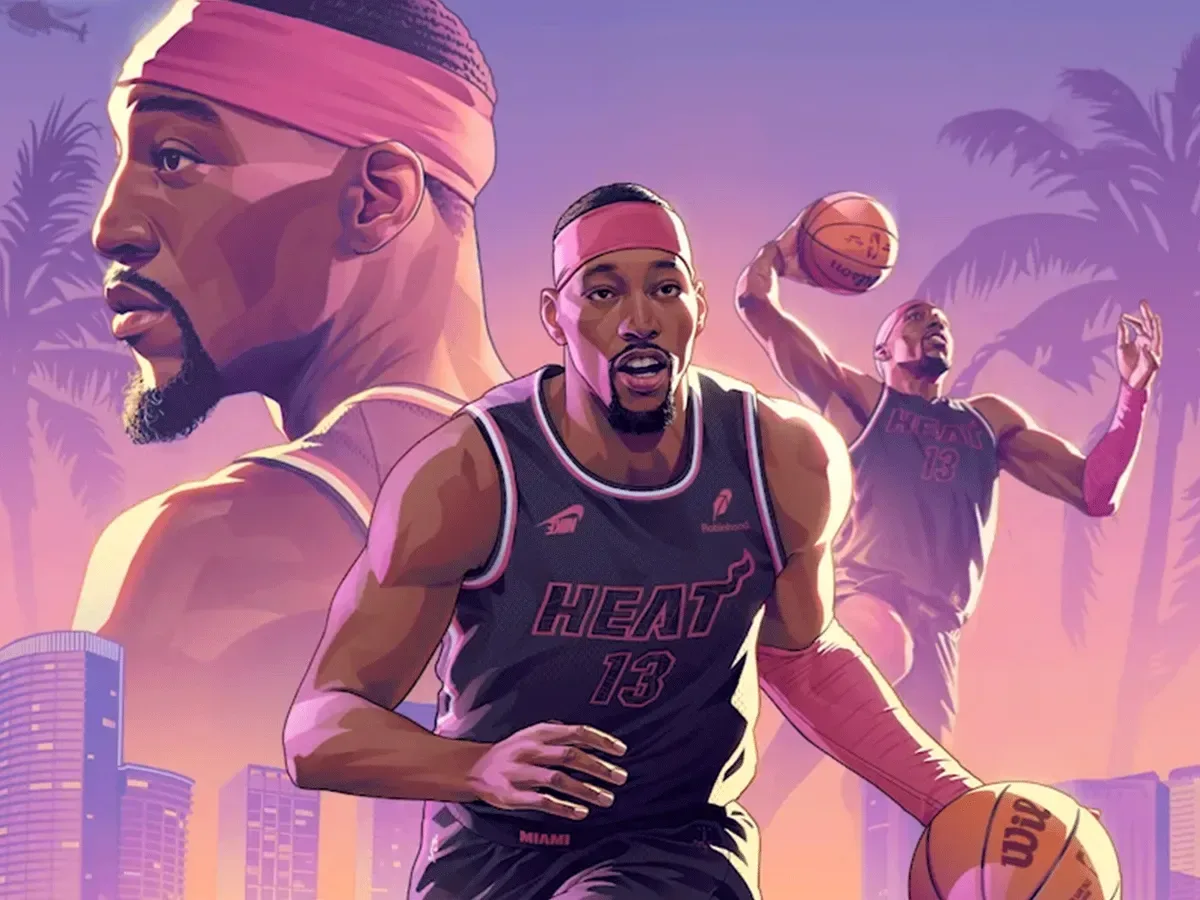
For a related example of GTA 6 crossing into other gaming ecosystems, see NBA 2K27’s Vice City and Rockstar Games crossover.
The AI flood is a credibility problem, not just an aesthetics problem
GTA 6’s launch buildup has also brought an increase in AI-generated videos. Some have reportedly reached hundreds of thousands or even millions of views. The concern raised by creators is not simply that synthetic visuals look polished. It is that AI can enable rapid production of informational videos built from material gathered elsewhere, sometimes with the original context, labor and attribution stripped away.
That matters particularly for guides. A good guide is more than a recitation of steps. It should reflect verified information, explain conditions and limitations, and distinguish a repeatable method from a one-off anecdote. A video that assembles scraped tips into a confident script can look authoritative before players have had time to check it.
Martin has described the technology as both impressive and unsettling, noting that elaborate assets that once required a budget and a team can now be produced from a brief prompt. TGG has similarly raised concerns about channels copying the work of human creators. Their shared worry is not that every use of AI is automatically worthless; it is that the rush for volume can remove the human experience viewers thought they were watching.
For players, the practical defense is fairly old-fashioned:
- Check whether the creator shows or clearly explains the evidence behind a claim.
- Be wary of urgent “best method” or “instant unlock” language during the first days, when information is changing rapidly.
- Look for corrections and updates rather than assuming a sleek package is accurate.
- Prefer creators who separate confirmed details from guesses, rumors and personal interpretations.
Authenticity cannot be reduced to a face on camera, and human-made work can be inaccurate too. But accountable creators leave a trail of judgment: they show what they tried, explain what they do not know, and revise mistakes. That is far more valuable than a production line optimized to sound certain.
Roleplay remains an important but unconfirmed horizon
GTA 5’s lifespan demonstrates why creators are looking beyond the single-player opening. The game’s roleplay scene became a major phenomenon in the early 2020s, aided by tools from FiveM. High-profile participants included LeBron James, Travis Scott and Kevin Durant. Rockstar later acquired the team behind FiveM, an important piece of background for anyone wondering why fans see user-generated experiences as a major part of GTA’s future.
Roleplay in this context means players taking on fictional roles within a shared game world and responding to other players within agreed social rules. It is different from simply playing a character in the official story. The entertainment comes from improvised interaction, ongoing communities and the unpredictable situations created by participants.
TGG’s view is that GTA’s content future may rest across three lanes: single-player, official online play and roleplay. It is a useful framework for understanding the appetite around GTA 6, even though the latter two lanes have not been confirmed in the supplied information for this new game. If they do materialize, they could turn a launch-week spectacle into a much longer creator economy. If they do not, creators will need to build longevity from the single-player world and whatever officially supported experiences actually arrive.
For now, the certainty is the scale of the moment, not every feature that may follow. GTA 6 has pushed platforms, creators and fans to plan around a release whose reach is expected to extend well beyond typical game coverage. Rockstar’s secrecy has removed much of the usual advance advantage. What replaces it will be a public contest of ideas: who explores best, who explains best, who entertains best, and who earns trust when the noise is loudest.