For game-focused creators, streams, convention coverage and podcast recordings, the camera is usually the glamorous purchase. Audio is the purchase that stops a perfectly usable video from sounding like it was captured inside a laundry basket. The DJI Mic Mini Bundle is currently listed at $79, reduced from its usual $99 price—a $20 reduction, or 20%.
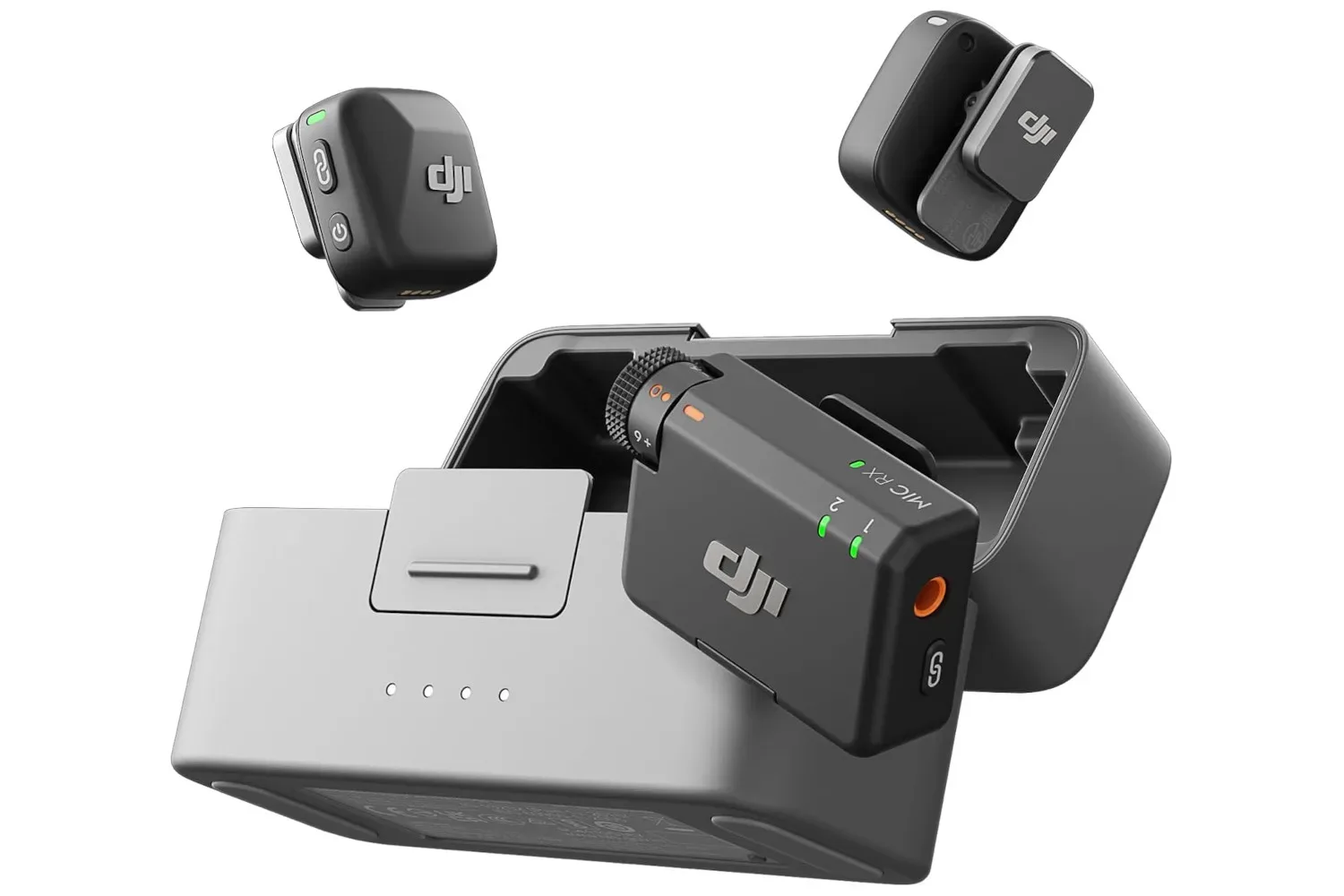
The bundle matters more than a single low price because it is built around a basic multi-person recording need. It includes two microphones, one receiver and a charging case. That configuration gives a creator two separate microphone units for a conversation, interview or co-hosted recording rather than requiring participants to share one mic or rely solely on a camera’s more distant built-in audio.
The available deal information describes a wireless working range of up to 400 meters between the microphones and receiver. As ever with a stated maximum range, it is best understood as a headline capability rather than a promise that every location will behave identically. Buildings, crowds, placement and other real-world conditions can complicate a wireless setup. Still, the stated range suggests the kit is aimed at flexibility beyond sitting directly in front of a desktop camera.
For creators trying to make videos around games rather than merely play them, that flexibility can be useful. A home recording setup may involve two people discussing a new release; a convention floor may involve short interviews; a group may need to record a segment without turning the whole production into a cable-management side quest. The bundle’s two-transmitter layout is the practical headline.
What comes in the bundle
The $79 package contains the following components:
- Two DJI Mic Mini microphone units
- One receiver
- One charging case
It is worth separating the roles here. A transmitter is the microphone unit worn or attached near the speaker. A receiver is the companion unit that receives the wireless signal. The charging case is not simply storage: it is intended to help keep the components powered over an extended day. The deal information says the case can support a full day of use.
That may be especially relevant for event coverage. A creator gathering multiple short interviews does not necessarily have an obvious chance to stop, find power and charge equipment between every conversation. A case that keeps the pieces together and available could be as valuable as the microphones themselves for people who are prone to arriving with a bag full of devices at wildly different battery percentages.
The listing can be found here. As with most retailer-driven discounts, prospective buyers should confirm the displayed price and included items before completing an order, since a current listing is not the same thing as a permanent price.
Why lavalier microphones suit creator work
The Mic Mini units are described as lavalier microphones. “Lavalier” generally refers to a small mic that can be worn on clothing or mounted close to a speaker. The point is proximity: putting the microphone nearer to the voice can help prioritize speech over the wider sound of the room.
That is a useful distinction for anyone whose current process is placing a phone or camera across the table and hoping dialogue wins a fight against keyboards, fans, traffic, people chatting nearby or the general acoustic chaos of a busy venue. A close-worn mic does not make imperfect surroundings disappear by magic, but it gives a recording setup a clearer starting point for isolating the person speaking.
The microphones are also presented as discreet units that can attach to different items, including clothing. In practical terms, that makes them more suitable for an on-camera presenter who does not want a large handheld microphone occupying every shot. The source material also highlights clipping one onto a trading card as a playful example, though a tie or other piece of clothing is likely the more conventional placement.
There is another basic advantage to having two mics: each speaker has a dedicated capture point. When two people share a single distant microphone, one person may be physically closer, speak louder or turn away at the wrong moment. Two microphone units are not a guarantee of a polished production, but they address a common structural problem before recording begins.
The gaming-creator case for better audio
Gaming coverage increasingly has to compete for attention in a dense release environment. As the growing discovery problem on Steam illustrates, visibility is a challenge for games—and the people making videos, podcasts and commentary around them. Clear speech will not solve discoverability by itself, but it can make a viewer more likely to stay with an explanation, reaction or interview once they find it.
That does not mean every creator needs the same equipment. A solo player streaming at a desk has different needs from a team interviewing developers at an event, and neither setup is automatically better. The particular strength of this bundle is that its contents map to two-person recording without immediately requiring a second microphone purchase.
For a podcast, that could mean one mic for each host. For a video segment, it could mean one creator and one guest. For convention work, it could mean an interviewer and interviewee. For a collaborative card-opening video, it could mean two people speaking from different positions without relying on a single camera mic to collect both voices evenly.
The listed 400-meter receiver range also points toward recordings where the receiver does not have to be right beside the person wearing the microphone. That can be helpful when the camera or recording rig is positioned at a distance. But buyers should treat the figure as a capability to check against their intended circumstances, not as a reason to ignore placement and environment altogether.
What this deal does—and does not—establish
The value claim here is straightforward and limited: the DJI Mic Mini Bundle is currently advertised for $79 rather than $99, with two microphones, a receiver and a charging case included. That makes it a lower-cost entry point for a two-person wireless audio arrangement than its listed regular price.
It does not establish that this will be the lowest price available in every store, that it will remain available, or that it is the right fit for every recording workflow. The provided deal details do not specify platform compatibility, connection options, recording formats, individual battery figures, noise-reduction modes or any other feature set beyond the components, the stated range, the charging-case endurance claim and the focus on reducing unwanted surrounding sound. Those are important details to verify when they matter to a particular setup.
It is also useful to be realistic about what a microphone purchase changes. Better voice capture can improve the foundation of a recording, particularly when speech is the main point. It does not automatically fix loud locations, unclear speaking, poor mic placement, a chaotic interview structure or a creator who leaves the receiver at home. Equipment helps most when it answers a specific workflow problem.
Who should pay attention to the $79 listing
This bundle looks most relevant to people who can clearly use its two-microphone design:
- Co-hosts: Two dedicated units fit a conversational video or audio show.
- Interviewers: The package is suited to recording both the person asking questions and the person answering them.
- Convention attendees: A charging case and wireless setup can be helpful when moving between interviews and show-floor segments.
- Small creator teams: Two speakers can be mic’d without starting with two separate purchases.
- Video makers upgrading from distant camera audio: Lavalier-style placement can bring the mic closer to the speaker.
Conversely, someone who only ever records one person in a fixed room may not need a twin-mic bundle simply because it is discounted. The charging case and second microphone are valuable when they solve a real problem, not when they become two more objects in a drawer beside abandoned capture cards and mystery USB cables.
At $79, the DJI Mic Mini Bundle’s appeal is chiefly its completeness. It packages the two mic units, receiver and charging case needed for a basic two-person wireless recording arrangement, then drops the advertised cost by $20. For a creator planning conversations, interviews or on-location material, that is a concrete deal worth checking while the listed discount remains active.
Shop the products
Check current price, model and availability at the retailer.