Diablo 4’s expansion era appears to be ending with Lord of Hatred. Blizzard Entertainment is not planning another Diablo 4 expansion in the foreseeable future, instead putting its attention on continued seasons for the current game and the long road toward Diablo 5, which is currently slated for sometime in 2029.
It is a major shift in how players should read Diablo 4’s future. The game is not being positioned as abandoned or finished in the ordinary sense: seasons are still expected to carry on, and ongoing support remains tied to players continuing to show up in Sanctuary. But the large, paid, narrative-heavy expansion format is not presently part of the roadmap beyond Lord of Hatred.
For a series built on eternal cycles of demons, loot and a frankly alarming amount of time spent opening cursed cupboards, that distinction matters. Diablo 4 can keep evolving through seasons while Blizzard uses those updates to establish the conditions for a successor set far beyond the present-day story.
Lord of Hatred closes one chapter of Diablo 4
Game director Brent Gibson has characterized Lord of Hatred as the conclusion of Diablo 4’s “Story of Hatred,” specifically bringing the arc involving Mephisto to a close. Blizzard’s creative direction is now turning from Hatred toward Terror, the theme expected to define Diablo 5 and Diablo’s return to the center of the franchise’s conflict.
That framing explains why a further expansion is not currently planned. Lord of Hatred is not simply another waypoint on an endless chain of boxed add-ons; it is being treated as the capstone for the particular story Diablo 4 set out to tell. The team’s next priority is maintaining Diablo 4’s seasonal cadence while preparing the narrative, systems and broader world needed for the next numbered entry.
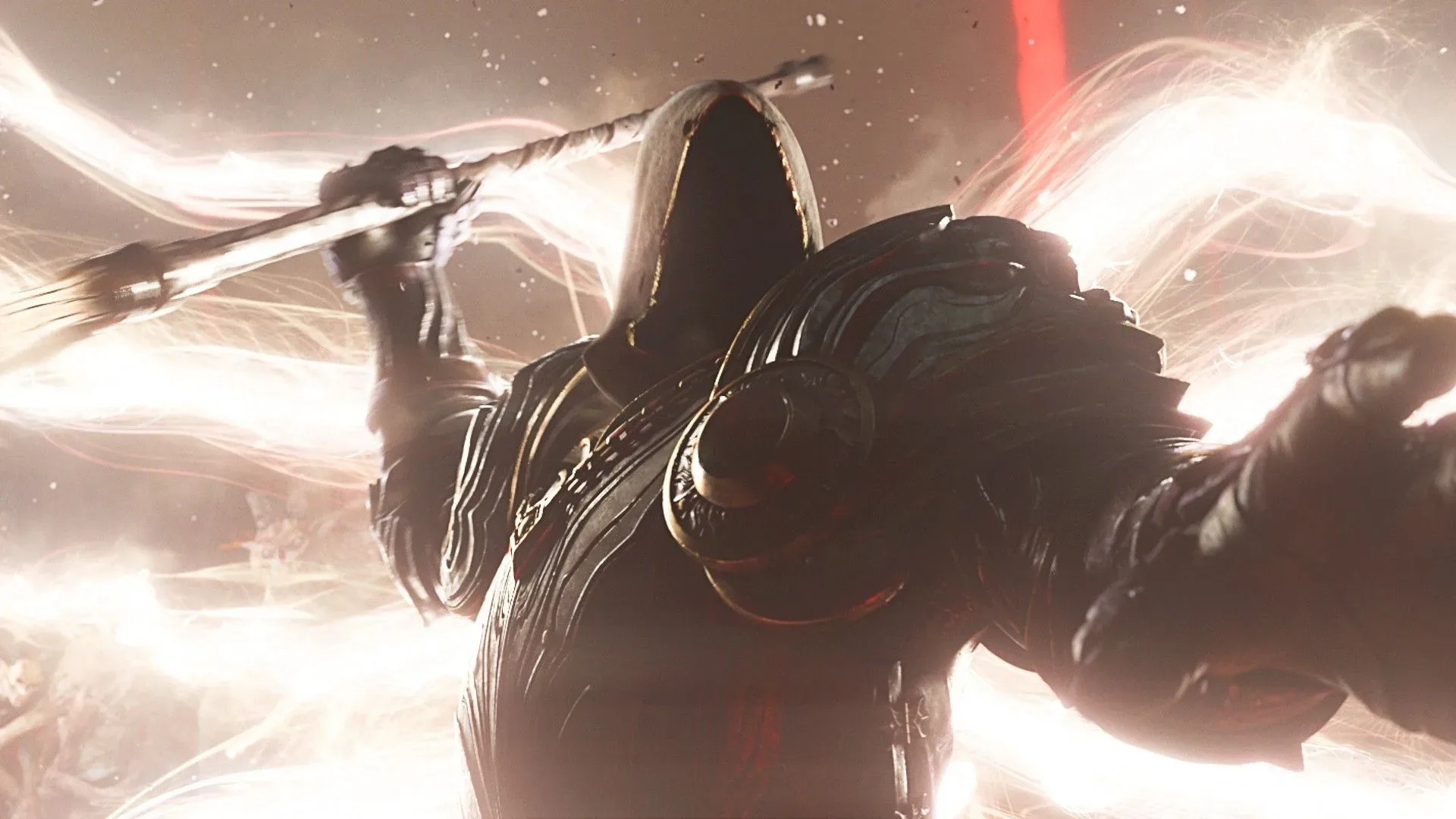
Diablo himself is also confirmed to be coming to Diablo 4, an appropriately enormous development for a game that has spent much of its life making players ask where, exactly, the fellow on the box art had wandered off to. Meanwhile, an animated Diablo show is in the works for Netflix, extending the franchise into another medium as Blizzard maps out the years before Diablo 5.
None of that means players should expect seasons to function like miniature expansions. Seasonal content can introduce story developments, activities and changes to the live game, but Blizzard has made a clear distinction between that continued support and a new full-scale Diablo 4 expansion. For now, Lord of Hatred is intended to stand as the final expansion.
Seasons will bridge a 100-year jump
Diablo 5 is set 100 years after Diablo 4, in a version of Sanctuary where the stakes have escalated from terrible to impressively catastrophic. Blizzard’s setup is that Sanctuary has fallen and Diablo has won. It is not subtle, but subtlety has never been the most reliable survival tool when one’s setting is filled with butchered cathedrals, blood magic and demons with job titles.
Related coverage includes Diablo 4's Lord of Hatred Will Be Its Final Expansion as Blizzard Turns Toward Diablo 5.
The century-long leap gives the new game considerable room to establish a different status quo. It also raises an intriguing question for Diablo 4 seasons: how much of the path from the current era to Diablo 5’s ruined world will be told in the live game?
Blizzard has indicated that seasonal storytelling will help connect the games, but has not locked itself into a fully detailed route. Gibson has emphasized that the studio wants to see how fans respond from season to season before determining precisely where all of that continuity leads. The broad destination is known. The road, fittingly for Diablo, still seems liable to contain detours through lava.
That flexibility could be valuable. A 100-year gap allows Diablo 5 to introduce new political orders, scarred regions, surviving factions and consequences that would be difficult to fit into a direct sequel only a few years later. At the same time, Diablo 4 can seed those changes gradually rather than making the next game feel disconnected from the events players have been following.
It also means seasonal narratives have a larger job than simply furnishing a fresh reason to chase improved gloves. If Blizzard follows through on its continuity ambitions, future Diablo 4 seasons may serve as chapters in the long decline—or transformation—of Sanctuary before Diablo 5 begins in its post-victory nightmare.
What continued Diablo 4 support means
“No planned expansion” is not the same as “no future content.” Blizzard’s stated focus remains Diablo 4 seasons, and the possibility of support after that is not being ruled out entirely. The crucial qualifier is that nothing beyond Lord of Hatred has been announced as a new expansion.
There is precedent for the Diablo series taking a surprisingly long view. Diablo 2 eventually received a new class and a paid expansion after a 25-year gap, a reminder that this franchise has a habit of leaving old tomb doors technically unlocked. As long as people continue playing Diablo 4, some form of support remains possible. Still, that historical example should not be mistaken for a promise of another Diablo 4 expansion or a timetable for one.
For players deciding what to expect in the nearer term, the practical message is straightforward:
- Lord of Hatred is expected to be Diablo 4’s final expansion under Blizzard’s current plans.
- Seasonal updates remain the main path for new Diablo 4 material.
- Diablo 5 is targeted for 2029, leaving several years for Diablo 4 seasons to develop the wider continuity.
- Further Diablo 4 support is possible, but no additional expansion has been confirmed.
That approach is a calculated balancing act. Blizzard must keep Diablo 4 compelling for players who have invested in its seasons without making every update feel like a commercial for a game still years away. It must also create enough connective tissue that Diablo 5’s devastated Sanctuary feels like the consequence of a living saga rather than a convenient reset button.
There is a wider business implication, too. A declared 2029 target makes Diablo 5 part of a remarkably long public horizon for Blizzard. The company has put a very visible date window around a project that will need to justify both its time in development and the expectations attached to the Diablo name. That bigger strategic commitment is explored in Blizzard’s unusually public 2029 Diablo 5 and 2030 StarCraft pledge.
Three classes are confirmed for Diablo 5
Diablo 5 has already confirmed three of its playable classes: the returning Demon Hunter, the returning Monk, and an entirely new class called the Plague Knight. Blizzard has also said Diablo 5 will have more classes than any previous game in the series.
The Demon Hunter and Monk give longtime Diablo players recognizable archetypes to hold onto as the series moves into a radically different era. The Demon Hunter’s ranged, trap-oriented demon slaying and the Monk’s close-range martial and spiritual identity have both been notable parts of the franchise’s class history. Their inclusion suggests Diablo 5 will not discard familiar gameplay fantasies just because the setting has taken a 100-year plunge into darkness.
The Plague Knight is the wild card. Its name alone points to a grim new thematic space, particularly in a Sanctuary that has already fallen to Diablo. Blizzard has not yet detailed its abilities, equipment or combat role, so players should be cautious about assuming whether it will resemble a heavily armored fighter, a disease-wielding caster, or something stranger. In Diablo, “plague” and “knight” could reasonably describe anything from a stoic crusader to a person-shaped public-health emergency.
More classes than ever before is an ambitious promise, but it remains broad. Blizzard has not confirmed the final roster or the total number of classes, and it has not specified which older archetypes will return. For now, the three revealed classes are the firm foundation, while the rest of Diablo 5’s character lineup remains an open crypt.
A long farewell, not an immediate shutdown
The end of Diablo 4 expansions will understandably land differently for different groups of players. Some may view it as a satisfying endpoint for the Mephisto-centered story, particularly if Lord of Hatred provides the resolution Blizzard intends. Others may have hoped for several more major expansions, each broadening Sanctuary with a new region, class or campaign.
But the announced plan is not a sudden departure from Diablo 4. It is a transition. Seasons are set to continue, Diablo is joining the current game, and Blizzard has several years to turn Diablo 4’s live narrative into a bridge toward a world in which Terror has prevailed.
That creates an unusually extended intermission for the series: Diablo 4 has more story to tell, yet its next expansion is not waiting in the wings. Diablo 5 has a destination and a few confirmed classes, yet its final form is still years away. Between them sits Sanctuary—doomed, seasonal, and apparently still willing to hand out legendary boots for killing a goatman in a basement.